





Embrace the Awe, Not the Academics
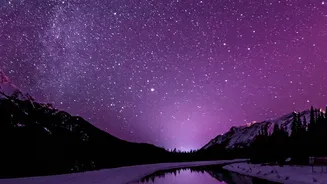
The single most important part of stargazing is simply to look up and feel something. It's a practice in mindfulness. Research shows that experiencing awe, like that inspired by a star-filled sky, can lower stress, improve your mood, and give you a powerful
sense of perspective. It’s a chance to disconnect from screens and daily worries. Don't worry about identifying every star. Instead, focus on the sheer scale of it all. Notice the different brightnesses, the subtle colours, and the profound silence of the cosmos. This is a sensory experience, not an exam. The universe won't quiz you.
Your Eyes Are Your First and Best Instruments
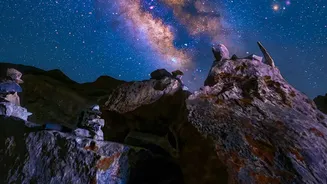
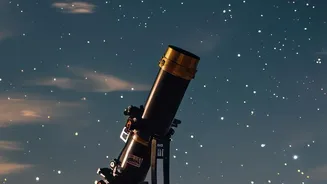
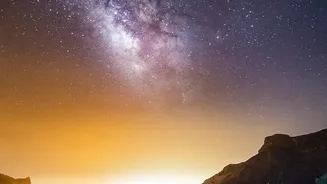
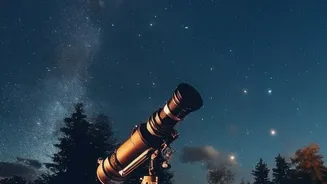
Forget expensive equipment; your own eyes are more than enough to begin. The key is giving them time to adapt. It takes about 20 to 30 minutes for your eyes to fully adjust to the darkness, a process called dark adaptation. During this time, avoid looking at bright lights, especially your phone screen. Once adjusted, you'll be amazed at what you can see: planets (which, unlike stars, don't twinkle), the faint, milky band of our own galaxy, and even shooting stars. You don't need a telescope for any of that.
Let Your Smartphone Be Your Guide
If your curiosity is sparked and you want to know what you’re looking at, your smartphone is the perfect field guide. There is a galaxy of user-friendly apps that turn your phone into a portable planetarium. Apps like SkyView, Star Walk 2, and Stellarium Mobile use your phone's camera and GPS to identify stars, constellations, and satellites in real-time. You just point your device at the sky. Many are free or very affordable and offer features like augmented reality overlays and information on celestial events, making them perfect for beginners.
Discover the Stories in the Stars
For millennia, before we knew about gas giants and nebulae, humans connected the dots and told stories. Learning the mythology behind the constellations is a wonderfully accessible way to engage with the night sky. You don't need to know the stellar classification of Betelgeuse to appreciate the story of Orion the Hunter, forever chasing the bull, Taurus, across the winter sky. These ancient tales, from the Greek myths of Pegasus the winged horse to the tale of the twins Castor and Pollux, transform points of light into characters in an epic drama.
Find Your Celestial Theatre
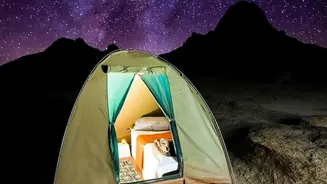
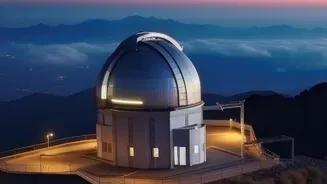
The final ingredient is a dark location. The biggest obstacle to good stargazing is light pollution from our cities and towns. For a truly special holiday, consider visiting a designated dark sky location. India is blessed with several world-class spots. Hanle in Ladakh is home to India's first official Dark Sky Reserve and offers some of the clearest skies on Earth. Other fantastic options include the high-altitude deserts of Spiti Valley, the vast white expanse of the Rann of Kutch, or the serene hill stations of Coorg. But you don't have to trek to the Himalayas. Simply getting to a nearby park or driving a little way out of your city can make a huge difference.