









The Invisible By-products of Cooking
Every time you cook, you release substances into the air. Even boiling water creates steam, but the real concern comes from more complex cooking methods. The main culprits are microscopic particles known as particulate matter (PM2.5), volatile organic
compounds (VOCs), and nitrogen dioxide (NO2), especially from gas stoves. These tiny particles and gases don't just create smoke or strong smells; they can linger in your home's air, creating a form of indoor air pollution that can be surprisingly potent. For example, one study found that cooking activities could raise particulate matter levels to be 65 times higher than normal background levels in a home.
Turning Up the Heat and the Risk
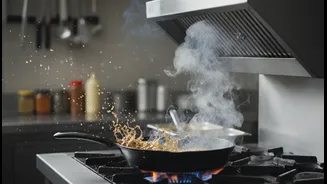
The core difference lies in temperature. High-heat cooking methods like pan-frying, searing, broiling, and stir-frying involve heating oils and fats to very high temperatures. This process breaks down fats, oils, and food components, aerosolizing them into a complex mixture of pollutants. Studies have clearly shown that pan-frying produces significantly more particulate matter and VOCs than gentler methods like boiling or steaming. A study that compared different ways of cooking chicken found that pan-frying produced the highest levels of PM2.5, followed by stir-frying, while boiling and air-frying produced the least. The same was true for VOCs, which include harmful compounds like aldehydes and formaldehyde. So, that perfect sear on your steak comes at the cost of higher indoor emissions.
What’s at Stake for Your Health?
This isn't just a matter of smoky smells that require opening a window. Consistent exposure to these cooking-related pollutants can have tangible health consequences. PM2.5 particles are small enough to be inhaled deep into the lungs and can even enter the bloodstream, potentially worsening conditions like asthma and heart disease. Long-term exposure is linked to an increased risk of chronic lung and heart conditions. Nitrogen dioxide, produced in higher concentrations by gas stoves, can irritate the respiratory system and is especially concerning for children with asthma. While the risk from a single well-cooked meal is low for most healthy individuals, the cumulative effect of daily cooking in a poorly ventilated kitchen can contribute to significant health burdens over time.
How to Clear the Air Effectively
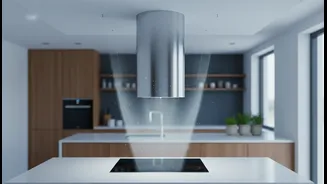
The good news is that managing these risks is straightforward with good ventilation habits. Your range hood is your most powerful tool. Crucially, it must be a hood that vents to the outside, not one that simply recirculates air through a filter. Use it every single time you cook, not just when you see smoke. For best results, turn the fan on a few minutes before you start cooking and leave it running for 10-15 minutes after you've finished to clear any residual pollutants. When possible, cook on the back burners, as this allows the range hood to capture emissions more effectively. If you don’t have an effective range hood, opening windows on opposite sides of the room to create a cross-breeze can also help significantly. Finally, consider your cooking methods. When it's not essential for the dish, choosing to boil, steam, or use an air fryer can drastically reduce the pollutants you generate in the first place.