

Understanding an Evening Elongation
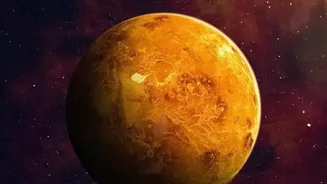
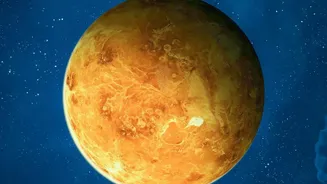
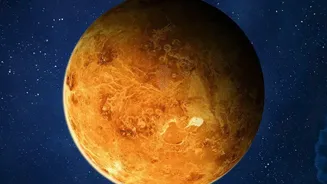
Venus is often called the 'Evening Star' or 'Morning Star' for a simple reason: its orbit is inside Earth's. This means from our perspective, Venus never strays far from the Sun. We only ever see it in the twilight of sunrise or sunset, never high in the sky
at midnight. The term 'greatest elongation' marks the point in its orbit when Venus appears farthest from the Sun in our sky. When this happens in the evening, it's called the 'greatest eastern elongation'. This event on August 15th will see Venus at an angular separation of 46 degrees from the Sun. This wide separation gives us the best and longest possible window to view the planet after sunset before it dips below the horizon.
Your Guide to Viewing in India
The great news for stargazers in India is that Venus will be magnificently visible. The peak of the elongation occurs at 6 UTC on August 15, which is 11:30 AM IST. However, the key is not the exact moment, but the viewing conditions it creates for that evening. Shortly after sunset on August 15th, look to the western sky. You will not need any special equipment to spot Venus; it will be the brightest object there, apart from the Moon. For the best view, find a location with a clear view of the western horizon, preferably away from the glare of city lights. The planet will be visible for about 90 minutes after sunset, offering a generous opportunity for observation. To make the evening even more special, a crescent Moon will be visible nearby, just below Venus.
What You Will See
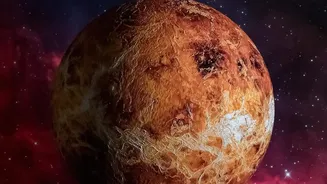
To the naked eye, Venus will appear as an exceptionally bright, white, and steady point of light. It shines with a magnitude of about -4.4, making it far brighter than any star. Unlike stars which twinkle, Venus shines with a constant, unwavering glow because its light is reflected from the Sun and passes through our atmosphere as a disk, not a point. If you have a pair of binoculars, you can get a better sense of its brightness and perhaps even resolve it as a tiny disk rather than a point. For those with a telescope, a remarkable sight awaits. Around the time of greatest elongation, Venus appears about 50% illuminated, similar to a first-quarter Moon. This half-phase is a fascinating visual confirmation that we are seeing another planet in our solar system going through its own cycle of phases, just as our Moon does.
A Celestial Month of Wonders
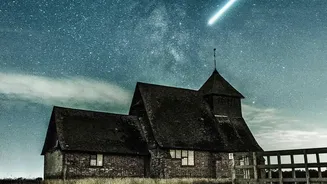
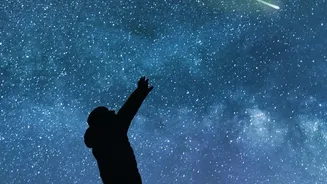
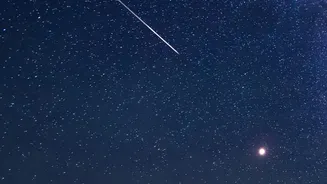
This event with Venus is part of a particularly exciting month for astronomy in August 2026. Just a few days before, on the nights of August 12th and 13th, the Perseid meteor shower will reach its peak. With the peak occurring near the new moon, skies will be dark, offering ideal conditions to see a high number of meteors. The same day, August 12th, also features a total solar eclipse, though it will not be visible from India. This concentration of celestial events makes August a fantastic time for anyone in India to begin a new hobby in stargazing. While the eclipse may not be visible locally, the meteor shower and the stunning appearance of Venus provide wonderful, accessible opportunities to connect with the cosmos.