




Who Got the New Contracts?
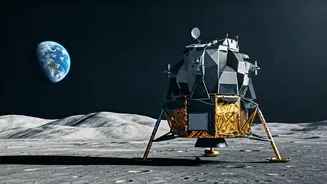
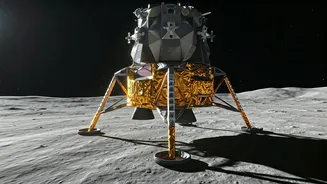
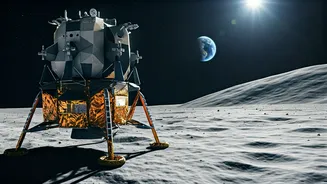
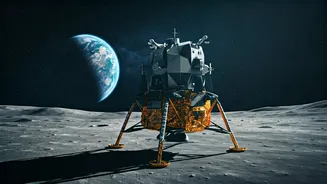
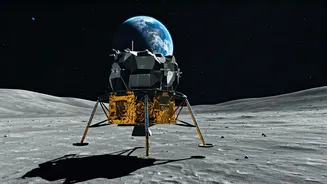
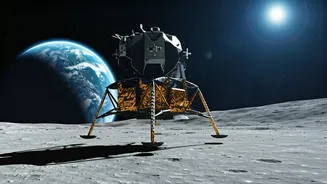
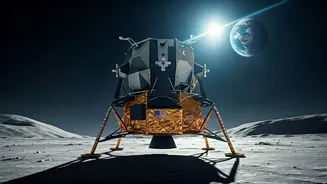
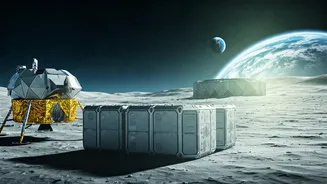
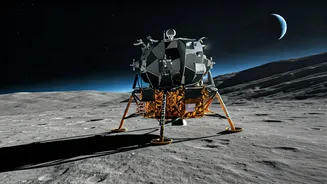
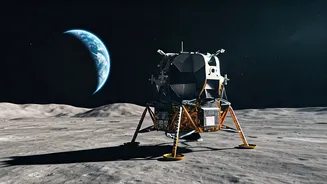
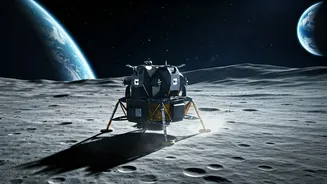
On June 30, 2026, NASA announced it had selected three American companies for four new robotic moon landings scheduled for late 2028. The contracts, part of the Commercial Lunar Payload Services (CLPS) initiative, total nearly $590 million. The awards
were distributed among key players in the commercial space sector: Astrobotic Technology secured the largest portion, $297.9 million, for two separate missions. Firefly Aerospace was awarded $144.2 million for a single mission, and Intuitive Machines received $148.3 million for its own landing. These are not newcomers to the lunar scene; all three companies have prior experience with moon missions and are expected to use updated versions of their existing lander designs to ensure reliability and speed.
The Strategy: Outsourcing the Moonshot
This latest round of funding highlights a fundamental shift in how NASA approaches space exploration. Instead of building and operating all its own hardware, as it did during the Apollo era, the agency is now acting as a customer. Through the CLPS program, NASA buys payload delivery services from private firms, which are responsible for everything from launch to landing. This public-private partnership model is central to the Artemis program, which aims to establish a sustainable human presence on the Moon. The goal is to spur innovation, reduce costs for taxpayers, and foster a robust commercial economy in space that doesn't rely solely on government missions. By funding multiple companies, NASA also encourages competition and builds redundancy into its supply chain for getting critical hardware to the lunar surface.
What Will These Landers Carry?
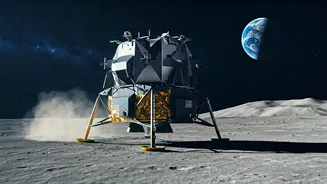
These aren't just empty test flights. Each of the four missions will carry a suite of NASA science and technology payloads to the lunar surface. Every lander is slated to deliver three specific instruments. The Stereo Camera for Lunar Plume Surface Studies (SCALPSS) will create 3D views of how engine exhaust kicks up lunar dust during landing, which is crucial data for planning a future moon base where landers might operate near each other. A Laser Retroreflector Array (LRA), a small, power-free device, will act as a permanent marker on the surface, allowing future orbiting or landing spacecraft to navigate more precisely. Finally, the Linear Energy Transfer Spectrometer (LETS) will measure the radiation environment on the lunar surface, helping NASA design safer systems to protect astronauts on long-duration missions.
Paving the Way for a Moon Base
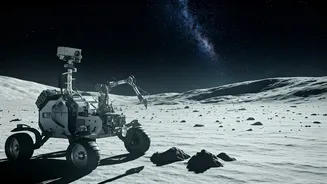
These robotic missions are critical stepping stones for NASA's larger ambition: building a permanent lunar base at the Moon's south pole. Before risking astronauts and expensive, one-of-a-kind habitats, the agency needs to prove that it can reliably and repeatedly land hardware on the surface. The CLPS missions serve as a proving ground, testing landing technologies and studying the lunar environment. NASA Administrator Jared Isaacman has outlined an ambitious plan to send up to 10 robotic landers to the Moon annually starting in 2027 to support the Moon Base project. This frequent cadence of missions, enabled by commercial partners, is intended to rapidly build up the infrastructure and operational experience needed for a permanent human outpost, which could eventually support missions to Mars.