




An End to an Era of Upgrades
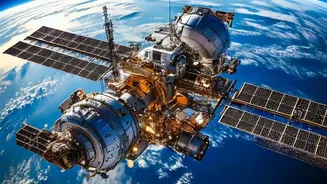
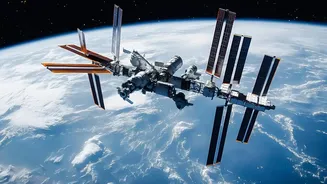
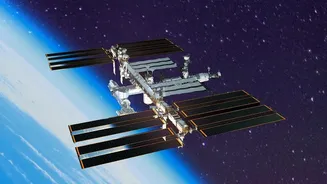
On November 5, 2026, astronauts Anil Menon and Joshua Kutryk performed a nearly seven-hour spacewalk to install the eighth and final new solar array, marking the end of a massive undertaking that began in 2021. This complex series of upgrades was essential,
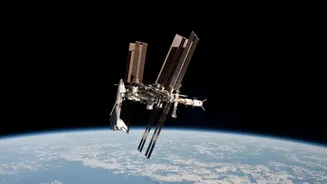
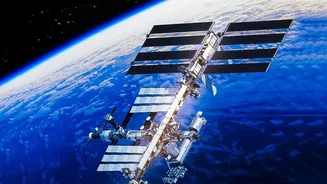
as the station's original solar wings, which have been operating for over two decades, were showing signs of age-related degradation. The project involved a total of 18 spacewalks by various astronauts to prepare the station's hardware and install the new arrays, a testament to the intricate planning and human effort required to maintain our outpost in space.
Introducing the IROSAs
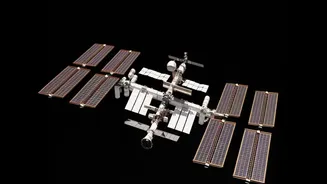
The new power sources are known as ISS Roll-Out Solar Arrays, or IROSAs. Unlike the station's original rigid panels, the IROSAs use an innovative roll-out design, much like a measuring tape unfurling. This allows them to be launched in a compact cylindrical form, saving significant mass and volume—critical considerations for any space-bound cargo. Developed by Redwire, these advanced arrays are smaller than their predecessors but far more efficient, using next-generation solar cell technology. The IROSAs are installed over the top of the existing arrays, augmenting the station's power grid rather than completely replacing it.
A Boost for Science and Operations
The completion of this project provides a significant power increase for the space station. Before the upgrades, the original arrays generated about 160 kilowatts of power. With all eight IROSAs now installed and operational, the total power capacity has been boosted to approximately 215 kilowatts, an increase of about 30 percent. This extra electricity is crucial for powering the station's life support systems, computers, and a growing number of complex scientific experiments. With more power available, scientists can run more demanding studies in fields like materials science and fluid dynamics, pushing the boundaries of research in microgravity.
Securing the Station's Final Chapter
This power augmentation is a critical investment in the final years of the International Space Station. The increased electrical capacity ensures the orbiting lab can continue to function at a high level and support a full slate of research and commercial activities until its planned retirement in 2030. The successful deployment of the IROSA technology also serves as a vital demonstration for future deep-space missions. The same rollout array design is already being used to power NASA's Lunar Gateway, a planned outpost that will orbit the Moon and support the Artemis program's longterm exploration goals.