



Unpacking the Groundbreaking Discovery
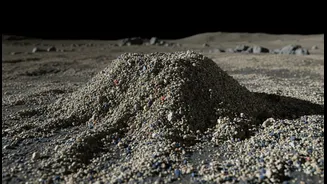
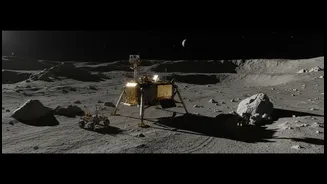
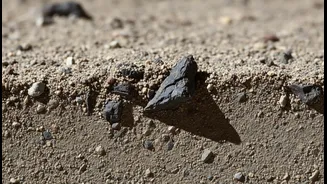
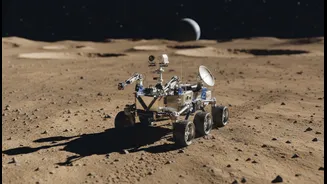
Scientists from the Physical Research Laboratory (PRL) in Ahmedabad have announced a significant finding from the data sent back by the Pragyan rover. The soil at the Shiv Shakti landing site, near the lunar south pole, isn't just surface dust. It appears
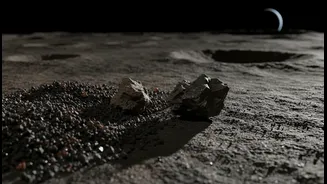
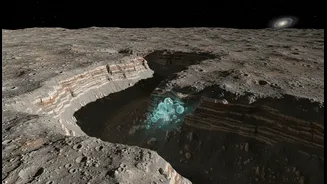
to be a mixture containing magnesium-rich rock fragments that likely originated from the Moon’s deeper crust. This is unusual because the surface is typically dominated by a different type of rock. Specifically, the soil has lower levels of aluminium and higher concentrations of iron and magnesium than is common for the lunar highlands. This composition suggests that powerful events in the Moon's past have churned its layers, bringing deep, ancient materials up to the surface where Chandrayaan-3 could analyse them.
A Surprising Link to Antarctica
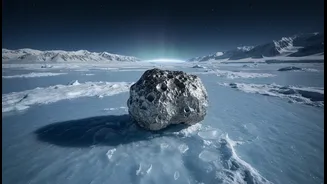
The discovery became even more intriguing when scientists compared the rover's findings with known lunar samples. They analysed the geochemical data against 66 lunar meteorites found on Earth. The result was a stunning match: the soil at Shiv Shakti Statio closely resembles a meteorite named ALHA 81005. This specific rock holds a special place in history, as it was the very first meteorite discovered in Antarctica's Allan Hills in 1981 to be definitively identified as coming from the Moon. This doesn't mean the meteorite came from the exact landing spot, but rather that both locations represent a similar, and relatively rare, type of magnesium-rich lunar crust. This connection provides a crucial link between on-site measurements and rock samples we already have, strengthening our ability to interpret lunar geology.
A Window Into the Moon's Fiery Past
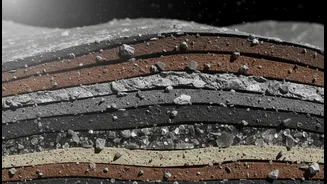
So why is finding deep crust material on the surface so important? It provides powerful evidence for the 'Lunar Magma Ocean' hypothesis. This theory suggests that shortly after the Moon formed, it was a molten ball of rock. As this massive magma ocean cooled over millions of years, lighter minerals like feldspar floated to the top to form the primary crust, while heavier, magnesium-rich minerals sank to form deeper layers. The material found by Chandrayaan-3 seems to be a mix of these different rock types, including both the lighter 'ferroan anorthosites' and the heavier 'Mg-suite' rocks. Finding this mixture on the surface acts as a geological time capsule, confirming that this layered structure exists and giving us a physical sample of the Moon's early evolution.
The Role of a Giant Impact
How did these deeper rocks get to the surface? The most likely culprit is a colossal impact. The Chandrayaan-3 landing site is located about 350 kilometres from the edge of the South Pole-Aitken (SPA) basin, one of the largest and oldest impact craters in the entire solar system. Scientists believe the cataclysmic event that formed this basin billions of years ago was powerful enough to excavate material from deep within the Moon's crust and mantle, flinging it across the surrounding landscape. Over eons, further smaller impacts would have mixed this deep material into the surface soil, or regolith. The Pragyan rover, rolling across this ancient debris field, was in the perfect place to sample this unique geological blend, a direct result of the Moon's violent history.
ISRO's Mission Continues to Deliver
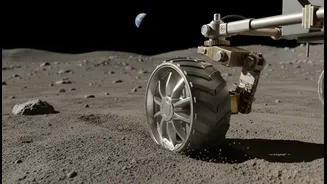
This finding was made possible by the Alpha Particle X-ray Spectrometer (APXS) instrument aboard the Pragyan rover, which precisely measured the elemental composition of the lunar soil. While the rover's surface mission lasted for one lunar day, the data it collected continues to yield profound scientific insights. ISRO has made the mission's data available to researchers worldwide, ensuring that the legacy of Chandrayaan-3 extends far beyond its historic landing. This pioneering work not only enhances our understanding of how the Moon formed but also serves as a 'ground truth' that helps calibrate instruments on lunar orbiters and future missions. Each new paper published from this data reinforces the immense scientific value of India's journey to the lunar south pole.