






A Lesson from the Last Decade
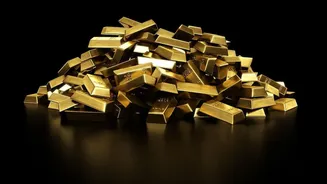
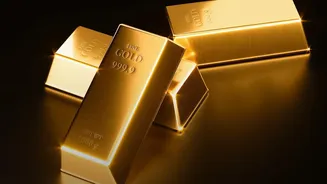
To understand the future, it helps to look at the past. Between 2016 and 2026, gold prices in India saw a significant upward trend. The average price for 24-karat gold rose from approximately ₹28,623 per 10 grams in 2016 to figures well over ₹1,50,000
by mid-2026. This substantial increase was driven by several factors, including the economic uncertainty during the COVID-19 pandemic, rising inflation, and consistent demand from both investors and central banks. An investment made in 2016 would have multiplied several times over, showcasing gold's ability to generate strong returns during periods of global turmoil and economic shifts. This historical performance provides a benchmark for what is possible, though it is not a guarantee of future results.
Key Drivers for Gold Prices Through 2036
Forecasting a decade into the future is complex, but analysts agree on several key factors that will likely influence gold's price trajectory. The first is global economic stability and monetary policy, particularly the interest rate decisions of central banks like the U.S. Federal Reserve. Lower interest rates tend to make gold, a non-yielding asset, more attractive. Second is inflation; as a traditional hedge against rising prices, sustained inflation could drive significant investment into gold. Geopolitical tensions are another major driver. Uncertainty, such as trade disputes or regional conflicts, often leads investors to seek safety in gold. Finally, physical demand, especially from major consumers like India and China, and continued purchasing by central banks will provide a fundamental floor for prices.
A Bullish Scenario: High Growth Potential
In a high-growth, or "bullish," scenario, a combination of these factors works in gold's favour. Imagine a decade marked by persistent global inflation, significant geopolitical instability, and a trend of de-dollarization where central banks increasingly shift reserves to gold. In this environment, demand for gold as a safe-haven asset would surge. Some optimistic long-term forecasts suggest that if gold follows a strong growth trajectory similar to past periods of high uncertainty, its price could see substantial appreciation. Based on long-term average annual returns of 7-9%, some models project international gold prices could potentially double from 2026 levels by the mid-2030s. For a ₹50,000 investment, this scenario could see its value grow to anywhere between ₹2,00,000 and ₹3,00,000, depending on the severity of economic pressures and the performance of the Indian rupee.
A Conservative Scenario: Modest Growth
A more conservative, or "bearish," scenario would see the global economy stabilize, with inflation brought under control and geopolitical tensions easing. If central banks maintain high interest rates for an extended period, interest-bearing assets like bonds might become more appealing than gold, dampening investor demand. In this environment, gold's price might stagnate or grow only modestly. Under such conditions, the growth of a ₹50,000 investment would be much slower, potentially appreciating in line with low single-digit annual returns. This could result in a 2036 value closer to ₹70,000 to ₹85,000. This highlights the risk that gold does not generate income and its returns are entirely dependent on price appreciation, which is not guaranteed.
The Middle Path: What Most Analysts Expect
Most financial analysts anticipate a future that lies somewhere between these two extremes. The consensus outlook is moderately positive, factoring in structural trends like ongoing central bank buying and sustained physical demand from Asia. While the acute crises that drove prices up in the early 2020s may subside, underlying economic challenges and a multi-polar global landscape are expected to keep gold relevant as a portfolio diversifier. Assuming a moderate annualized growth rate of 5-7%, which is historically reasonable, a ₹50,000 investment today could realistically be worth between ₹81,000 and ₹98,500 by 2036. This path accounts for periods of both volatility and stability, reflecting gold's role as a long-term store of value rather than a short-term speculative play.