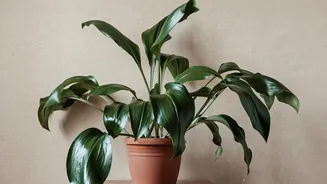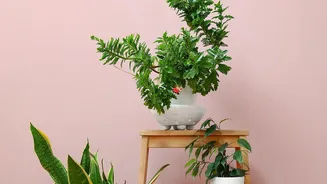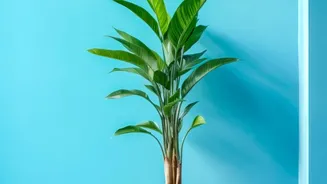






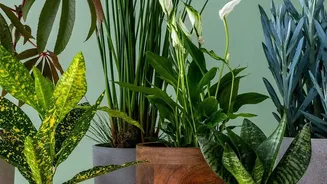
The idea that a few potted plants can scrub your home’s air clean is a beautiful thought. But while these green companions are wonderful for many reasons, their power as natural air purifiers is more complex than it seems.
The Myth's Origin: The NASA Clean Air Study
The belief that houseplants are
tiny air-purifying machines stems largely from a 1989 NASA study. Researchers, looking for ways to clean the air in sealed space stations, placed various plants in small, airtight chambers and injected pollutants like formaldehyde and benzene. They found that some plants did indeed reduce the concentration of these chemicals. This finding was scientifically sound, but there was a major catch: the test conditions have very little in common with the average living room, which is not a sealed box.
Reality Check: Why Your Home Isn't a Space Station
In a typical home, air is constantly exchanged through windows, doors, and ventilation systems. This process, called air exchange, dilutes and removes pollutants far more effectively and quickly than a few plants ever could. A 2019 review of decades of research concluded that to achieve the air-cleaning rates seen in lab chambers, you would need an impractically large number of plants—somewhere between 10 to 1,000 plants per square metre of floor space. In short, unless you plan on living in a dense jungle, your plants' effect on air quality is likely negligible.
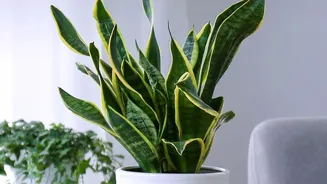
1. Snake Plant (Sansevieria trifasciata)
Often hailed as a top air purifier, the hardy Snake Plant was one of the stars of the NASA study. It's also known for performing a special type of photosynthesis at night, releasing a small amount of oxygen while you sleep. However, like other plants, its ability to significantly clean the air in a ventilated room is minimal. You would need hundreds of them to compete with an open window. So, while it’s a fantastic, low-maintenance plant, don't rely on it to purify your bedroom air.
2. & 3. Spider Plant and Peace Lily
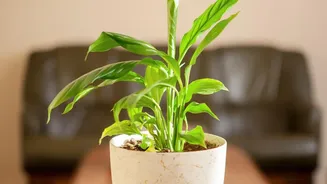
The Spider Plant (Chlorophytum comosum) and Peace Lily (Spathiphyllum) are two more famous names from NASA's list, celebrated for their ability to remove toxins like formaldehyde in lab settings. The Peace Lily, in particular, is noted for tackling ammonia. Both are easy to care for and visually appealing. However, they face the same limitations as the Snake Plant when taken out of the lab and placed in a dynamic home environment. Their air-cleaning contribution is simply too slow to make a measurable difference compared to normal ventilation.
4. & 5. Golden Pothos and Philodendron
With their cascading vines and heart shapes leaves, Golden Pothos (Epipremnum aureum) and Philodendrons are incredibly popular. They are excellent at removing formaldehyde in controlled tests and are famously easy to grow, thriving even with some neglect. But their real value is in their beauty and resilience, not their air purifying prowess. Like the others, their impact on a room's air is too small to be significant.
6., 7. & 8. Palms, Dracaenas, and Rubber Plants
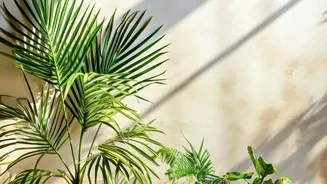
This group includes heavy hitters from the NASA study like the Areca Palm (Dypsis lutescens), various Dracaena species, and the Rubber Plant (Ficus elastica). These larger leafier plants might seem like they would have a greater impact, and while they do have more surface area for absorption, the principle remains the same. The sheer volume of air in a room and the constant air exchange dwarfs their slow and steady cleaning process. Their primary role in your home is aesthetic.
9. & 10. English Ivy and Boston Fern
English Ivy (Hedera helix) and the Boston Fern (Nephrolepis exaltata) are also frequently mentioned as air purifying champions. In lab tests English Ivy showed promise in reducing airborne mould while ferns are good at filtering certain pollutants. Yet again the scale is the issue. The effect in a home is minimal at best. If you are concerned about pollutants your best bet is to open windows for ventilation or use a mechanical air purifier.
The Real, Proven Benefits of Houseplants
So should you get rid of your leafy friends? Absolutely not. While they may not be effective air purifiers the proven benefits of houseplants are immense. Studies have shown that interacting with indoor plants can reduce stress lower blood pressure and improve feelings of well being. Having plants in a workspace has been linked to increased productivity and creativity. They add humidity to dry indoor air and most importantly bring a sense of nature and life into our homes which has a powerful positive psychological effect.