



The Landmark Trial Run
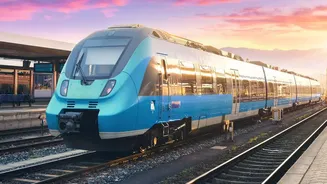
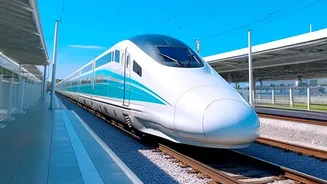
In a significant move to enhance connectivity, the South Western Railway is conducting extensive trial runs for a Vande Bharat Express service between Bengaluru and the coastal city of Mangaluru. Scheduled between August 11 and August 20, 2026, these
tests are focused on one of the most technically demanding stretches of the Indian rail network. A specially manufactured 20-coach Vande Bharat rake, dispatched from the Integral Coach Factory in Chennai, is being used for these trials. Supervised by the Research Designs and Standards Organisation (RDSO), the tests aim to assess every aspect of the train's performance on this unique and challenging terrain before it can be cleared for passenger service.
A Feat of Modern Engineering
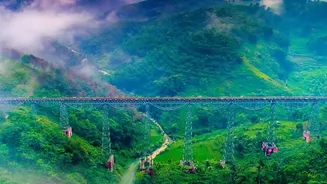
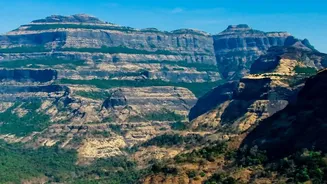
The heart of the challenge lies in the 55-kilometre Sakleshpur–Subrahmanya Road ghat section. This stretch, winding through the scenic Western Ghats, is an engineering maze featuring 57 tunnels, 226 bridges, and over 100 sharp curves. What makes it particularly difficult is its steep gradient of 1 in 50, a significant incline that tests the limits of any locomotive. For years, conventional trains have required the assistance of additional 'banker' locomotives to push them up the steep slopes. The goal of the current trials is to determine if the Vande Bharat, India's premier semi-high-speed train, can navigate this demanding section on its own power, setting a new benchmark for railway operations in mountainous regions.
Technology on Test
To safely navigate the steep descents of the ghat section, the Vande Bharat rake being tested is equipped with a crucial piece of technology: an Automatic Emergency Braking (AEB) system. This advanced safety feature continuously monitors the train's speed and is designed to automatically apply the brakes if it exceeds the permissible limit of 30 kmph on this stretch. This innovation is critical, as it allows the train to manage its speed without the external support required by older trains. The success of the AEB system is paramount for ensuring passenger safety and is a key focus of the ongoing assessment by the RDSO teams.
The Monsoon Factor
Adding another layer of complexity to these trials is the timing. The Western Ghats are famous for heavy monsoon rainfall, which makes the route highly susceptible to landslides. In fact, services on the line were disrupted as recently as late July due to a landslide, underscoring the operational challenges faced during this season. Conducting the trials in August means that railway authorities are not only testing the train's capabilities but also the resilience of the track and infrastructure under severe weather conditions. This makes the safety clearance from the Commissioner of Railway Safety even more critical before the commercial launch can be planned.
Connecting Coast to Capital
The successful launch of the Bengaluru-Mangaluru Vande Bharat service promises to be a game-changer for commuters in Karnataka. It will drastically improve connectivity between the state's IT capital and the vital coastal hub, offering a faster, more comfortable, and convenient travel option. The route, which was fully electrified in December 2025, has been eagerly awaiting a premium service like the Vande Bharat. This direct link is expected to boost not only daily travel but also business and tourism, making the scenic journey through the Ghats accessible to more people in a fraction of the time it currently takes by road.