
The Roaring Twenties: Bobs and Waves
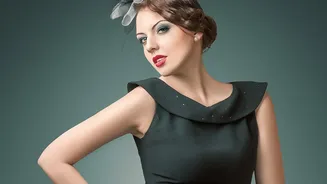
The 1920s marked a revolution in women's hair, with the bob becoming a symbol of liberation and modern femininity. A deep side part was essential to many of the era's iconic looks. One of the most recognisable styles is finger waves, where hair is sculpted
into a series of 'S'-shaped curves that hug the head, creating a sleek, polished finish. Another popular choice was the side-parted bob, which could be worn straight and sleek or with a soft wave. This style was often paired with a cloche hat, with the side-parted fringe peeking out to frame the eyes beautifully. Modern interpretations often soften the waves for a more wearable, less rigid look.
The Forties Femme Fatale: Rolls and Glamour
Wartime practicality met Hollywood glamour in the 1940s, and the side part was central to achieving the decade's structured yet feminine silhouettes. Victory rolls are perhaps the most iconic style of this era, featuring large rolls of hair pinned on top or to the side of the head. These were often paired with a deep side part, sweeping the remaining hair into soft, brushed-out curls. Veronica Lake and Rita Hayworth popularised long, cascading waves with a dramatic side part, a look that exuded mystery and sophistication. For a more understated take, a simple side part with hair curled under at the ends was a common and stylish choice that kept hair neatly off the face.
The Fabulous Fifties: Polished Curls
After the austerity of the war years, the 1950s embraced a return to overt glamour. The side part remained a staple, but the styles became softer and more voluminous. Old Hollywood waves, characterised by deep, uniform 'S'-shaped curls, were often styled with a dramatic side part for red-carpet-ready elegance. This look was about gloss, symmetry, and flawless structure. The poodle cut, a shorter style featuring a pile of tight curls on top, also frequently incorporated a side part to give the look shape and direction. For a more casual, youthful aesthetic inspired by icons like James Dean, the side part was given more texture and effortless volume.
The Swinging Sixties: Volume and Flips
The 1960s saw a shift towards more playful and voluminous hairstyles. While the decade is often remembered for the beehive, the side part held its own, especially with chic, shorter cuts. A deep side part was often used to create a dramatic, sweeping fringe that fell across the forehead, a look that was both soft and modern. Bobs were styled with flicked-out ends and plenty of volume at the crown, all balanced by a neat side part. This era played with height and shape, and the side part provided the perfect foundation for creating asymmetrical, eye-catching looks that defined the youthful spirit of the decade.
Making the Retro Part Modern
Bringing a vintage side-parted style into the present day is all about relaxing the finish. Instead of a stiff, heavily sprayed look, today's retro-inspired styles favour touchable texture and movement. To avoid a dated feel, ensure the parting itself is clean and intentional, then combine it with modern styling. For instance, you can pair 1940s-style waves with a more relaxed, brushed-out finish. Or, take the structure of a 1920s finger wave but apply it only to the front section of your hair, leaving the rest soft and natural. Using a matte pomade or a texturising spray instead of a high-gloss gel can also instantly update a classic look. The key is to borrow the beautiful shapes of the past while keeping the feel current.