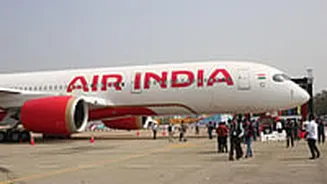




A Violent Jolt in the Sky
For the 137 passengers and eight crew members aboard Air India flight AI2379 from Phuket to Delhi, the journey took a frightening turn on August 4, 2026. While cruising, the Airbus A320neo aircraft was hit by a period of severe turbulence that lasted
for several minutes. Passengers described a sudden and violent jolt that caused the plane to drop approximately 300 feet in altitude. The abrupt plunge sent unbelted passengers, luggage, and food carts flying through the cabin. Eyewitness accounts paint a picture of chaos, with people hitting the overhead cabin panels and landing on the floor. One passenger recounted how his father, who was not wearing a seatbelt at the moment, was thrown into the air, hitting the roof before falling. In the aftermath, images showed cracked interior panels and scattered belongings, testament to the intensity of the event.
Immediate Aftermath and Response
The flight crew managed to regain control and the aircraft continued its journey, landing safely at Delhi's Indira Gandhi International Airport. Emergency services were on standby, having been alerted that medical assistance would be required. A total of 17 people—13 passengers and four crew members—sustained injuries ranging from minor bruises and cuts to more serious spinal and neck injuries. Medical teams provided immediate aid at the airport before transferring those needing further care to nearby hospitals. In a display of professionalism, several injured crew members continued to assist passengers for the remainder of the flight despite their own injuries. Air India confirmed that all affected passengers were later discharged from the hospital, though some crew members remained under medical observation for their injuries.
Understanding Severe Turbulence
Turbulence is an irregular motion of air that can range from light bumpiness to extreme, violent jolts capable of causing structural damage to an aircraft. While unnerving, it is a common aspect of flying. The incident on flight AI2379 is being investigated, with initial speculation pointing towards clear-air turbulence (CAT), a particularly hazardous type because it occurs in cloudless skies and is not visible to pilots or standard weather radar. CAT is often associated with the jet stream or can be caused by atmospheric waves generated by storms or mountain ranges hundreds of miles away. The region over the Bay of Bengal, which this flight path may have crossed, is notoriously turbulent, especially during monsoon season due to the formation of large cumulonimbus clouds associated with thunderstorms. These atmospheric conditions create powerful updrafts and downdrafts that can destabilise a flight path without warning.
Aviation Authorities Launch Probe
India's Directorate General of Civil Aviation (DGCA) has launched a thorough investigation into the incident. Civil Aviation Minister Ram Mohan Naidu confirmed that the aircraft was immediately secured upon landing. The crucial flight data recorder (FDR) and cockpit voice recorder (CVR), often called the 'black boxes', were taken into custody. These devices will provide investigators with precise data on the aircraft's performance, altitude changes, and the conversations in the cockpit, helping them piece together the exact sequence of events. The probe will examine all possible causes, including atmospheric conditions and any potential technical faults. Air India has stated it is fully cooperating with the investigation.
The Unwavering Case for Seatbelts
This incident serves as a stark and powerful reminder of why aviation experts and crew members constantly advise passengers to keep their seatbelts fastened whenever they are seated, even when the seatbelt sign is off. The majority of injuries in turbulence-related events occur to individuals who are not secured. Sudden, unexpected turbulence like CAT gives no warning, making it impossible for passengers or crew to prepare. As one passenger from the flight urged, a seatbelt is the single most effective defense against being thrown about the cabin during an unexpected jolt. The simple act of keeping the belt loosely fastened can prevent serious injury, turning a potentially life-threatening event into a frightening but survivable one.