






The Cardinal Rule: Proportion is Everything
Before you bring home that massive rug or king-sized blanket, take a moment to consider scale. Scale refers to an object's size in relation to the room, while proportion is about how different objects relate to each other. An oversized textile can make
a room feel grand and unified, but only if it's balanced with the furniture and the overall dimensions of the space. For instance, a huge sofa might work in a small room if the coffee table is also substantial, but a tiny chair will look lost next to a giant ottoman. The goal is to make a deliberate statement, not to create an accidental sense of clutter.
Ground Your Space with an Oversized Rug
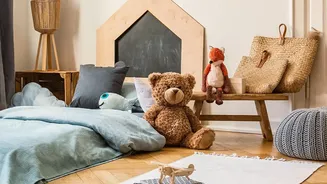
One of the most common decorating mistakes is choosing a rug that's too small. An undersized rug can make a room feel disjointed. An oversized rug, however, can unify a space and even make it appear larger. In the living room, a good rule is that the rug should be large enough for at least the front legs of all major furniture pieces to rest on it. In a large room, having all furniture legs on the rug creates a cohesive, defined zone. A general guideline is to leave about 18 to 24 inches of bare floor between the edge of the rug and the walls to create a visual frame. For bedrooms, placing a large rug two-thirds of the way under the bed, extending beyond the sides and foot, adds a luxurious, hotel-suite feel.
Master the Art of the Oversized Throw
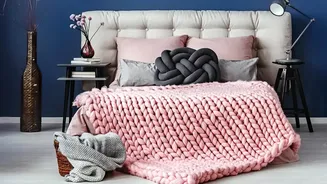
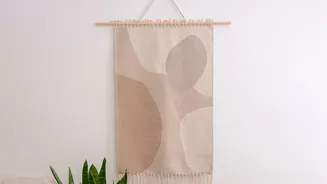
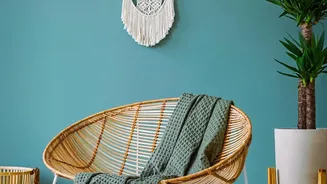
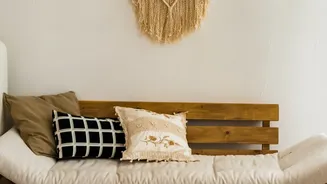
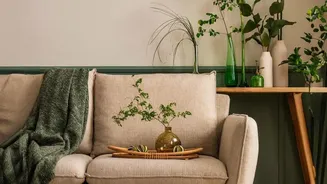
An oversized throw blanket is a versatile tool for adding texture, colour, and warmth. Unlike a full bedspread, a large throw is lighter and can be styled in multiple ways. On a large sectional sofa, a generously sized throw invites shared comfort and adds visual dimension. In the bedroom, draping one across the foot of a queen or king bed creates a sophisticated, layered look. The key is in the drape. Avoid a perfectly folded, rigid look. Instead, let it cascade naturally over the arm of a sofa or the corner of a bed. This casual styling adds a sense of effortless comfort. If you have a particularly beautiful throw, you can even hang it on a large, empty wall as a piece of statement art.
Create Drama with Floor-to-Ceiling Curtains
Curtains have a powerful effect on a room's perceived height. Short curtains that stop at the windowsill can visually shrink a space. To create a sense of grandeur and height, opt for curtains that skim the floor. Install the curtain rod as close to the ceiling as possible, ideally 20 to 30 cm above the window frame. This simple trick draws the eye upward, making the walls appear taller. Also, extend the rod wider than the window frame itself. This allows the curtain panels to rest on the wall when open, maximising the natural light and making the window itself seem larger. Choose fabrics that complement the room's design; if you have a bold patterned rug, consider a solid, neutral curtain to maintain balance.
Balance Bold Textiles with Negative Space
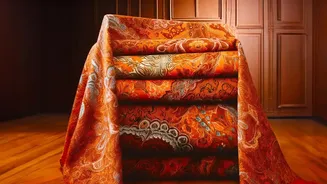
When you introduce a large-scale textile, you are making a strong statement. To keep it from becoming overwhelming, you need to balance it with negative space—the empty areas in the room. If you have a large, boldly patterned rug, let it be the hero piece. Keep surrounding furniture relatively neutral and avoid cluttering the walls with too many small pictures. The empty space around a large element gives it room to breathe and allows the eye to appreciate it. This principle of balance is crucial; a room filled with too many large or busy items will feel chaotic, not comfortable.