


What is the PUFFINS Mission?
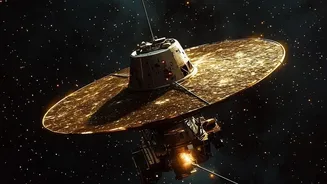
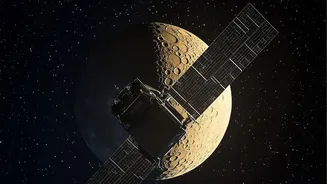
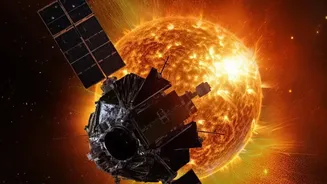
PUFFINS is a clever acronym that spells out its scientific purpose: Polarimetry in the Ultraviolet to Find Features in INterStellar dust. It's a NASA-funded Astrophysics Pioneers mission designed as a SmallSat, or a small satellite, which makes it a cost-effective
way to conduct targeted science. At its heart is a 10-inch telescope, about the size of a dinner plate, that will orbit the Earth. The mission, which has a budget of around $20 million, is led by Principal Investigator Dr. Ramya Anche of the University of Arizona. Though the headline suggests a 2029 launch, more recent reports indicate the launch is targeted for 2030. This mission will fill a critical knowledge gap, as the last time this type of science was attempted from space was nearly three decades ago.
The Cosmic Dust Detectives
The 'dust' PUFFINS will study isn't the kind that collects on your shelves. It's interstellar dust—tiny grains of carbon and silicates adrift in the medium between stars. These particles are incredibly small, some roughly the size of a common virus, making them practically invisible to most conventional telescopes. Yet, despite making up only about 1% of the interstellar medium's mass, this dust plays a huge role in the cosmos. It acts as a shield, protecting dense clouds where new stars are born from destructive radiation. It also serves as a sort of cosmic meeting point where atoms can stick together to form molecules, including the most abundant molecule in the universe, H2.
Unlocking Secrets with Ultraviolet Light
So how do you study something so small and elusive? PUFFINS will use a technique called ultraviolet spectropolarimetry. Instead of just taking a picture, it will measure a property of starlight called polarization, which is the direction in which light waves vibrate. Certain types of interstellar dust grains align with the galaxy's magnetic field like tiny compass needles. As light from a distant star passes through these aligned grains, its polarization changes. By studying these changes across the ultraviolet spectrum, scientists can deduce the dust's size, composition, and structure. PUFFINS will observe about 70 stars, building a map that will reveal new details about how dust behaves in different parts of our galaxy.
Why This Dust Matters for Us
Understanding these tiny grains is fundamental to answering some of astronomy's biggest questions. These particles are the raw materials for planets. They collide and stick together, eventually growing into the pebbles, boulders, and finally the planets that form in disks around young stars. By studying the very smallest grains, PUFFINS will give scientists a clearer picture of the initial conditions for planet formation. As Dr. Anche explained, 'Since dust is such a critical component of how planetary systems and eventually life form, understanding it feels very essential'. The mission's data will help create more complete models of how our own solar system may have formed and how habitable worlds might arise elsewhere in the universe.
A Stepping Stone to Future Observatories
While a small mission, PUFFINS has a big role to play in the future of astronomy. It is considered a scientific and technological pathfinder for NASA's next great flagship space telescope, the Habitable Worlds Observatory (HWO), which is planned for the 2040s. The techniques and technologies refined by PUFFINS in ultraviolet polarimetry will inform the design and capabilities of this future, more powerful observatory. The mission is a collaborative effort involving the University of Arizona, McDonald Observatory, and researchers from institutions worldwide, including in India. This global team of about 40 scientists, engineers, and students is now in the design phase, preparing for a launch that will shed new light on the dusty origins of our universe.