




A Midnight Tryst with Destiny
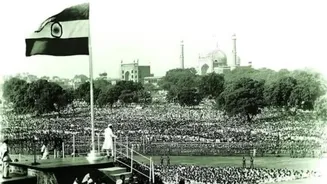
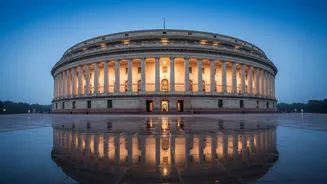
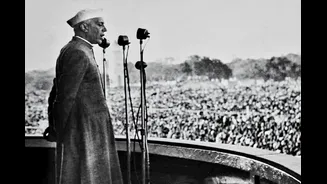
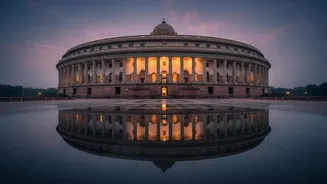
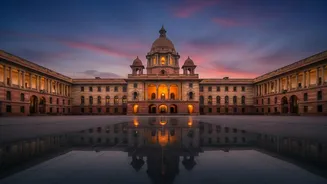
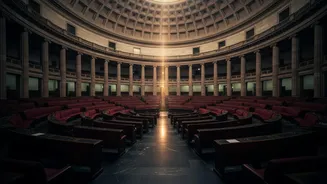
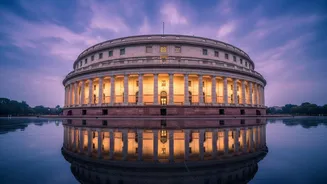
At the stroke of midnight between August 14 and 15, 1947, India officially became a sovereign nation. In the Constituent Assembly hall in New Delhi, Jawaharlal Nehru, the first Prime Minister, delivered his iconic "Tryst with Destiny" speech. He declared,
"At the stroke of the midnight hour, when the world sleeps, India will awake to life and freedom." These powerful words captured the hope of a nation stepping out from under nearly 200 years of British rule. The moment was the culmination of a long, arduous freedom struggle marked by non-violent resistance and civil disobedience. While celebrations erupted in Delhi and across the country, the joy was tragically marred by the simultaneous partition of British India into the two dominions of India and Pakistan, which unleashed unprecedented violence and one of the largest mass migrations in history.
The Story of the Tricolour
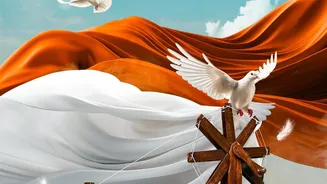
The Indian national flag, the Tiranga, was officially adopted by the Constituent Assembly on July 22, 1947, just weeks before independence. Its design evolved from earlier versions used during the freedom movement. An early influential design by Pingali Venkayya featured red and green bands for the Hindu and Muslim communities, to which Mahatma Gandhi suggested adding a white band for other communities and a spinning wheel (charkha) to symbolise self-reliance. In the final version, the charkha was replaced by the Ashoka Chakra, a 24-spoke wheel representing the eternal wheel of law (Dharma), progress, and justice. The colours took on a more secular meaning: saffron for courage and sacrifice, white for peace and truth, and green for fertility and prosperity. On August 15, 1947, the Tiranga was hoisted, replacing the Union Jack and marking the dawn of a new era.
Lesser-Known Facts of the Day
Contrary to popular belief, the tradition of the Prime Minister hoisting the flag at the Red Fort began on August 16, 1947, not the 15th. The date of August 15 was chosen by the last Viceroy, Lord Mountbatten. He considered it a lucky date as it marked the second anniversary of Japan's surrender in World War II. Mountbatten, who oversaw the transfer of power, stayed on as India's first Governor-General for a brief period. Perhaps most poignantly, Mahatma Gandhi, the architect of India's freedom movement, was not in Delhi for the official celebrations. Deeply pained by the violence of Partition, he was in Calcutta (now Kolkata), fasting and appealing for peace between Hindus and Muslims. Lord Mountbatten himself acknowledged Gandhi's absence and his vital peacemaking efforts, referring to him as a 'one-man boundary force'.
From 1947 to Today: An Evolving Identity
The meaning of Independence Day has evolved significantly since 1947. Initially, it was a raw, powerful symbol of liberation from colonial rule and a memorial for the sacrifices made. Today, while that historical significance remains central, the celebration has broadened. For new generations, August 15 is a day to celebrate India's journey as a sovereign nation—its democratic resilience, economic progress, and cultural diversity. The annual address by the Prime Minister from the Red Fort no longer just recounts the freedom struggle but sets the agenda for the future, highlighting achievements in technology, infrastructure, and global standing. The day serves as an annual renewal of the pledge to uphold the constitution and work towards the ideals of justice, equality, and opportunity that Nehru spoke of in 1947. It is a moment of collective pride and reflection on the challenges that remain in fulfilling that original 'tryst with destiny'.