




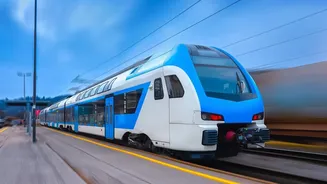
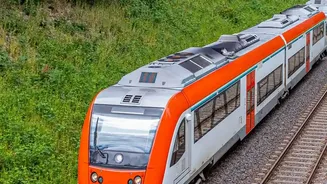

What are Amrit Bharat Trains?
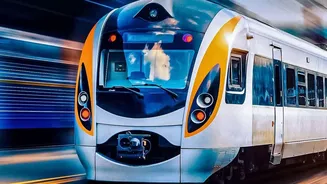
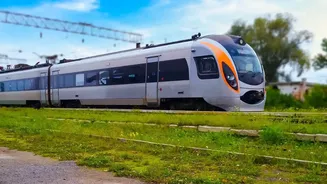
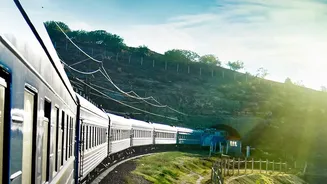
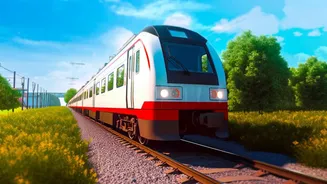
The Amrit Bharat Express is a new category of superfast passenger train designed for long-distance travel, specifically catering to budget-conscious passengers and migrant workers. Unlike premium services like the Vande Bharat, these trains feature non-air-conditioned
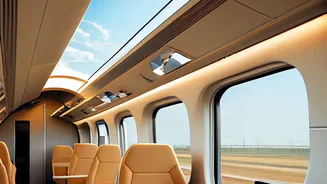
sleeper and general class coaches. The core idea is to provide a significant upgrade to mass mobility without a hefty price tag. They are built to address overcrowding on popular routes and provide a more comfortable and reliable option for journeys that are often over 800 kilometres. Key features include cushioned berths, improved sanitation with modern toilets, CCTV cameras for security, and better ventilation, all aimed at improving the travel experience for the common passenger.
The 'Push-Pull' Technology Advantage
What makes Amrit Bharat trains stand out technologically is their use of a 'push-pull' configuration. Each train has a locomotive at both the front and the back. This setup allows for much faster acceleration and deceleration, significantly reducing journey times. Passengers also benefit from a smoother, jerk-free ride, as the dual locomotives provide better control and stability. This technology also eliminates the need for time-consuming engine reversals at terminal stations, further improving operational efficiency across the railway network. This innovative approach is a key part of the train's ability to offer superfast service at an affordable cost.
The Seven New Approved Routes
The Railway Board has given the green light to seven new weekly services that will span the length and breadth of the country, connecting major hubs and smaller towns. These routes have been strategically chosen to enhance interstate connectivity. The newly sanctioned services include: the Dhanbad-Coimbatore Express, connecting Jharkhand and Tamil Nadu; the Charlapalli-Gorakhpur Express, linking Telangana and Uttar Pradesh; the Gorakhpur-Delhi Express; and the Gorakhpur-Bandra (Mumbai) Express. Additionally, three services originating from the Prayagraj region have been approved: the Prayagraj-Lokmanya Tilak Terminus (Mumbai) Express, the Prayagraj-Udhna (Surat) Express, and the Subedarganj-Lokmanya Tilak Terminus (Mumbai) Express.
Strengthening North-South and East-West Corridors
These new services are more than just individual routes; they represent a significant strengthening of India's major travel corridors. The Dhanbad-Coimbatore service, for instance, creates a vital link between the eastern coalfields and the industrial south, passing through states like Jharkhand, Uttar Pradesh, Madhya Pradesh, Maharashtra, Telangana, and finally Tamil Nadu. Similarly, the Charlapalli-Gorakhpur train will improve connectivity between the southern state of Telangana and the populous regions of Uttar Pradesh via central India. The services from Gorakhpur and Prayagraj to major economic centres like Delhi, Mumbai, and Surat will cater to the high-density migrant worker traffic, providing a more dignified and faster travel option.
Impact on Passengers and Regional Economies
For passengers, the introduction of these trains means access to faster and more comfortable long-distance travel at fares that are expected to be affordable. The improved amenities, such as foldable snack tables, mobile charging points, and better-designed toilets, address long-standing demands from passengers in non-AC coaches. For regional economies, this enhanced connectivity can be a boon. It facilitates easier movement of labour to industrial hubs and can also boost tourism to smaller towns and pilgrimage sites that will now have better train access. The addition of new stops in stations like Mancherial and Peddapalli in Telangana on two of the new routes is a clear example of how these services aim to bring development to smaller regions.