
The Celestial Dance of Elongation
So, what exactly is happening on August 15? The event is called Venus's greatest eastern elongation. In simple terms, elongation is the angular distance between the Sun and a planet as we see it from Earth. Because Venus orbits closer to the Sun than
we do, it never strays far from the Sun's glare in our sky. It’s always seen either trailing the sunset as an 'Evening Star' or leading the sunrise as a 'Morning Star'. Greatest eastern elongation is the specific moment when Venus appears at its farthest point to the east of the Sun. This wider separation means the planet will be higher above the horizon and linger in the deepening twilight for longer after the Sun has set, making it much easier to spot.
Why August 15 is a Prime Viewing Night
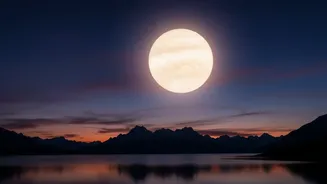
This event makes mid-August the absolute best time to see Venus this season. On this date, the planet will appear at its widest separation from the Sun—a full 46 degrees. It will be shining at a brilliant magnitude of -4.4, making it the brightest object in the night sky aside from the Moon itself. This incredible brightness means you'll be able to spot it easily even while the sky is still washed with the colours of sunset. You won't need any special equipment; its dazzling light is impossible to miss if you know where to look. While these elongations happen roughly every 19 months, this particular one in August 2026 is a highlight for sky-watchers.
Your Simple Guide to Spotting Venus
Finding Venus on or around August 15 is incredibly simple. All you need to do is look toward the western sky shortly after sunset. The best viewing window is typically between 30 and 90 minutes after the Sun has gone down. Look for an intensely bright, unwavering point of light. Unlike stars that twinkle, Venus shines with a steady, silvery glow. For the best experience, find a location with a clear view of the western horizon, away from tall buildings or hills. While city lights can obscure fainter stars, Venus is so bright it can often punch through urban light pollution. No telescope is required, but if you have a pair of binoculars, you might be able to see that Venus isn't perfectly round.
More Than Just a Bright Dot
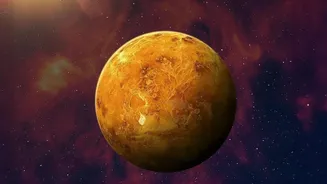
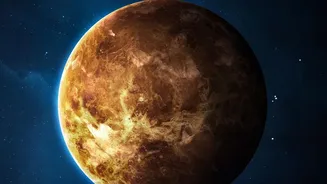
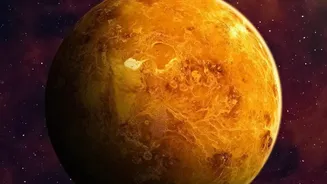
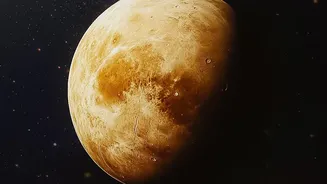
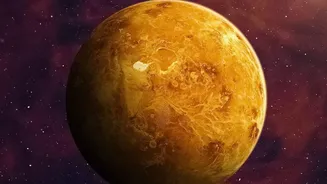
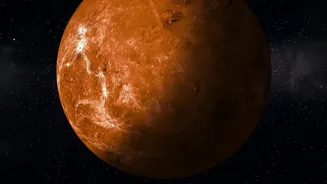
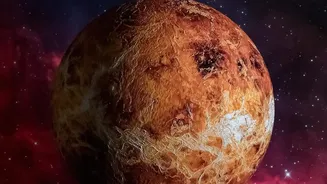
Through a telescope or even powerful binoculars, Venus reveals a fascinating secret: it has phases, just like our Moon. At greatest elongation, the planet appears about half-illuminated, like a tiny quarter moon. This happens because we are viewing the sunlit side of Venus from an angle. The brilliant light we see is the Sun's rays reflecting off Venus's thick, dense atmosphere, which is composed of carbon dioxide and clouds of sulfuric acid. While it is often called 'Earth's twin' due to its similar size, its environment is incredibly hostile. This celestial event isn't just a chance to see a bright light; it's an opportunity to visually connect with our planetary neighbour and appreciate the grand mechanics of our solar system in motion.