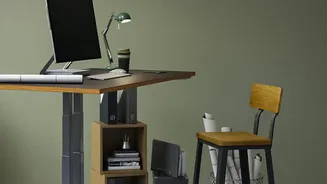








The Desk-Bound Dilemma
For many, the workday involves hours spent in a chair, which can be a primary source of back and neck strain. Slouching or hunching over a desk forces your spine out of its natural alignment, putting undue pressure on your vertebrae and spinal discs.
This poor posture often leads to a 'forward head' position, where your head juts out in front of your shoulders. This seemingly small shift dramatically increases the load on your neck muscles, which have to work overtime just to hold your head up. Over time, this contributes to muscle fatigue, stiffness, and chronic pain that affects not just your work hours, but your ability to move freely after you log off. A poorly set-up workstation, such as a monitor that is too low or a chair without proper lumbar support, only makes this worse.
The 'Text Neck' Phenomenon
The term 'text neck' was coined to describe the repetitive stress injury caused by looking down at phones, tablets, and other devices for extended periods. When you tilt your head forward by just 15 degrees, the force on your cervical spine can surge to around 12 kilograms. At a 60-degree angle, which is common when texting, that pressure increases to roughly 27 kilograms. This constant strain can lead to sharp or nagging pain in the neck and shoulders, chronic headaches, and even nerve pain that tingles down into your arms. This habit doesn't just cause temporary discomfort; it can alter the natural curve of your spine and create muscle imbalances that impact your posture around the clock.
The Problem with a Sedentary Life
Beyond the desk and phone, a generally inactive lifestyle is a major contributor to back and neck issues. A lack of regular physical activity leads to the weakening of core and back muscles that are essential for supporting the spine. When these muscles are deconditioned, your body relies more on ligaments and spinal structures for stability, increasing the risk of strain and injury. Prolonged sitting also impedes blood circulation, which is vital for nourishing spinal tissues and clearing out inflammatory substances. This combination of weak muscles and poor circulation can result in stiffness, reduced mobility, and a lower threshold for pain during simple activities like walking or standing for long periods.
Incorrect Sleeping Positions
How you spend your nights can directly impact how you feel during the day. Sleeping on your stomach is often cited as the most stressful position for the spine, as it forces your neck to twist to one side for hours and can flatten the natural curve of your lower back. While side sleeping is common, it can lead to hip and shoulder pain if your spine isn't kept in a neutral alignment. Even sleeping on your back, generally considered the best position, can strain your lower back without the right support. Waking up with stiffness and soreness is a clear sign that your sleeping posture is contributing to muscle tension and misalignment, setting you up for a day of discomfort.
Simple Adjustments for Better Movement
Correcting these mistakes doesn't require a complete life overhaul. Start with small, mindful changes. At your desk, ensure your monitor is at eye level and use a chair with lumbar support. When using your phone, try to hold it up closer to your face rather than looking down. Incorporate frequent movement breaks into your day—stand up, stretch, and walk around at least once an hour to combat the effects of a sedentary lifestyle. For sleep, try placing a pillow under your knees when on your back or between your knees when on your side to maintain better spinal alignment. Simple exercises like chin tucks and shoulder blade squeezes can also help strengthen neglected muscles and improve posture.