





A Fiery Ascent into Orbit
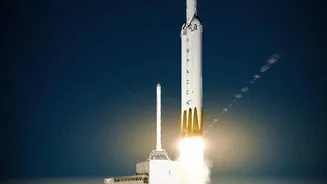
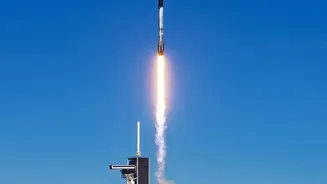
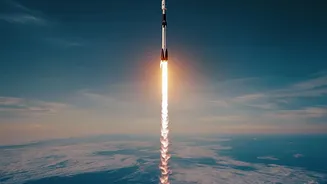
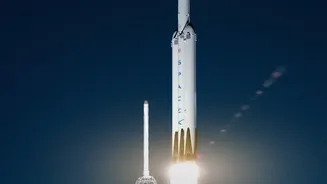
On September 28, 2026, the world's largest and most powerful rocket, standing over 120 meters tall, ignited its 33 Raptor engines and thundered into the sky from SpaceX's Starbase facility in Texas. The mission, designated Flight 14, was the first attempt
to place the Starship vehicle into a full orbit around the planet, a significant leap from previous suborbital test flights. Despite an engine shutting down on the Super Heavy booster during ascent and another on the Starship upper stage, mission controllers made the bold call to press on. Cheers erupted in mission control when, 25 minutes after launch, Starship successfully performed its orbital insertion burn, officially becoming an orbital spacecraft for the first time.
Why This Flight Was a Milestone
Reaching orbit is a critical achievement that moves Starship from the development phase toward becoming a functional, working vehicle. Unlike suborbital flights that arc into space and fall back, achieving orbital velocity of around 28,000 km/h means the spacecraft is moving fast enough to continuously circle the Earth. This capability is the gateway to everything else SpaceX plans for Starship. It is a vital step in proving the vehicle's design and paving the way for future long-duration missions. The flight also marked Starship's first deployment of a real payload: 26 next-generation Starlink V3 satellites were successfully released into orbit, demonstrating the rocket's potential as a heavy-lift launch vehicle for the company's internet constellation.
An Early but Controlled Return
While the original plan called for a nearly 10-hour mission with six orbits, SpaceX opted to bring Starship home early. Citing an abundance of caution due to the engine issue during ascent, the team initiated a deorbit burn about three hours into the flight. The spacecraft performed a belly-flop maneuver, using its large flaps to control its descent through the atmosphere before reorienting itself for a splashdown in the Pacific Ocean, north of Hawaii. While the vehicle erupted in a fireball upon hitting the water, the controlled atmospheric re-entry and targeted landing were key objectives that provided invaluable data for perfecting the system's reusability. The Super Heavy booster also performed a controlled splashdown in the Gulf of Mexico.
Paving the Way for Moon and Mars
This successful orbital flight is more than just a technical achievement; it is a cornerstone of humanity's future in space. NASA is relying heavily on a modified version of Starship to serve as the lunar lander for its Artemis program, which aims to return astronauts to the Moon's surface as early as 2028. This test provides a much-needed boost of confidence for that partnership. Beyond the Moon, Starship is the vehicle at the heart of CEO Elon Musk's long-term vision of making humanity a multi-planetary species by establishing a self-sustaining city on Mars. Each successful test flight, even those with anomalies, brings that ambitious goal one step closer to reality by proving the fundamental technologies required for such journeys.
What Comes Next for Starship
While reaching orbit was a huge victory, the work is far from over. Future flights will need to demonstrate even greater reliability and flawless engine performance. The next major hurdles include perfecting the landing and recovery of both the Super Heavy booster and the Starship upper stage. SpaceX's ultimate goal is to catch both components with the giant 'chopstick' arms on the launch tower, allowing for rapid reuse. The company will also need to master in-orbit refueling, a complex maneuver where one Starship tanker transfers propellant to another, which is essential for journeys to the Moon and Mars. With this orbital milestone achieved, the pace of testing is expected to accelerate as SpaceX works to make Starship the fully reusable, transformative launch system it was designed to be.