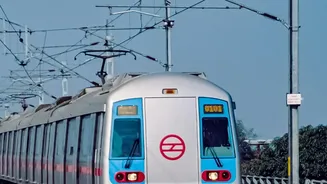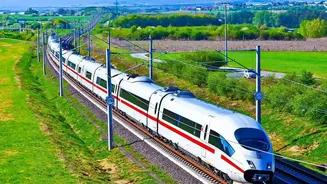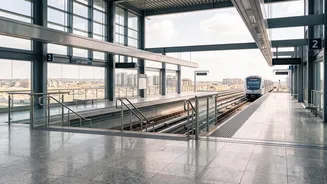






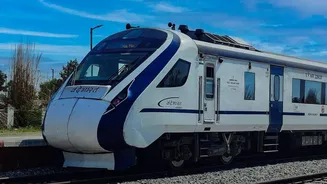
A major infrastructure upgrade is poised to redraw the real estate map of the National Capital Region. The Delhi-Panipat-Karnal Namo Bharat corridor promises to slash travel times, but its biggest impact might be on property demand.
The High-Speed Game-Changer
The Delhi-Panipat-Karnal
Namo Bharat corridor is a 136.3 km semi-high-speed rail line designed to drastically cut travel time between the national capital and key industrial and residential hubs in Haryana. Part of the broader Regional Rapid Transit System (RRTS), this project aims to operate trains at speeds of up to 160 km/h, reducing the Delhi to Panipat journey to about one hour and Delhi to Karnal to 90 minutes. The project, which has received key approvals and is targeted for completion by 2030, involves the construction of 22 stations and will run parallel to National Highway 44. For residents and investors, this isn't just a new train line; it’s a fundamental shift in regional connectivity.
Connecting the Dots: Key Stations
The corridor will feature 22 proposed stations, creating a chain of new growth centres. In Delhi, key stations like Sarai Kale Khan and Kashmere Gate will act as massive interchange hubs, connecting the Namo Bharat line with the Delhi Metro, ISBTs, and other RRTS corridors. As the line moves into Haryana, it will serve critical locations including Kundli, Rajiv Gandhi Education City, Murthal, Gannaur, Samalkha, and multiple points within Panipat and Karnal. These stations are strategically located to serve existing population centres and unlock development in emerging areas. The inclusion of the corridor in Haryana's Transit-Oriented Development (TOD) policy signals a clear intent to encourage concentrated residential and commercial growth around these new transit nodes.
How Transit Fuels Real Estate Growth
The connection between mass transit and property value is a well-established global phenomenon. Fast, reliable connectivity makes distant suburbs more attractive for daily commuters, turning them into viable housing alternatives. This increased demand naturally drives up property prices and rental yields. Real estate experts predict a similar trend for the Delhi-Panipat-Karnal belt. By making it feasible for professionals to live in cities like Sonipat or Panipat and work in Delhi, the Namo Bharat corridor is expected to attract a new wave of homebuyers seeking more affordable options than those available in the core NCR. This migration fuels demand not just for housing, but also for supporting social infrastructure like schools, hospitals, and retail centres.
Investment Hotspots on the Horizon
Sonipat and Panipat are poised to be the primary beneficiaries of this infrastructure boom. Areas in and around Sonipat, such as Kundli and Murthal, are already on the radar of investors. Kundli, in particular, is noted for its connectivity via expressways and will host a Namo Bharat station, significantly boosting its appeal. Property analysts note that while Sonipat's real estate market is varied, with prices differing significantly by sector, the overall trend is positive. The corridor is expected to accelerate this growth, making smaller, more affordable plots and apartments particularly attractive to salaried professionals looking to escape Delhi's high rents. Similarly, Panipat, a major industrial city, will become a more practical residential option with its travel time to Delhi halved.
A Word of Caution for Buyers
While the potential is enormous, prospective investors and homebuyers should proceed with a clear strategy. The project's completion is still years away, targeted for 2030, and timelines for large infrastructure projects can shift. Early investors may see higher returns but also face greater risks. Property appreciation is not guaranteed and will depend on the timely execution of the project and the parallel development of local infrastructure. It is crucial to conduct thorough due diligence, focusing on the legal status of plots, the credibility of developers, and the specific location's long-term development plan. Relying solely on the 'Namo Bharat effect' without examining local factors could be a risky proposition.