





The Numbers Are In
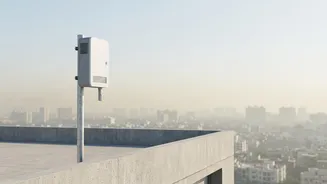
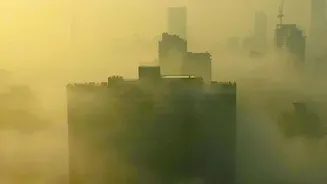
After a period of relatively clean air following the monsoon, Delhi's Air Quality Index (AQI) is steadily climbing. The first week of October 2026 has been the most polluted in three years, with the average AQI settling at 171. While still in the 'moderate'
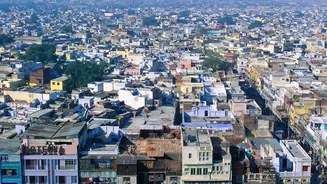
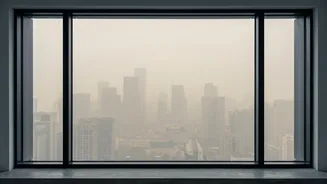
category, several monitoring stations across the region, especially in areas like Dwarka, Mundka, and RK Puram, are already recording 'poor' air quality. On October 4, the city-wide AQI touched 196, the highest in over 80 days, with PM10 being the dominant pollutant. Forecasters expect the air quality to remain in the 'moderate' to 'poor' range in the coming days, as meteorological conditions become increasingly unfavourable for dispersing pollutants.
Why the Air Gets Trapped
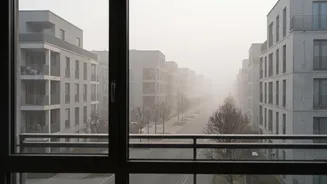
The key culprit mentioned in the headline is 'weakening atmospheric mixing'. But what does that mean? Think of the atmosphere above the city as a large room. During summer and the monsoon, strong winds act like fans and a high ceiling (known as a high mixing height) allows pollutants to rise and scatter. As winter approaches, this changes dramatically. The winds calm down, and the 'ceiling' lowers significantly, sometimes to just a few hundred metres. This phenomenon, often called a temperature inversion, occurs when a layer of warmer air traps colder, denser, pollutant-filled air near the ground. Everything emitted from vehicles, industry, and other sources gets trapped in this shallow layer, unable to escape, leading to a rapid build-up of toxic air. This process is now beginning, setting the stage for the severe pollution episodes Delhi is known for.
Familiar Pollution Cocktail
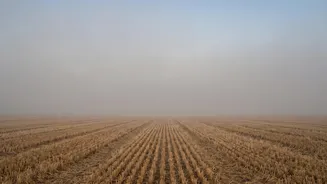
While meteorological conditions trap pollutants, the sources of the pollution remain a consistent problem. Key contributors include emissions from the millions of vehicles in the NCR, dust from construction sites and roads, and industrial pollution. Adding to this local pollution is the seasonal issue of stubble burning in neighbouring states like Punjab and Haryana. As farmers clear their fields for the next crop, large-scale fires release massive plumes of smoke that travel towards Delhi. While data between September 15 and October 6 shows that farm fires in Punjab are at a seven-year low for the period, incidents are still being recorded. Authorities are taking preemptive measures, with the Commission for Air Quality Management (CAQM) deploying flying squads to 34 districts in Punjab and Haryana to monitor and control stubble burning through the harvest season.
What Happens Next?
To combat the inevitable rise in pollution, authorities rely on the Graded Response Action Plan (GRAP), an emergency framework that enforces stricter measures as the AQI worsens. The CAQM has recently tightened the GRAP rules for 2026. For instance, restrictions on certain polluting inter-state buses and the use of diesel generator sets will now begin at Stage I ('Poor' AQI: 201-300), rather than Stage II. As the air quality deteriorates further into 'Severe' (Stage III), restrictions on BS-III petrol and BS-IV diesel cars will be enforced in Delhi and, for the first time, Sonipat, alongside other NCR cities like Gurugram and Noida. These measures are now triggered based on forecasts, allowing authorities to act preemptively before the air becomes toxic. This proactive strategy, combined with Delhi's own Winter Action Plan, aims to blunt the worst impacts of the pollution season.