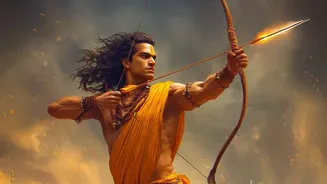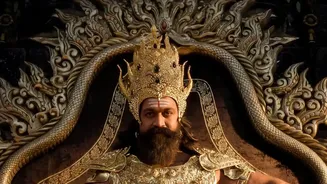




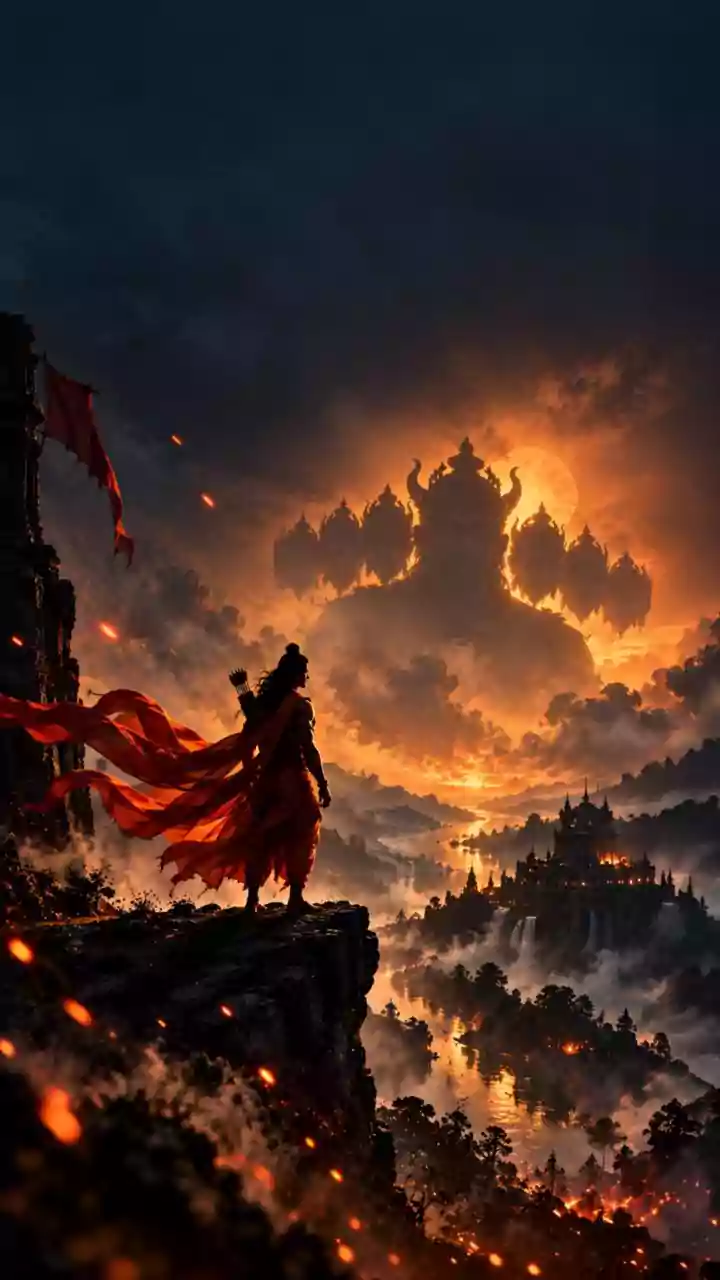

When we think of the Ramayana, figures like Ram, Sita, Hanuman, and Ravan come to mind. But the epic is a vast universe of characters whose stories, though often overlooked, are just as powerful. So why do modern retellings keep returning to them?
The Power of a New Perspective
Every
telling of a story is a choice. The narrator decides who stands in the spotlight and who remains in the shadows. The Ramayana has been retold for centuries across different regions and languages, with each version reflecting the values of its time. Modern writers often shift the focus from the main protagonists to explore themes that resonate today, such as feminism, duty, and social justice. By giving a voice to a minor character, a storyteller can re-examine the epic's moral complexities and ask new questions of an ancient text, creating space for fresh interpretations of heroism, sacrifice, and righteousness.
Urmila: The Quiet Sacrifice
Perhaps no character exemplifies quiet strength more than Urmila, Lakshmana's wife and Sita's sister. While Lakshmana chose to accompany Ram into exile, Urmila was left behind in Ayodhya for fourteen years. In most traditional versions, her story is a brief footnote. However, modern retellings, particularly those with a feminist lens, see her as a forgotten heroine. Her story becomes a powerful exploration of a woman’s silent endurance and a different, less visible kind of sacrifice. Some versions even tell of her 'Urmila Nidra', a magical sleep she undertook for all fourteen years, which allowed Lakshmana to stay awake and guard Ram and Sita without rest. By focusing on her, writers highlight that courage isn't always found on the battlefield but in the quiet patience of waiting.
Mandodari: The Voice of Reason in Lanka
As Ravan's chief queen, Mandodari offers a fascinating perspective from within the so-called 'enemy' camp. Described as beautiful, pious, and righteous, she stands in stark contrast to her husband's arrogance. In many tellings, she repeatedly advises Ravan to return Sita and avoid war, acting as a voice of dharma and reason. Her pleas, however, go unheeded. Retellings that centre Mandodari challenge the simple binary of good versus evil. They present a nuanced portrait of a woman bound by love and duty to a flawed man, whose wisdom is ignored. Her story forces us to see the tragedy of Lanka not just as the defeat of a demon king, but as the failure of a court to listen to its wisest counsel.
Shanta: The Sister Left Behind
Many are unaware that Ram even had a sister. Shanta, the daughter of Dasharatha and Kausalya, is a figure found in many regional versions and later texts, though not prominently in Valmiki's original. Her story is often one of sacrifice; she was given in adoption to Romapada, the childless king of Anga. Her marriage to the sage Rishyasringa was crucial, as he was the one who performed the yajna that led to the birth of Ram and his brothers. By exploring Shanta’s life, storytellers can delve into uncomfortable questions about a daughter's place in a patriarchal society and the hidden histories that lie just beneath the surface of the main narrative. Her story reminds us that even before Ram’s journey began, sacrifice defined the royal family of Ayodhya.
Shurpanakha, Ahalya, and Others
Beyond these figures, retellings have given new life to many others. Shurpanakha, often dismissed as a lustful demoness, is reexamined as a woman acting with agency who suffers brutal punishment. Ahalya, cursed for a supposed infidelity she was tricked into, becomes a symbol of patriarchal injustice and female resilience. Even characters like Bharata’s wife Mandavi, Shatrughna, and the noble vulture Jatayu offer different windows into the epic's vast moral landscape. Each choice reflects a desire to find contemporary meaning in the epic, proving that the Ramayana is not a static story but a living tradition that continues to evolve with every retelling.