







What Is This ‘Pure’ Experience?
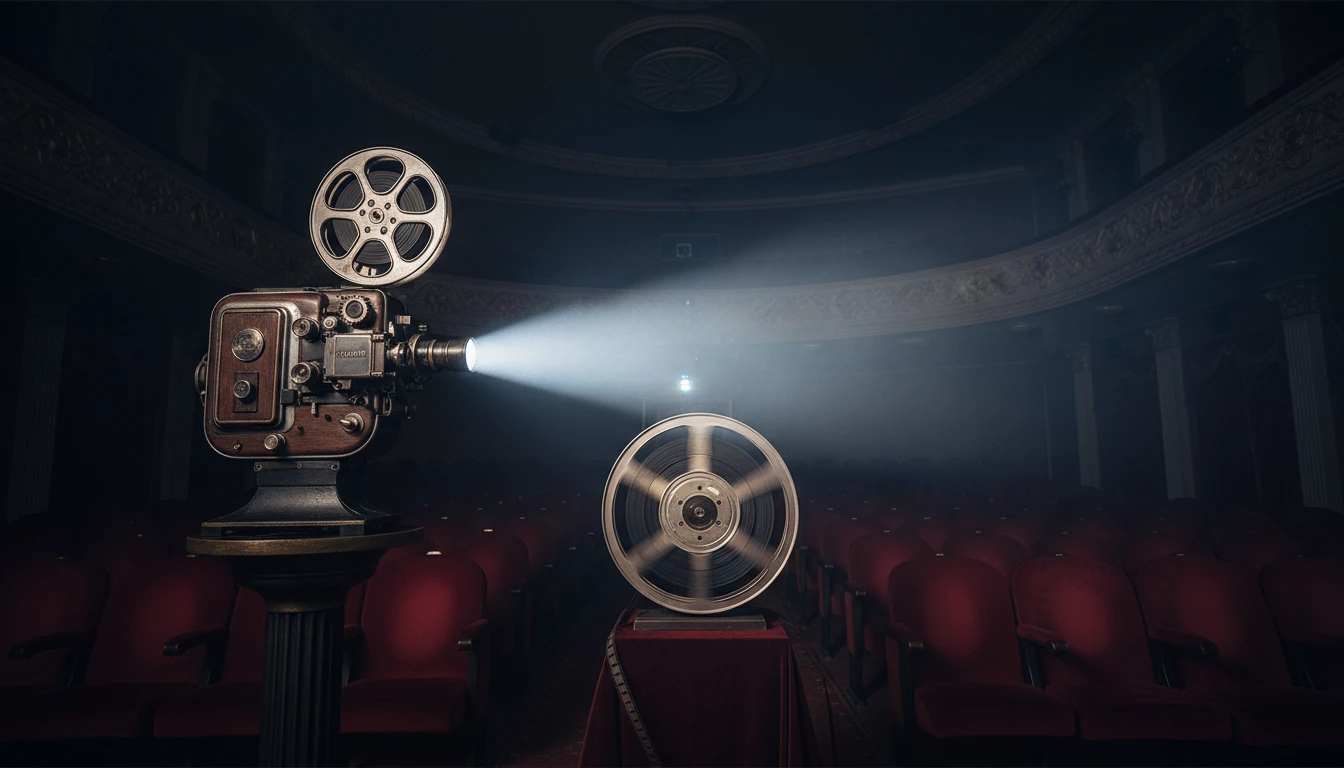
When a filmmaker like Christopher Nolan talks about the 'pure' way to see his movie, he’s referring to a specific and incredibly rare format: IMAX 15/70mm film projection. Imagine a piece of film nine times the size of a standard 35mm frame. Each frame is so
detailed it’s equivalent to a digital resolution of 16K or even 18K, creating an image with staggering clarity, depth, and colour. Projected onto a massive, multi-storey screen that fills your peripheral vision, the effect is what Nolan himself describes as "virtual reality without the goggles." For his latest film, 'The Odyssey,' an adaptation of Homer's epic poem, this isn't just for a few action sequences. For the first time ever, the entire movie was shot using these massive IMAX cameras, meaning every single scene is designed for this hyper-immersive format.
Nolan’s Uncompromising Vision
Christopher Nolan has been a champion of film over digital for his entire career, arguing that it captures a world with more texture and life. His love for the IMAX format, in particular, has grown with each film, from the opening sequence of 'The Dark Knight' to large portions of 'Dunkirk' and 'Oppenheimer'. For him, the goal is to make the screen disappear, immersing the audience completely in the story. With 'The Odyssey,' starring Matt Damon as the wandering Greek king, Nolan and his team pushed the technology further than ever, developing new enclosures to silence the notoriously noisy IMAX cameras so they could be used even for quiet, dialogue-driven scenes. The result is a film where the vast, mythical landscapes and the intimate, emotional moments are all presented with the same monumental scale and detail. It’s a statement about the power of the theatrical experience in an age of streaming.
Why Are These Theatres So Rare?
If IMAX 70mm is so spectacular, why can only a handful of theatres show it? The answer lies in technology and cost. These are complex, expensive film projectors, some weighing over 2,000 pounds, and they require highly trained specialists to operate. Over the past two decades, the vast majority of cinemas worldwide, including most that carry the IMAX brand, have transitioned to cheaper and easier-to-manage digital projection systems. While many of these digital IMAX screens offer a great experience—often with laser projection and better sound—they are not the same as true film projection. There are over 1,800 IMAX-branded screens globally, but only about 41 have the 15/70 film projectors needed for 'The Odyssey.' This makes seeing the film as Nolan intended an exclusive, pilgrimage-worthy event for cinephiles.
The Unfortunate News for India
For movie lovers in India, this is where the story becomes frustrating. Of the 41 theatres in the world equipped to show 'The Odyssey' in IMAX 70mm, not a single one is in India. While India once had true 70mm IMAX screens, such as the famous Prasad's in Hyderabad, these have since been converted to digital projection systems due to high maintenance costs and the rarity of films released in the format. The only remaining 70mm IMAX projector is at Gujarat Science City, which is used for documentaries, not commercial blockbusters. This means Indian fans, despite their passion for cinema and Nolan's work, will not be able to see 'The Odyssey' in its truest form within the country. The experience is limited to locations in the US, Canada, the UK, and Australia.
What Are the Best Alternatives?
So, how should you watch 'The Odyssey' in India? While the gold standard is out of reach, you can still get a premium experience. The next best option is an IMAX with Laser theatre. These venues use 4K laser projectors that offer superior brightness, contrast, and colour compared to standard digital systems. While you won't get the 18K-equivalent resolution of film, you will see a massive, high-quality image. It is important to note, however, that most digital IMAX screens have a wider 1.90:1 aspect ratio, meaning the image will be cropped, losing some information at the top and bottom of the frame compared to the full 1.43:1 picture that Nolan composed. Beyond IMAX, other premium large formats (PLFs) will also offer a better-than-average presentation. No matter what, 'The Odyssey' was designed to be seen on the biggest screen possible.