

What Exactly Is Colour-Blocking?
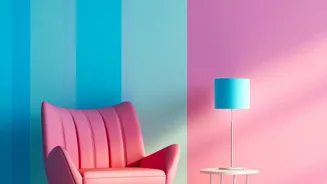
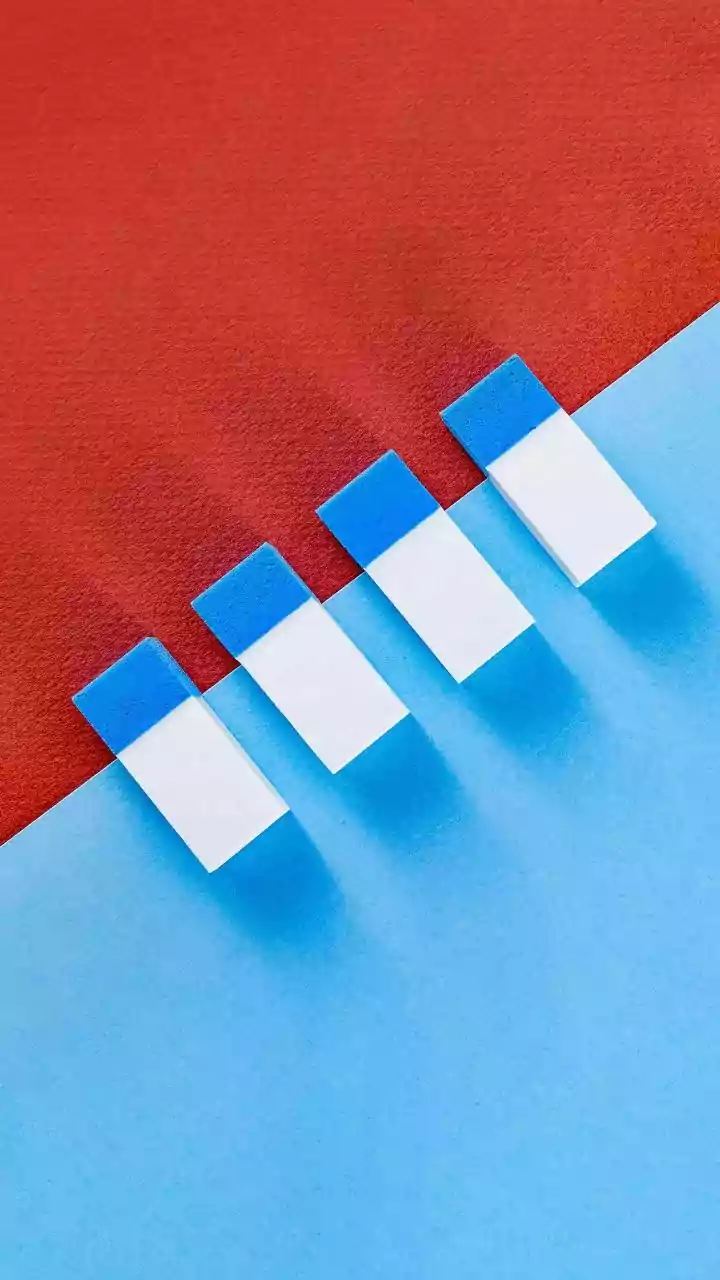
At its core, colour-blocking is an interior design technique that involves pairing two or more distinct blocks of colour together on a wall, piece of furniture, or across an entire room. Instead of a single, uniform shade, you create intentional geometric
shapes—like rectangles, arches, or circles—in different hues. The concept traces its roots to early 20th-century art movements, particularly the work of Dutch artist Piet Mondrian, who used simple grids and primary colours to create harmony. In home decor, this translates to a modern, graphic statement that can be as dramatic or as subtle as you wish, transforming a plain wall into a piece of abstract art.
The Unsung Hero: Negative Space
The magic of colour-blocking isn't just in the colours you choose, but in the space you leave untouched. In art and design, this is known as negative space—the area around and between the subjects of an image. With colour-blocked walls, the unpainted portion of your wall is just as important as the painted shapes. This negative space gives the bold colours room to breathe, preventing the design from feeling overwhelming. It provides balance and clarity, allowing each block of colour to stand out as a distinct shape. By strategically leaving parts of your wall blank, you create a sophisticated composition that feels intentional and uncluttered, making the colours pop and giving the entire arrangement a light, airy quality.
Choosing Your Perfect Palette
The key to successful colour-blocking is a well-considered palette, which usually consists of two to three colours plus a neutral like white, grey, or black. For a high-impact look, you can use complementary colours, which are opposites on the colour wheel (like blue and orange). This creates a vibrant, energetic contrast. For a more subtle and harmonious feel, an analogous scheme uses colours that sit next to each other on the colour wheel (like blue and green). Another option is a monochromatic palette, which uses different shades, tints, and tones of a single colour to create a sophisticated, layered effect. Before you commit, consider the existing colours in your room, including furniture and textiles, to ensure your new art complements the space.
From Simple Shapes to Bold Compositions
You don't need to be an artist to create a compelling design. Colour-blocking can be as simple as painting a single, large rectangle behind your sofa to create a focal point or a painted arch to frame a headboard or desk area. This technique is excellent for zoning a larger room, visually separating a workspace from a living area, for instance. You can also use painter's tape to create sharp, geometric compositions with overlapping shapes or stripes. The shapes themselves can alter the perception of a room; vertical blocks can make a ceiling feel higher, while horizontal bands can make a space feel wider. The goal is to use colour and shape to enhance your room's architecture and define the space.
DIY Project or Store-Bought Art?
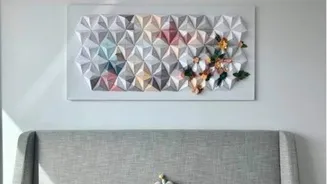
One of the best things about colour-blocking is its accessibility. For a true DIY approach, all you need are basic supplies: painter's tape, a level, a pencil, and your chosen paint colours. This allows you to create a custom mural perfectly suited to your wall dimensions and style. The process involves taping off your design, painting within the lines, and then removing the tape to reveal crisp, clean shapes. However, if you're renting or prefer a less permanent solution, you can achieve a similar effect with purchased art. Many artists and decor brands offer colour-block prints and canvases that celebrate bold shapes and minimalism, allowing you to bring the trend home without ever picking up a paintbrush.