


A Much-Needed Power Boost
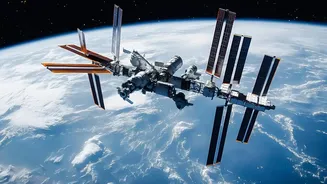
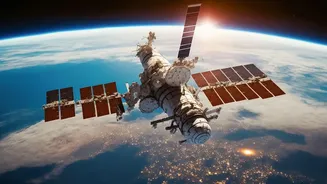
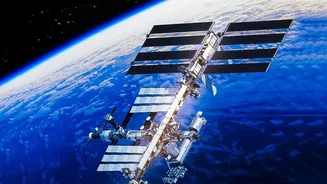
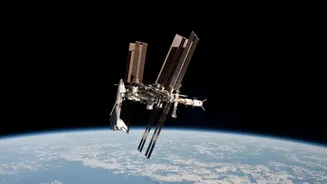
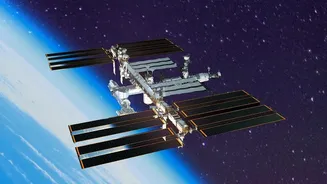
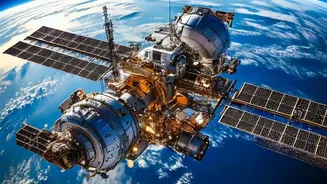
The International Space Station (ISS) has been continuously inhabited since November 2000, orbiting Earth as a premier laboratory for microgravity research. Its original power system, a massive set of eight solar array wings, was designed with a 15-year
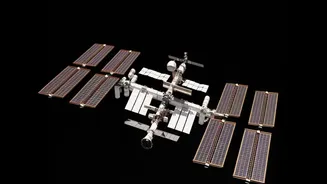
lifespan. After more than two decades of service, the photovoltaic cells on these arrays began to show their age, with power output gradually degrading. To ensure the station could continue to support an increasing number of complex scientific experiments and commercial activities, NASA and its international partners initiated a major power augmentation project in 2021. The original arrays were generating about 160 kilowatts of power; the upgrades were designed to significantly increase that capacity.
Introducing the iROSA
The solution came in the form of the ISS Roll-Out Solar Array, or iROSA. Developed by Redwire, these are not your typical rigid solar panels. The iROSA design is lighter, more compact, and more efficient. It launches rolled up in a compact cylinder and unfurls like a measuring tape or a yoga mat once in position. This is possible because of the stored 'strain energy' in its composite booms, which allows it to self-deploy without a motor. Though smaller than the original arrays, each pair of iROSAs adds a significant power boost. They are installed in front of the existing arrays, partially shading them but ultimately providing a substantial net increase in power.
A Spacewalking Marathon
Installing these eight new arrays was a monumental task, requiring a carefully orchestrated series of spacewalks that began in June 2021. The 750-pound arrays were transported to the station in the unpressurized trunk of SpaceX Dragon cargo spacecraft. From there, astronauts embarked on a series of extravehicular activities (EVAs) to mount, connect, and deploy them. The final installation, completed on November 5, 2026, was carried out by NASA astronaut Anil Menon and Canadian Space Agency astronaut Joshua Kutryk. The duo spent nearly seven hours outside the station to secure the final array, overcoming a minor electrical issue before getting the 'go' from Mission Control to unfurl the 63-foot panel. This final EVA marked the 286th spacewalk in support of station assembly and maintenance.
Powering the Future of the ISS
With all eight iROSAs now operational, the station’s total power generation capability has increased from 160 kilowatts to approximately 215 kilowatts, a boost of more than 30 percent. This revitalized power system is critical for the station's final chapter. The additional electricity will support a wide range of advanced scientific research in fields like materials science and combustion, which are often power-intensive. It also enables the growing commercial use of the station, including private astronaut missions and new technology demonstrations. The power upgrade ensures the ISS can remain a vibrant hub for research and international collaboration until its planned retirement at the end of 2030. The success of the iROSA technology also serves as a crucial testbed for future deep-space missions, including powering the Lunar Gateway and other craft venturing beyond Earth's orbit.