






An Unprecedented Digital Boom
India is in the midst of a data centre gold rush. The nation's installed capacity has surged in recent years, with projections showing it will continue to multiply by 2030. This explosive growth is fuelled by a perfect storm of factors: ballooning data consumption
from a massive smartphone user base, the rapid adoption of cloud computing and AI, and the rollout of 5G technology. Furthermore, government policies promoting data localisation, such as the Digital Personal Data Protection Act, mean that more data must be stored and processed within India's borders, directly driving the need for more domestic data centre capacity. This has attracted billions of dollars in investments from both global hyperscalers and domestic giants, all racing to build the backbone for 'Digital India'.
The Soaring Energy Demand
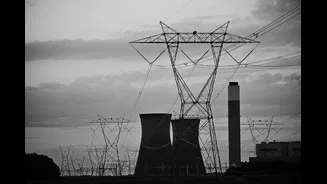
Data centres are the invisible factories of the digital age, and they are incredibly power-hungry. Their 24/7 operations require a constant, high-quality electricity supply to run servers, storage systems, and, crucially, the extensive cooling systems needed to prevent overheating. Cooling alone can account for up to 40% of a data centre's total power consumption. As India's data centre capacity grows from hundreds of megawatts to several gigawatts, the strain on the national and regional power grids is becoming a serious concern. Projections from India's Central Electricity Authority estimate the power demand from data centres could reach 17 gigawatts by 2031-32. This intense demand not only stresses electricity grids, which are still heavily reliant on coal, but also puts pressure on other vital resources like water, which is used extensively in many cooling systems.
The Push for 'Green' Data Centres
In response to this energy challenge, the concept of the 'green data centre' is gaining traction. The core objective is to improve energy efficiency and minimise environmental impact. A key metric used to measure this is Power Usage Effectiveness (PUE). PUE is a ratio of a data centre's total energy consumption to the energy delivered to its IT equipment. A perfect score is 1.0, meaning no energy is wasted on overheads like cooling or lighting. While a perfect score is practically impossible, modern hyperscale facilities now regularly achieve PUE values of 1.3 or lower, a significant improvement over older, less efficient sites which could have a PUE of 1.6 or higher. The difference is substantial, translating into enormous cost savings and a smaller carbon footprint.
Solutions and Innovations
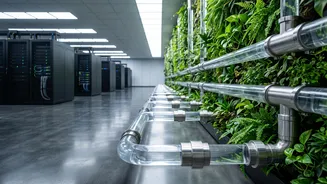
Data centre operators in India are actively deploying a range of solutions to tackle the energy problem. Many are making significant commitments to power their facilities with renewable energy, signing power purchase agreements (PPAs) for solar and wind energy. On the technology front, advanced cooling solutions are being implemented, including direct-to-chip liquid cooling, which is more efficient than traditional air cooling and can drastically reduce water consumption. Companies are also using AI-optimised systems to manage power and cooling in real-time, ensuring maximum efficiency. Key players like AdaniConneX, Nxtra by Airtel, and CtrlS are leading the charge, building new campuses with sustainability as a core design principle, often targeting 100% renewable energy and achieving green building certifications.
Policy and the Path Forward
The Indian government and various state governments recognise the strategic importance of sustainable data infrastructure. While a comprehensive national data centre policy is still evolving, several states like Maharashtra, Tamil Nadu, and Uttar Pradesh have rolled out their own policies, offering incentives like subsidised electricity, tax waivers, and streamlined approvals for green-certified facilities. The central government has also granted 'infrastructure status' to the data centre sector, easing access to financing. Furthermore, the Bureau of Indian Standards (BIS) has introduced voluntary standards for measuring efficiency, such as Cooling Efficiency Ratio (CER) and Water Usage Effectiveness (WUE), providing a common framework for the industry to benchmark performance. These policy levers, combined with industry innovation, are crucial for ensuring India's digital growth is both powerful and sustainable.