







A Crisis Decades in the Making
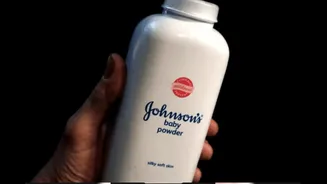
The heart of the issue lies with Johnson & Johnson’s iconic Baby Powder. For decades, plaintiffs have alleged that the company's talc, the primary ingredient, was contaminated with asbestos, a known carcinogen. Tens of thousands of lawsuits, primarily
from women who developed ovarian cancer, claim that the company knew about the risks and failed to warn consumers. These allegations struck at the core of J&J's carefully cultivated image as a trusted, family-friendly brand. The litigation has resulted in a mix of verdicts, including some staggering awards against the company, such as a $2.12 billion judgment for 22 women in 2021. Despite consistently maintaining that its talc is safe and asbestos-free, the company ceased selling its talc-based powder globally in 2023, citing commercial reasons.
The Failed 'Texas Two-Step' Gambit
Before arriving at this direct settlement offer, J&J pursued a controversial legal strategy known as the "Texas two-step." In 2021, the company created a subsidiary, LTL Management, and transferred all its talc-related liabilities to it. LTL then promptly filed for bankruptcy, a move designed to halt the thousands of individual lawsuits and consolidate them into a single bankruptcy court to be resolved via a trust. However, courts repeatedly rejected this maneuver. A federal appeals court ruled that LTL was not in the kind of financial distress that would justify bankruptcy protection, primarily because it was backstopped by the immensely wealthy J&J. After three failed bankruptcy attempts, the last of which was dismissed in early 2025, J&J was forced back to the drawing board, with its massive legal exposure still very much intact.
Mounting Pressure and the Need for Finality
With the bankruptcy strategy off the table, the legal pressure on J&J continued to mount. The company faced a relentless stream of individual trials across the country, each carrying the risk of a multi-million or even billion-dollar verdict. This created a state of perpetual uncertainty for the company and its investors. The ongoing litigation was not just a financial drain but also a significant reputational one. After more than a decade of fighting, both sides were facing fatigue. For J&J, the endless cycle of trials and appeals was unsustainable. The proposed settlement is a pragmatic move to cap this unpredictable liability and bring finality to one of the most extensive mass tort litigations in U.S. history.
Inside the $5.5 Billion Proposal
Announced in late July 2026, the new proposal offers $5.5 billion to resolve an estimated 76,000 pending ovarian cancer claims. Unlike previous attempts, this deal was negotiated directly with plaintiffs' lawyers rather than through the bankruptcy system. If approved, J&J expects to pay a substantial portion, up to $3 billion, in 2027, with the rest to follow. However, the deal comes with a critical condition: it requires at least 95% of the claimants to agree to the terms. If this high threshold isn't met, the deal could collapse, and the litigation would continue. While J&J calls the claims meritless, this settlement represents its most significant step toward closing this chapter for good.