




A Frightening Reminder from 35,000 Feet
On August 4, 2026, passengers and crew aboard Air India flight AI2379 were subjected to a terrifying few moments. While cruising from Thailand to India, the Airbus A320 hit a pocket of severe turbulence, causing a sudden altitude drop of around 300 feet.
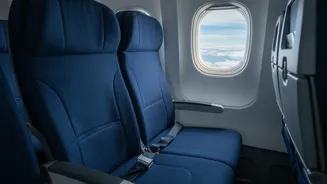
In an instant, anyone not secured was thrown about the cabin, with passenger accounts describing people hitting the ceiling before falling back down. Seventeen people, including both passengers and cabin crew, required medical evaluation upon landing in Delhi. While the aircraft landed safely, the incident serves as a visceral example of why aviation experts are unanimous in their most important piece of advice for flyers: keep your seatbelt fastened whenever you are in your seat, even if the seatbelt sign is off.
The Invisible Danger: Clear Air Turbulence
What makes incidents like the one on the Air India flight so dangerous is their unpredictability. It was reportedly caused by Clear Air Turbulence, or CAT, a phenomenon that gives pilots and crew virtually no warning. Unlike turbulence caused by thunderstorms or mountain ranges, which are often visible or predictable, CAT is invisible to the eye and undetectable by standard onboard radar. It occurs when bodies of air moving at vastly different speeds meet, often near the jet stream. This creates powerful, chaotic eddies in the atmosphere. For a plane flying through it, the experience can range from light bumps to a violent jolt, all while appearing to fly through perfectly calm, clear skies. This is the crucial reason why waiting for the seatbelt sign is not enough.
A Growing Problem in a Changing Climate
Aviation experts and climate scientists are increasingly pointing to evidence that these invisible turbulence events are becoming more common and more severe. Research from the University of Reading has shown that severe clear-air turbulence over the busy North Atlantic route increased by 55 percent between 1979 and 2020. The culprit is believed to be climate change, which is strengthening wind shear—the difference in wind speed and direction over a short distance—in the jet streams where CAT is born. As the atmosphere warms, these temperature and wind differentials are expected to intensify, leading to a bumpier future for air travel and making personal safety measures even more critical.
Simple Physics, Serious Consequences
The danger during a turbulence event isn't that the plane will fall out of the sky; modern aircraft are built to withstand forces far greater than any turbulence can produce. The real danger is to the unsecured objects and people inside the cabin. When a plane drops suddenly, a person who is buckled in moves with it. An unbuckled person, however, continues on their previous trajectory due to inertia. For a brief moment, they are effectively weightless within the cabin, until the plane's movement stops or changes direction. That's when they might hit the ceiling, a window, an armrest, or another passenger, causing injury. Federal Aviation Administration (FAA) data is stark, showing that the vast majority of turbulence-related injuries happen to people who are not wearing their seatbelts.
The Undisputed Advice from Experts
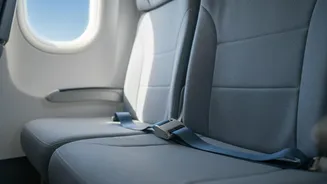
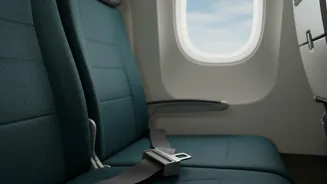
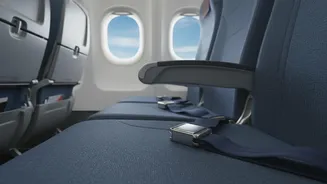
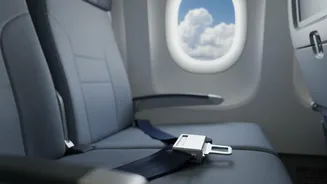
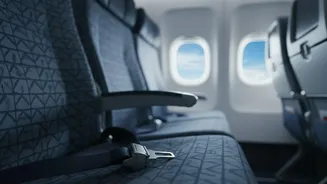
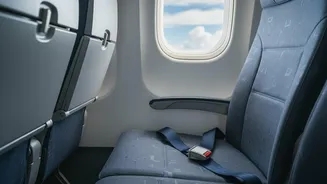
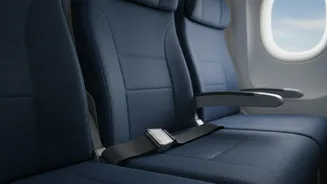
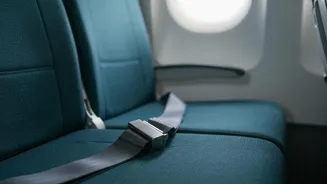
Flight attendants and pilots are consistent with their guidance because they have seen the consequences firsthand. The official recommendation from aviation authorities like the FAA and crew unions worldwide is simple: if you are in your seat, your seatbelt should be fastened. It should be low and snug across your hips. This simple act turns a potentially dangerous situation into a non-event for you personally. The seatbelt sign is a command, but the absence of the light is not a guarantee of smooth air. Thinking of the seatbelt as a standard part of being seated, rather than an instruction to be followed only when lit, is the safest approach.