


A Junkyard Orbiting Earth
Low Earth Orbit is often described as a junkyard, and for good reason. For decades, every rocket launch has left something behind. There are now hundreds of thousands of tracked objects, from defunct satellites and spent rocket stages to tiny fragments
of debris, all circling the planet at incredible speeds. These items travel at speeds exceeding 17,000 miles per hour, fast enough for even a small piece of junk to cause catastrophic damage to a functional satellite. With services like GPS, global communications, and weather forecasting reliant on these satellites, protecting them from this orbital minefield has become a critical priority. The problem is self-perpetuating; a single collision can create thousands of new pieces of debris, increasing the risk of a chain reaction that could render certain orbits unusable for generations.
Britain's Robotic Cleanup Crew
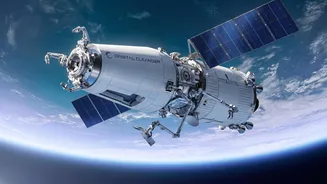
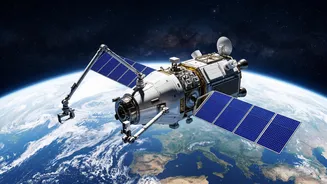
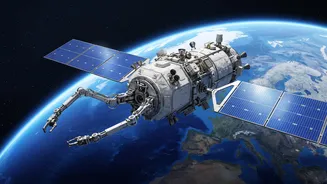
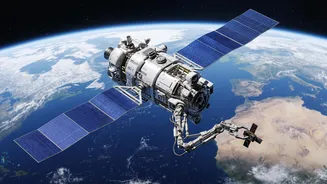
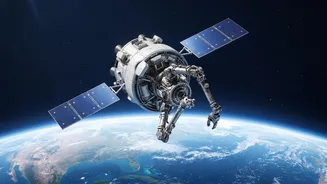
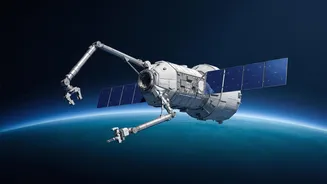
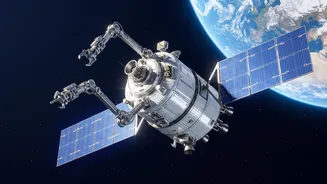
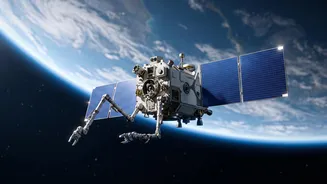
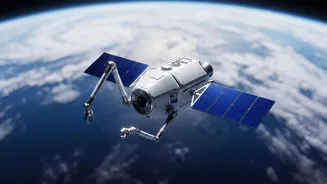
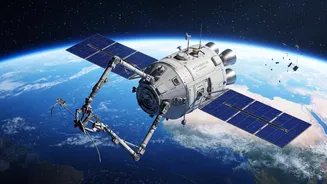
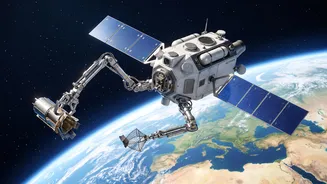
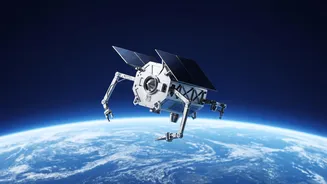
Enter the UK's Active Debris Removal (ADR) mission. Backed by over £60 million from the government, this groundbreaking project will be the first of its kind to remove more than one piece of space junk. The mission, which is being developed with prime contractor ClearSpace UK, will involve a robotic spacecraft designed to capture two defunct, UK-registered satellites. Using advanced robotic claws, the spacecraft will grab onto these 'uncooperative' targets—satellites that were never designed to be captured—and guide them into a lower orbit to safely burn up in Earth's atmosphere. The mission is slated to launch in 2029 from the SaxaVord Spaceport in Scotland, with the first removal expected by 2030.
More Than Just a Space Janitor
While cleaning up space is the primary goal, the mission has broader ambitions. It serves as a crucial technology demonstrator for the UK's growing in-orbit servicing sector. The spacecraft is being designed to be refuellable, meaning it could potentially perform multiple cleanup missions over many years, a bit like an orbital bin lorry. The technologies developed for rendezvous, autonomous navigation, and robotic capture will pave the way for a new commercial market that includes repairing, refuelling, and repositioning satellites, extending their operational lives and making space activities more sustainable. Successfully proving these capabilities will position the UK as a leader in this emerging, multi-billion dollar industry.
Your Chance to Make History
To raise public awareness, the UK Space Agency has launched a competition to name the ADR mission. The contest is open to UK residents, who can submit a name and a short explanation for their choice. The agency is looking for creative and simple names that reflect themes of cleaning up space, innovation, and protecting the environment. The winning entry will not only make history but will also be etched onto the side of the spacecraft itself, with the winner receiving a framed certificate from the Space Minister. According to the UK Space Agency, entries can be submitted until December 10, 2026.