


A New Era for Space Operations
The International Conference on Spacecraft Mission Operations, or SMOPS-2026, held in Bengaluru, is highlighting the transformative power of artificial intelligence in managing space assets. With experts from global space agencies like ISRO, NASA, and
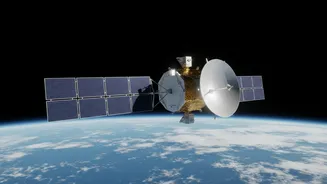
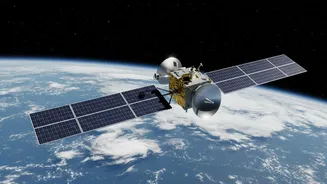
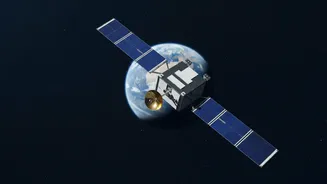
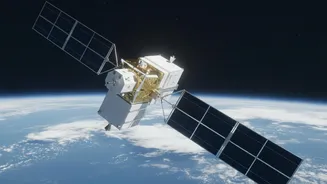
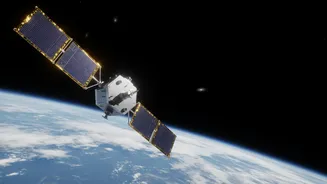
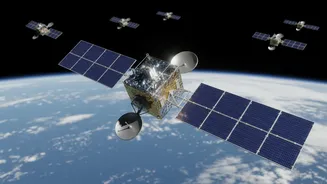
ESA in attendance, the conversation has centered on using AI to manage the growing complexity of space. As ISRO Chairman Dr. V Narayanan noted, AI and machine learning have evolved from theory to a pressing need for the industry. This is especially true with the rise of mega-constellations, vast networks of hundreds or thousands of satellites that are impossible to manage manually.
The Promise of Autonomous Spacecraft
AI offers incredible advantages in the harsh environment of space. Algorithms can optimize satellite constellations in real-time, ensuring efficient data routing, resource allocation, and continuous coverage. This automated management can adjust for weather, user demand, and network traffic far faster than a human operator. For routine tasks like scheduling, power management, and minor trajectory adjustments, AI promises to dramatically lower costs and improve the reliability of services we depend on, from GPS to global communications. It also enables deep-space missions where communication delays make real-time human control impossible.
The Unseen Risks of 'Fire-and-Forget' AI
Despite the benefits, there is a growing chorus of caution. A key concern is the "black box" nature of some complex AI, where even its creators cannot always explain the reasoning behind a decision. A hostile actor could potentially manipulate data fed to an AI, causing it to make catastrophic decisions like executing a collision-course maneuver. A single compromised satellite in an interconnected constellation could lead to a cascading failure, potentially creating fields of space debris that threaten all orbital activities—a scenario known as the Kessler syndrome. Given that satellites cannot be easily serviced, a software vulnerability could become a permanent, unfixable threat.
The Case for Human-in-the-Loop
The solution is not to abandon AI, but to design systems that keep humans in a position of meaningful control. This is often described as a "human-in-the-loop" or "human-on-the-loop" approach. Human-in-the-loop typically requires direct operator approval for critical actions, which can be a bottleneck. A more scalable model is human-on-the-loop, where the AI operates autonomously within carefully defined parameters set by humans. The human operator's role shifts from a pilot to a supervisor, monitoring the system's health, making high-level strategic decisions, and, most importantly, intervening when the AI encounters a situation it wasn't trained for.
Finding a Sustainable Balance
The consensus emerging from SMOPS-2026 is that the future is one of human-machine synergy. The goal is to build AI that is not only powerful but also trustworthy and explainable. This means developing robust safeguards and fail-safe behaviors, ensuring that if an AI malfunctions or faces an unknown variable, it reverts to a safe state and hands control back to a human operator. The speed of space conflict and the latency in communications mean that some level of autonomy is a physical necessity, not just a convenience. The challenge, therefore, lies in engineering a framework where we can trust these autonomous systems to act within our strategic intent, without requiring second-by-second supervision.