



The Government's Stance on AI and Jobs
Union Minister for Commerce and Industry, Piyush Goyal, has recently highlighted tourism as a sector that could prove more resistant to the job disruption caused by Artificial Intelligence. His broader argument is that India should view AI as an opportunity
for growth and a job creator, not a threat that will lead to mass unemployment. He draws parallels to the Y2K boom, where initial fears gave way to a massive expansion of India's software industry. In Goyal's view, AI will transform jobs rather than eliminate them, creating new roles in areas like cybersecurity, data protection, and AI application development. The government's strategy involves identifying and promoting these "AI-proof" sectors to balance technological adoption with employment security.
Why Tourism Is Considered More Resilient
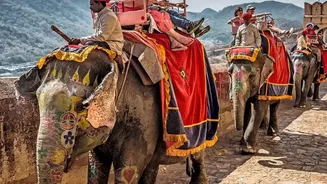
The core of the argument for tourism's resilience lies in its fundamental nature as an experience-driven industry. While AI can handle logistics, it cannot replicate the human element that defines hospitality. Jobs requiring personal interaction, cultural nuance, empathy, and creative problem-solving are significantly harder to automate. Roles such as bespoke tour guides, hotel managers creating a welcoming atmosphere, chefs curating unique dining experiences, and even staff who provide personal recommendations based on genuine connection are central to the travel experience. Goyal's assertion is that these services, which require physical and emotional engagement, cannot be fully delivered remotely or by an algorithm, giving the sector a defensive edge.
Where AI Is Already Reshaping the Industry
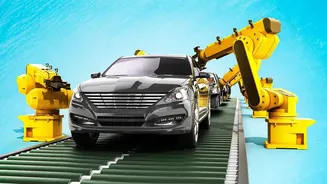
However, resilience is not the same as immunity. The tourism sector is already undergoing a significant digital transformation powered by AI. Artificial intelligence is widely used to streamline operations, from automated booking systems and dynamic pricing for flights and hotels to 24/7 customer service via chatbots. AI-powered platforms offer personalised travel recommendations, build customised itineraries, and predict future travel trends by analysing vast amounts of data. These tools are making the industry more efficient and data-driven, automating many of the repetitive and administrative tasks that were once performed by humans. This shows that the industry is far from untouched by automation.
The Roles at Risk and the Skill Shift
The distinction between resilience and immunity becomes clear when looking at specific job functions. While guest-facing, experience-driven roles are safer, many other jobs within tourism are vulnerable. Clerical positions, data entry roles, and certain customer service and sales department jobs can be performed more efficiently by AI. The rise of AI travel agents and automated booking platforms directly challenges the traditional role of travel agencies. This doesn't necessarily mean total job loss, but rather a significant transformation. The industry is seeing a shift away from transactional tasks and towards roles that require a new set of skills: digital literacy, data analysis, critical thinking, and emotional intelligence. The consensus is that AI is not a threat to total employment, but a catalyst for job enhancement.
The Hybrid Future: Human Touch, AI Power
Piyush Goyal's claim is best understood as a statement about relative strength. Compared to sectors like data processing or routine manufacturing, tourism's core value proposition is harder to automate. The future of tourism employment is likely a hybrid model where technology and humans work in tandem. AI will handle the data-heavy, logistical, and repetitive tasks—optimising flight paths, managing bookings, and answering basic queries—freeing up human workers to focus on what they do best: creating memorable, personalised, and authentic experiences. This collaboration allows for greater efficiency without sacrificing the invaluable human touch that makes travel and hospitality special. For India's workforce, this means the key to a future-proof career in tourism lies in adapting and focusing on these uniquely human skills.