






A New Frontier in Rail Safety
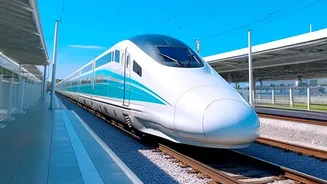
The focus of these trials is a specially modified 20-car Vande Bharat rake fitted with an Automatic Emergency Braking (AEB) system. Unlike standard braking, AEB is an active safety feature that uses sensors to monitor the train's speed and proximity to obstacles.
If it detects an imminent collision or a dangerous situation and the driver doesn't react in time, the system can automatically apply the brakes. This technology is designed to either prevent an accident entirely or significantly reduce its severity. The current trials, conducted by the South Western Railway's Mysuru Division, are taking place on the Sakleshpur-Subrahmanya Road ghat section, a key step towards launching a Vande Bharat service between Bengaluru and Mangaluru.
The Ultimate Challenge: The Ghats
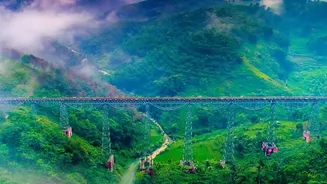
Running a high-speed train is one thing; running it through a ghat section is another challenge altogether. Ghats are the mountain passes and steep slopes that cut through India's mountain ranges. The Sakleshpur-Subrahmanya section, for example, is a 55-kilometre stretch with a steep gradient of 1 in 50, meaning the track rises one metre for every 50 metres travelled. This terrain features 57 tunnels, over 220 bridges, and more than 100 sharp curves, making it one of the most operationally difficult corridors in the country. For conventional trains, this often requires attaching extra engines, known as 'bankers', to push the train up the incline and control its descent, a time-consuming process that the new Vande Bharat aims to avoid.
Why This Test Is Different
The Vande Bharat trains already have advanced braking systems, but the unique dangers of ghat sections—like sharp curves, steep descents, and the risk of landslides—require an additional layer of protection. Personnel from the Research Designs and Standards Organisation (RDSO) are on board during these trials to evaluate a range of parameters, including acceleration, stability on curves, and overall braking performance under demanding conditions. The goal is to ensure the train can safely operate on this terrain without the need for banker locomotives, which cannot be easily attached to the Vande Bharat's aerodynamic nose. The AEB system is being tested to ensure it can hold the train at the restricted maximum speed of 30 km/h on the steepest parts of the route.
What This Means for Passengers
Successful completion of these trials will be a game-changer for rail connectivity in the region. A Vande Bharat service between Bengaluru and Mangaluru would drastically cut travel time and provide a faster, safer, and more comfortable journey between Karnataka's capital and its coastal hub. The introduction of a train that can handle such challenging terrain independently marks a significant engineering milestone for Indian Railways. It showcases a commitment to not just increasing speed, but also deploying advanced, context-specific safety solutions. Before passenger services can begin, the results of these trials will need to be thoroughly assessed and certified by the Commissioner of Railway Safety.