


Why Portion Size is a Game-Changer
Portion control is the practice of consciously managing the amount of food you consume. It’s fundamental for weight management because it directly helps regulate calorie intake, preventing the overeating that leads to weight gain. But its benefits go
far beyond the bathroom scale. Proper portions can lead to better digestion, more stable blood sugar levels, and sustained energy throughout the day. By being mindful of quantities, you ensure a balanced intake of nutrients and can reduce the risk of chronic conditions like heart disease and diabetes. It encourages a more intuitive relationship with food, helping you listen to your body’s natural hunger and fullness cues.
Your Guide is in Your Hand
You don’t need to carry measuring cups and a food scale everywhere you go. One of the easiest and most personalized ways to estimate portions is by using your own hand. This method is effective because your hand size is relative to your body size, creating a naturally scaled guide. For a single serving, aim for: a palm-sized portion for proteins like chicken or fish (about 85-113 grams); a cupped hand for carbohydrates like rice or pasta; your entire fist for a serving of non-starchy vegetables; and the length of your thumb for high-fat foods like oils, cheese, or nut butters.
The Psychology of the Plate
Your brain can be easily tricked by visual cues, and your dinnerware plays a starring role. This is explained by the Delboeuf Illusion, an optical effect where the same amount of food looks smaller on a large plate and larger on a small one. People consistently serve themselves and eat more when using larger plates. Simply switching from a 12-inch dinner plate to a 9 or 10-inch plate can help you naturally reduce the amount you eat without feeling deprived. The shape and weight of your plates and cutlery can also influence your perception of satisfaction, with heavier bowls and round plates often leading to a greater sense of fullness with less food.
Build a Balanced Plate
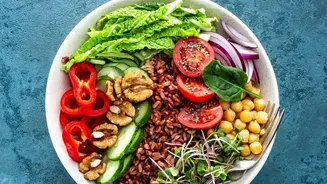
A simple and effective visual method for portioning is the “Healthy Plate Model”. The formula is straightforward: fill half of your plate with non-starchy vegetables or salad. This part of your meal is packed with vitamins, minerals, and fibre, which helps you feel full on fewer calories. The other half of your plate should be divided equally between two other food groups. Fill one-quarter with a lean protein source like fish, chicken, beans, or tofu to support muscle health and satiety. The final quarter should be dedicated to whole grains or starchy carbohydrates, such as brown rice, quinoa, or sweet potatoes, which provide sustained energy.
Smart Cooking and Serving Strategies
Portion control starts before the food even hits your plate. When cooking, you can implement simple strategies to manage amounts. Try not to eat directly out of a large bag or container; instead, portion out a single serving into a bowl. When you make a large batch of a meal, consider immediately dividing it into single-serving containers for future meals. This is especially helpful for preventing mindless second or third helpings. At the dinner table, keep serving dishes off the table and on the kitchen counter. The simple act of having to get up for more food makes you pause and consider if you are truly still hungry.