






The Planet's Giant Battery
Think of the ocean as Earth’s largest rechargeable battery. For decades, it has been quietly absorbing the vast majority—over 90%—of the excess heat trapped by greenhouse gas emissions. This crucial buffering process has slowed the warming of the atmosphere,
but it has come at a cost: the oceans themselves are heating up at an unprecedented rate. Scientists measure this using a metric called Ocean Heat Content (OHC), which tracks the total energy stored. According to multiple international research bodies, 2025 marked the ninth consecutive year of record-breaking ocean heat. This isn't just a surface-level issue; the warming now penetrates as deep as 2,000 meters, creating a massive reservoir of thermal energy that will persist for centuries.
How Ocean Heat Becomes Land Heat
So, how does heat stored in the middle of the ocean lead to a scorching day in Delhi or Nagpur? The connection is a fundamental process of physics. Warmer sea surfaces lead to higher rates of evaporation, pumping more moisture and heat into the atmosphere. This supercharged, moisture-laden air acts as fuel for more extreme weather patterns. Furthermore, warm ocean patches can help create and sustain high-pressure systems known as “blocking highs” or “heat domes.” These systems act like a lid over a region, trapping hot air, preventing cloud formation, and leading to prolonged periods of dangerously high temperatures on the land below. Recent studies have found that a significant portion of heat waves on land actually have their origins in the ocean.
The View from India's Coasts
For India, with its extensive coastline, this phenomenon is particularly critical. The Indian Ocean is warming faster than any other tropical ocean basin. The Arabian Sea, in particular, has become a hotspot for marine heatwaves, which are prolonged periods of exceptionally high sea surface temperatures. This warming is not just an abstract concept; it has tangible effects on the subcontinent’s weather. Research now increasingly shows that warming in the Arabian Sea can influence the Indian summer monsoon. While some scenarios suggest it could weaken the overall monsoon winds, it can also increase the risk of extreme rainfall events over southern and northwestern India by providing extra moisture to the atmosphere. Essentially, a warmer ocean is making our weather systems more volatile and extreme.
A Cascade of Consequences
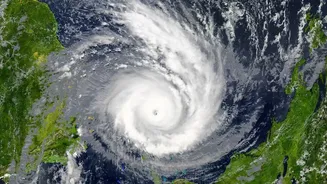
Intensifying heat waves are just one symptom of the ocean's fever. The same excess energy is fueling stronger and more rapidly intensifying cyclones in the Arabian Sea and Bay of Bengal. It also causes thermal expansion of water, which is a major contributor to sea-level rise, threatening coastal communities. Below the surface, marine heatwaves are causing devastating coral bleaching events and disrupting fisheries, which millions of people depend on for their livelihoods and food security. The intricate web of life, from the smallest plankton to the largest whales, is being strained by these rapid changes in their environment. This is a planetary-scale problem with local consequences that are becoming impossible to ignore.