






The New Space Race
The phrase “one million satellites” sounds like science fiction, but it reflects the staggering ambition of the modern space industry. This figure originates from filings and proposals by various companies. SpaceX, for instance, has filed plans to launch
as many as one million satellites for future space-based data centers, a project that would dwarf its already massive Starlink constellation. While there are currently around 14,000 active satellites in orbit, proposals from companies like SpaceX, Amazon's Project Kuiper, China's state-backed projects, and others could increase that number dramatically. These networks, known as mega-constellations, consist of thousands of satellites working in concert, primarily in low-Earth orbit (LEO). The main players are well-known names in the tech world. SpaceX's Starlink is the dominant force, with thousands of satellites already providing internet services globally. Amazon's Project Kuiper is also ramping up deployment, planning an initial constellation of over 3,200 satellites. Other significant ventures include OneWeb and emerging Chinese constellations.
The Promise of Global Connectivity
The primary business driver behind this orbital land grab is the immense market for global, high-speed internet. For billions of people in rural, remote, and underserved regions, satellite internet is not just a convenience; it's a potential lifeline, offering access to education, telehealth, and economic opportunities previously out of reach. This is a goal with particular resonance in India, where digital infrastructure is a national priority. Companies are betting billions that by blanketing the globe with LEO satellites, they can provide fast, low-latency broadband that rivals and, in some cases, surpasses ground-based options. Beyond consumer internet, these constellations are targeting lucrative enterprise, government, and mobility markets, including aviation and maritime services. SpaceX's more futuristic plan for orbital data centers aims to leverage this infrastructure for advanced AI applications, creating a new economy in orbit.
An Astronomer's Nightmare
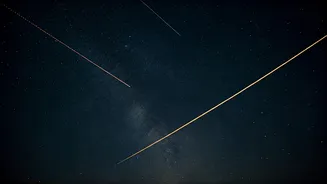
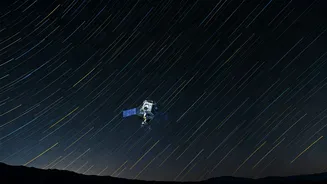
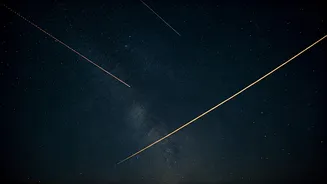
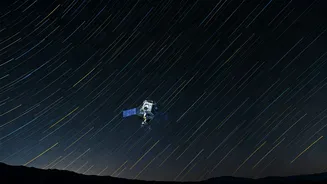
For the scientific community, this satellite boom is a looming crisis. Astronomers have been raising alarms since the first large batches of Starlink satellites were launched in 2019. The problem is twofold. First, the satellites are reflective. Just after sunset and before sunrise, they catch the sun's rays and shine brightly, leaving long, ruinous streaks across images captured by ground-based telescopes. A recent study by the European Southern Observatory (ESO) warned that with the full complement of proposed satellites, dozens of trails could contaminate a single image, potentially wiping out a significant percentage of the data. Second, these constellations pose a threat to radio astronomy. While they operate in allocated frequencies, the sheer number of satellites creates a cumulative radio 'noise' that could drown out the faint cosmic signals scientists are trying to detect. The International Astronomical Union (IAU) has expressed deep concern, stating these constellations pose a “significant or debilitating threat” to astronomical research.
Will We Still See the Stars?
The impact isn't just limited to professional observatories. The very experience of looking up at the night sky is at risk. Currently, on a clear, dark night, a few hundred satellites might be visible to the naked eye over time. But if plans for over a million satellites come to pass, simulations show that at certain times, hundreds or even thousands of satellites could be visible at once. This could mean that in many parts of the world, artificial satellites would outnumber the visible stars. One particularly controversial proposal comes from a startup called Reflect Orbital, which aims to launch mirror-like satellites to provide sunlight at night. Calculations show these could appear as bright as Venus, and from a light-polluted city, they might be the only 'stars' visible. The cumulative effect of all these satellites would also increase the overall brightness of the night sky, creating a pervasive form of light pollution that even the most remote, pristine dark-sky sites on Earth could not escape.
A Search for Solutions
Recognizing the threat, a search for solutions is underway, though it's fraught with challenges. Astronomers are collaborating with companies like SpaceX to mitigate the brightness of their satellites. These efforts have included painting satellites with darker materials and adding sunshades to reduce reflectivity. While these measures have shown some success in dimming the satellites, they don't eliminate the problem, and there are concerns about the brightness of newer, larger satellite models. The bigger challenge is regulation. Space is a largely unregulated frontier, and there is no international body with the power to enforce limits on satellite numbers or brightness. Scientific bodies like the ESO and AAS are now calling for a hard cap, suggesting a limit of 100,000 faint satellites to protect modern astronomy. Getting international agreement on such a limit, however, remains a massive diplomatic and commercial hurdle.