





Meet the Bambara Groundnut
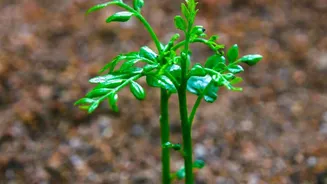
The legume in the spotlight is the Bambara groundnut, known scientifically as Vigna subterranea. Native to sub-Saharan Africa, it's the continent's third most important legume after the common groundnut and cowpea. Often called a 'complete food', it has
long been a subsistence crop, primarily cultivated by women on small plots for household consumption. Despite its potential, it has been historically underutilized and overlooked by mainstream agricultural research, earning it the label of an 'orphan crop'. But as the world seeks resilient food sources, this humble groundnut is finally getting the global recognition it deserves.
A Nutritional Powerhouse
The Bambara groundnut's reputation as a 'complete food' is well-earned. It boasts a balanced profile of macronutrients, with a composition of approximately 64% carbohydrates, 24% protein, and 6.5% fat. This high protein content is particularly valuable, offering essential amino acids like lysine that are often lacking in cereal-based diets. Beyond protein, it is a rich source of dietary fibre and essential minerals, including potassium, iron, magnesium, and zinc, making it a powerful tool in combating micronutrient deficiencies. This robust nutritional profile makes it an ideal food source for improving dietary quality, especially in regions vulnerable to food insecurity.
Thriving in a Tough Climate
Perhaps the most compelling attribute of the Bambara groundnut is its exceptional resilience. It is famously drought-tolerant, capable of producing a yield in hot, arid conditions with minimal rainfall. It thrives in marginal, low-fertility soils where many other crops would fail. As a legume, it possesses the natural ability to fix atmospheric nitrogen, which enriches the soil and reduces the need for synthetic fertilisers. This not only makes it an environmentally friendly crop but also a perfect candidate for intercropping systems, where it can help improve the health of the entire farm ecosystem.
From Local Crop to Global Hope
This combination of nutrition and resilience has captured the attention of researchers and institutions worldwide. Teams from organisations like the University of Cambridge's Crop Science Centre and the International Institute of Tropical Agriculture (IITA) are now spearheading projects to unlock its full potential. The goal is to move the Bambara groundnut from a neglected subsistence crop to a mainstream agricultural solution. Innovators are also exploring new uses, such as developing a sustainable, protein-rich plant-based milk from the legume that is more sustainable than many popular alternatives.
The Road Ahead: Challenges and Opportunities
Despite its many advantages, scaling up the cultivation of Bambara groundnut is not without challenges. It remains an under-researched crop, hindered by issues like low or inconsistent yields, the lack of formally improved seed varieties, and labour-intensive post-harvest processing. Overcoming these hurdles will require concerted investment in genetic improvement to develop varieties with more desirable traits, such as higher yields and shorter cooking times. Establishing better market access and processing technologies will also be crucial to incentivise farmers to cultivate it on a larger scale.