




A Global Commodity on Edge
The global rice market is in a state of consolidation after a period of significant volatility. Recent market reports from mid-September 2026 show that while futures have settled slightly, prices remain historically high. This stability is fragile, influenced
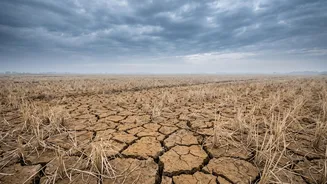
by a mix of factors including a weak Indian monsoon, which raises concerns about future crop yields, and geopolitical tensions that disrupt trade. Conflicts in the Middle East, for example, have driven up energy and fertilizer costs, which in turn affects everything from irrigation to transport and threatens to create localized food crises. The result is an international market where buyers are cautious and supplies, though currently described as comfortable, face significant future risks.
India's Pivotal Balancing Act
As the world's largest rice exporter, India's domestic policies have a massive ripple effect globally. The government constantly walks a tightrope between ensuring food security for its own population and meeting export demand. Currently, this balancing act is under immense pressure. Geopolitical instability, particularly the US-Iran conflict, has prompted stockpiling by countries in the Gulf region, leading to a surge in export demand from India. This, combined with domestic factors like a weak monsoon in key southern states and increased government procurement for public distribution systems, has tightened local supplies. Consequently, domestic rice prices have seen a sharp increase, with basmati rising by 15-20% and non-basmati varieties by 20-25% in the first quarter of fiscal year 2027.
From Price Spikes to Conflict
The link between soaring food prices and social unrest is well-documented, and rice is often at the center of this dynamic. Analysts warn that sustained high prices for essential commodities can trigger mass protests and political upheaval, especially in countries already facing economic or climate-related stress. The World Food Programme has highlighted how disruptions in major trade routes like the Strait of Hormuz not only increase freight costs but also drive up the price of basic food baskets in vulnerable nations, pushing millions toward hunger. While a full-blown global food crisis is not the immediate consensus, the risk of multiple, simultaneous local crises is high. India's export restrictions on certain rice varieties, a tool used historically to control domestic prices, have been shown to increase price volatility for its trading partners, particularly in Asia and Africa, exacerbating food security risks abroad.
An Unchanged and Tense Reality
The headline's notion of a "preserved status" accurately captures the current situation. Despite a clearer understanding of the market forces at play, the fundamental vulnerabilities persist. Domestically, Indian households are grappling with higher prices that are unlikely to ease until the new Kharif crop arrives in the market. Traders expect prices to remain firm due to the twin pressures of strong export demand and tight domestic availability. Internationally, while India's exporters are exploring new markets in places like Jordan and Turkey, the overall export growth has been slowed by the high costs and logistical nightmares caused by conflict in West Asia. Global bodies like the USDA have noted the changes in India's production and stock levels as a key variable for the entire world market. The situation remains in a delicate equilibrium, where any new shock—be it climatic or political—could easily tip the scales.