






A Trio of Groundbreaking Checks
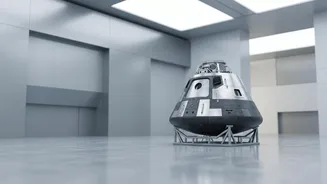
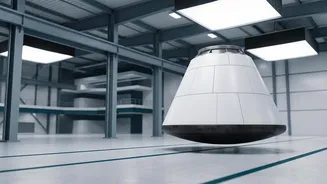
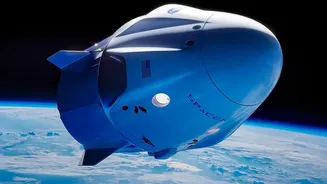
In July 2026, ISRO announced the successful completion of three major ground-based qualification tests for the Gaganyaan crew module systems. The first was the Crew Module Up-righting System (CMUS) test, which validated a flotation system designed to
ensure the capsule turns upright after splashing down in the sea—a vital step for a safe recovery of the astronauts. The second test verified the umbilical separation of the Crew Module Service Module Connect & Disconnect System (CSCDS). This system ensures the crew capsule cleanly detaches from its service module before re-entering Earth's atmosphere. Finally, a structural test confirmed the module could withstand the force of the Apex Cover separation, the event that jettisons the protective shield over the parachutes. Together, these ground tests clear critical safety hurdles for the capsule's return journey.
Escaping Danger on the Launchpad
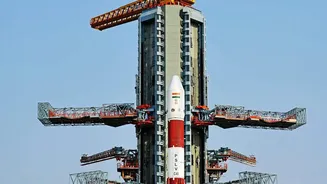
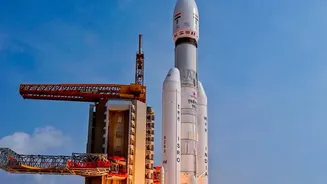
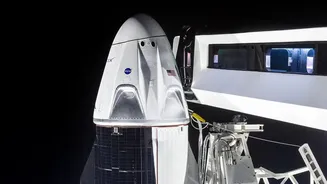
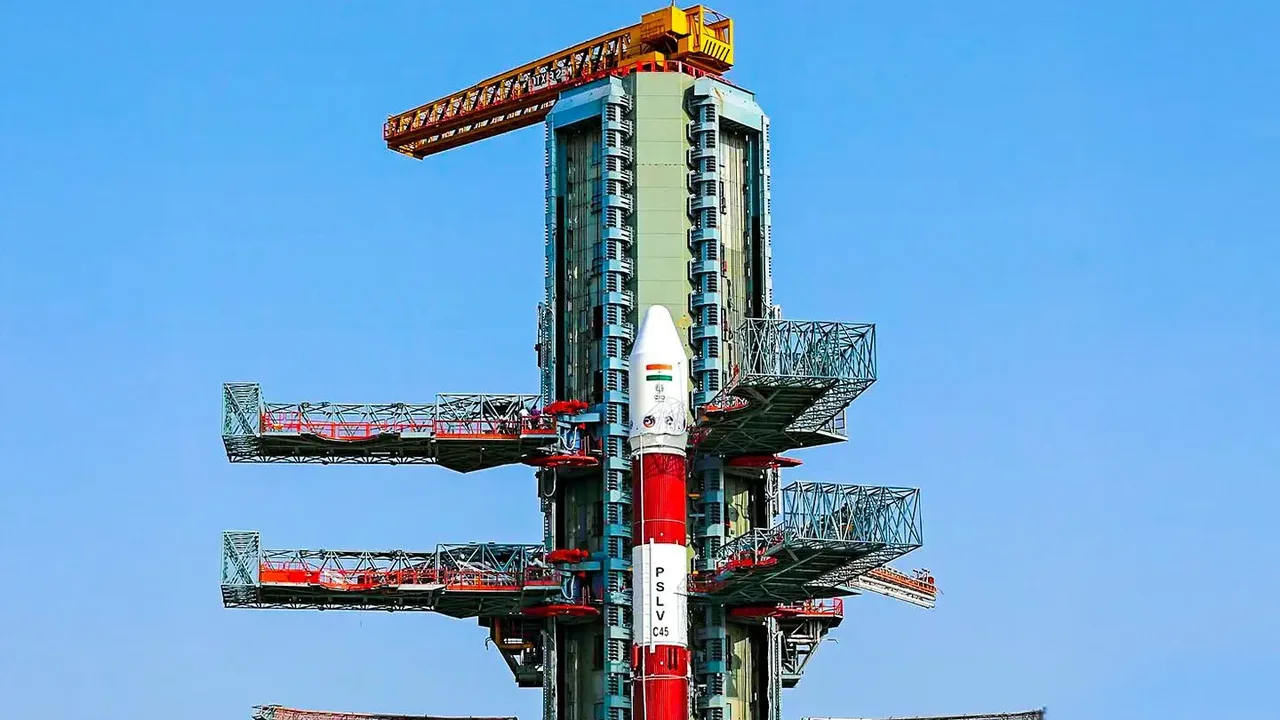
While post-mission safety is crucial, Gaganyaan's safety protocols begin before the rocket even clears the tower. The Crew Escape System (CES) is designed as a powerful emergency ejector seat, but for the entire capsule. In the event of a catastrophic failure on the launchpad, a set of quick-firing solid motors are designed to pull the crew module and its occupants clear of the malfunctioning launch vehicle. ISRO successfully demonstrated this capability back in July 2018 with the Pad Abort Test (PAT). In that test, a simulated crew module was launched to an altitude of 2.7 km and brought to a safe splashdown, proving the escape system can save the crew in the most immediate of emergencies.
Mastering Mid-Air Emergencies
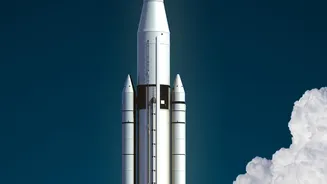
The most aerodynamically stressful point of any launch occurs during ascent, when the vehicle is travelling at transonic speeds. An emergency at this stage requires a robust abort system. To validate this, ISRO conducted the Test Vehicle Abort Mission-1 (TV-D1) in October 2023. This test simulated an in-flight abort, with the Crew Escape System successfully firing to pull the module away from its booster at an altitude of about 17 km. The capsule then descended safely under parachutes. This was a critical demonstration of the escape system's performance under maximum dynamic pressure. The next step, Test Vehicle Abort Mission-2 (TV-D2), planned for late 2026, will test a high-altitude abort scenario, further qualifying the system for the entire ascent phase.
The Gentle Art of a Fiery Return
Surviving the return from orbit and landing safely is perhaps the most complex part of the mission. For this, Gaganyaan relies on a sophisticated parachute system designed to slow the 5.7-tonne crew module from high speed to a gentle splashdown. The entire system uses a sequence of ten parachutes of four different types. A series of Integrated Air Drop Tests (IADT) have been conducted to validate this system. In April 2026, the second such test (IADT-02) saw a simulated crew module dropped from a Chinook helicopter at an altitude of 3 km to test the full parachute deployment sequence. These tests, which recreate the final leg of the capsule’s journey, are essential for ensuring the parachutes perform flawlessly when it matters most.
Building a Fortress for Our Vyomanauts
These individual tests are not just items on a checklist; they are interlocking pieces of a comprehensive safety philosophy. From the abort motors that offer an escape route seconds into the launch, to the complex parachute sequence for landing, every potential failure point is being addressed with redundant and rigorously tested systems. The recent qualification of the up-righting system, umbilical separation, and apex cover strength adds another layer of confidence for the final phases of the mission. Human spaceflight is an inherently risky endeavour, but ISRO's methodical, step-by-step approach demonstrates an unwavering commitment to making Gaganyaan as safe as humanly and technologically possible for India’s future Vyomanauts.