






Meet PRIMA, NASA’s New Cosmic Detective
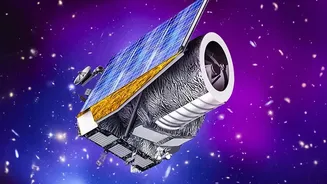
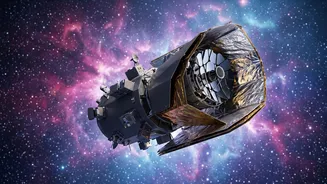
NASA has given the green light for the development of the Probe far-Infrared Mission for Astrophysics, or PRIMA. Announced in late September 2026, this mission is the very first in a new category called Probe Explorers, a new class of astrophysics missions
recommended by the National Academies of Sciences, Engineering, and Medicine. These missions are designed to be a middle ground, more ambitious and powerful than smaller projects but more focused and cost-effective than giant flagship observatories like the James Webb Space Telescope (JWST). With a projected cost of around $1.2 billion, PRIMA is slated to launch no earlier than 2033 for a five-year mission to survey the cosmos. Its main goal is to solve long-standing mysteries about how planets, stars, and galaxies come to be.
The Universe’s Hidden Light
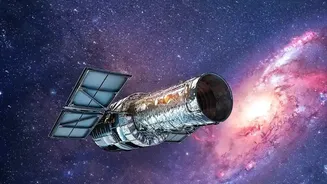
To understand PRIMA's importance, you have to think about light. The visible light our eyes see is just a tiny fraction of the full electromagnetic spectrum. Telescopes like Hubble see mostly in visible and ultraviolet light, while the James Webb Space Telescope is an expert in near- and mid-infrared light. On the other end of the spectrum, radio telescopes like the Atacama Large Millimeter/submillimeter Array (ALMA) study long-wavelength radio waves. But there’s a significant blind spot between them: the far-infrared part of the spectrum. This is the light emitted by some of the coldest and dustiest objects in the universe. Without a dedicated, high-sensitivity telescope for this range, astronomers have been missing a huge piece of the cosmic puzzle. PRIMA is specifically designed to fill this critical observational gap.
A Partner to Webb, Not a Replacement
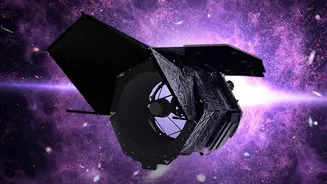
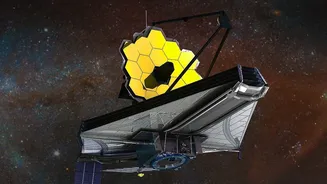
While JWST has revolutionized astronomy with its stunning infrared images, it can't see everything. JWST's instruments are sensitive up to about 28.5 microns, but many crucial cosmic processes are only visible at longer, far-infrared wavelengths. This is where PRIMA steps in, designed to detect light in the 24 to 235 micron range. For example, key spectral signatures for water are found in the far-infrared, meaning PRIMA will be able to investigate the role of water in forming new planets in ways that Webb cannot. Scientists emphasize that PRIMA is a complementary tool, not a competitor. By covering this different slice of the spectrum, it will work alongside Webb and other telescopes to provide a more complete and comprehensive picture of the universe.
Unlocking the Secrets of Creation
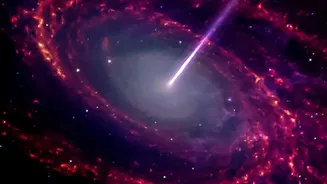
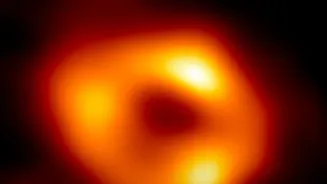
PRIMA has three major scientific themes. First, it will study the origins of planets and their atmospheres, particularly how and where water gathers in the disks of gas and dust that form new solar systems. Second, it will investigate the evolution of galaxies, tracing how supermassive black holes at their centers grow and how powerful outflows of molecules from galaxies can shape star formation over billions of years. Finally, PRIMA will track the buildup of cosmic dust and heavy elements throughout the universe's history. These are fundamental questions about our cosmic origins, from how planets like Earth got their water to the processes that govern the lifecycle of entire galaxies. It will even be able to spot distant objects in our own solar system's Kuiper Belt that are too cold and dark for other telescopes to find.
A New Era of Exploration
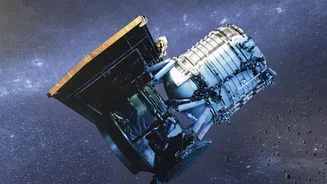
PRIMA's selection as the first Probe-class mission signals a new strategy for NASA. The Explorers Program, which began with the launch of Explorer 1 in 1958, is NASA's oldest continuous program, providing regular, cost-effective access to space. The new "Probe" category fills a strategic need for missions that can tackle major scientific goals identified by the scientific community without the massive budgets of flagship missions. PRIMA will feature a 1.8-meter (5.9-foot) telescope and highly sensitive instruments that must be cryogenically cooled to frigid temperatures to reduce thermal noise and detect faint far-infrared signals. This new mission class ensures a steady cadence of high-caliber projects, keeping the pipeline of discovery flowing well into the next decade.