



What's in a Name?
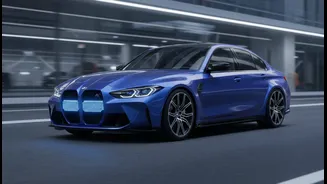
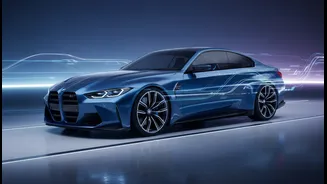
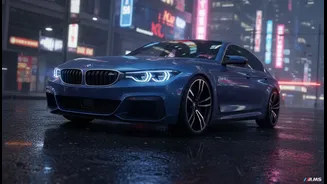
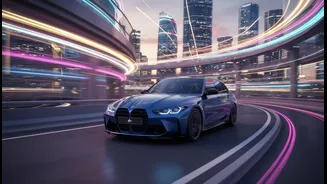
For over a decade, BMW has conditioned us to associate the letter 'i' with its electric vehicles. So, when the first all-electric M3 was announced, the world assumed it would be called the 'iM3'. It seemed like a logical step. However, BMW M’s CEO, Frank
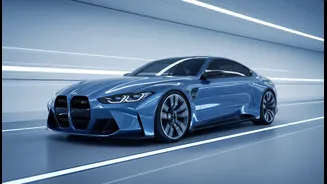
van Meel, has repeatedly and firmly shut down this assumption. The upcoming electric performance sedan, he insists, will simply be called the M3. His reasoning is that the M3 nameplate has always transcended its powertrain. Whether it had a four-cylinder, a V8, or a modern twin-turbo inline-six, it was always just an M3. In BMW's view, the M badge signifies a level of performance and handling, not the type of motor that delivers it.
The Heart of a New Machine
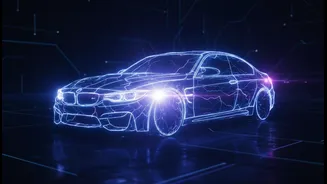
To back up this bold claim, BMW is engineering the electric M3 on its radical 'Neue Klasse' (New Class) architecture. This isn't just an existing car with batteries swapped in; it's a dedicated EV platform designed from the ground up. At the core of this new platform is a super-fast central computer system that BMW has poetically named the 'Heart of Joy'. This system integrates all driving dynamics—powertrain, braking, steering, and stability control—into a single, unified brain. BMW claims this allows for reactions ten times faster than current systems, creating a level of control and driver feedback that is simply not possible with separate electronic modules. This technology is BMW's answer to the age-old question of whether an EV can have a soul.
Recreating the M Experience
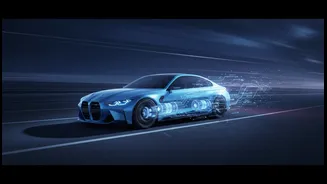
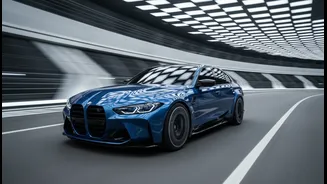
The soul of the M3 has always been more than just straight-line speed. It’s about the feel, the sound, and the dynamic connection between driver and car. BMW knows this and isn't ignoring the sensory experience. The electric M3 is expected to feature a quad-motor setup, with one electric motor powering each wheel. This will allow for unprecedented, instantaneous torque vectoring, enabling the 'Heart of Joy' to precisely control the car’s handling dynamics, from rock-solid all-wheel-drive grip to a classic M-car rear-wheel-drive feel. While not chasing an absurd horsepower figure just for marketing, the car is expected to be breathtakingly quick—a byproduct of its advanced engineering, not the primary goal. Van Meel himself says prototypes are already lapping tracks significantly faster than the current M4 CSL. To address the lack of engine noise, BMW is developing unique, emotionally resonant sounds and may even simulate gear shifts to give drivers the sensory feedback they're used to.
A Tale of Two M3s
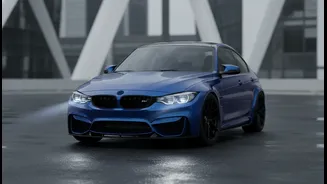
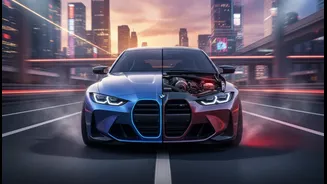
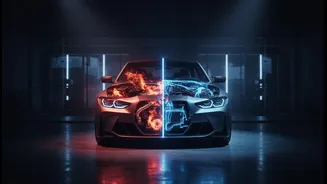
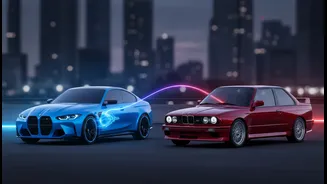
Adding another layer to this transition is the fact that BMW isn't putting all its eggs in one electric basket. For a period, there will be two distinct M3s on sale. Alongside the all-electric M3 built on the Neue Klasse platform, BMW plans to release an updated combustion-engine M3 based on its current architecture. This dual-strategy acknowledges that while the future is electric, the present still has a passionate base of petrol purists. It allows the brand to cater to its entire fanbase while simultaneously proving its thesis: that the M3 identity is strong enough to exist across two entirely different technological foundations. This unusual overlap will provide a direct, real-world comparison for customers and critics alike to decide if an electric M3 is, indeed, still an M3.