



The Allure of an Assured Income
The primary driver behind paddy's dominance is the robust safety net it offers. Unlike cotton, which is sold to private traders at fluctuating market prices, paddy is backed by the government's Minimum Support Price (MSP) mechanism. This system guarantees
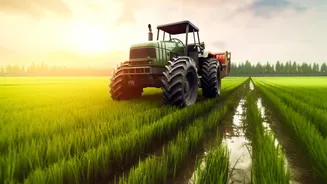
that the government will purchase the harvest at a pre-announced price, providing farmers with a predictable and secure income. For the 2026-27 season, the MSP for common paddy was set at ₹2,441 per quintal. This assurance of procurement and payment, coupled with an established network of mandis, makes paddy the least risky option for many farmers, effectively shielding them from market volatility and ensuring a stable return on their investment.
The Mounting Risks of Growing Cotton
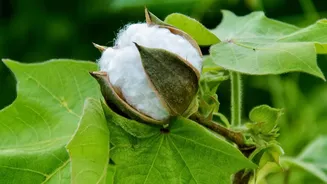
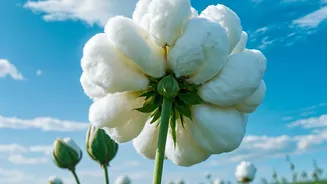
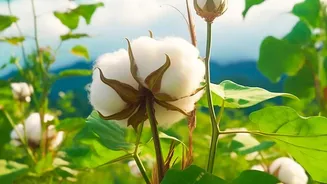
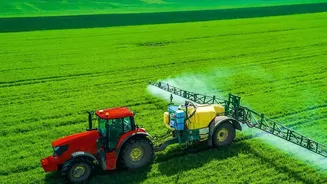
While paddy pulls farmers in with its security, cotton has been actively pushing them away. In recent years, cotton cultivation in Punjab has become fraught with risk. The area under cotton has plummeted to a historic low, shrinking from over 7 lakh hectares in the past to under 1 lakh hectares recently. A major reason for this is the crop's vulnerability to devastating pest attacks. Pests like the whitefly and, more critically, the pink bollworm have developed resistance to genetically modified Bt cotton, leading to widespread crop failures and immense financial losses. Adding to these woes are erratic weather patterns, with unseasonal rains often damaging the crop during the crucial harvesting period, further diminishing yields and income. For many, the risk of losing an entire season's investment has made cotton an untenable choice.
An Environmentally Costly Decision
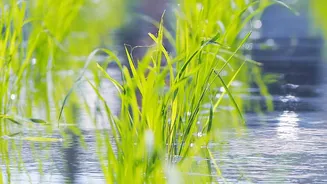
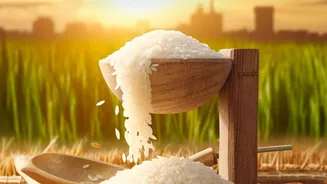
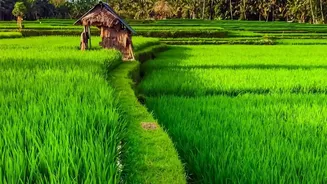
The shift towards paddy, while economically rational for individual farmers, comes at a tremendous environmental cost. Paddy is a notoriously water-intensive crop, requiring about 5,000 litres of water to produce a single kilogram of rice. This has put immense strain on Punjab’s natural resources, leading to a severe groundwater crisis. About 80% of the state is in a red zone due to over-exploitation of groundwater, with water tables falling by more than a meter each year in some central districts. Some reports warn that at the current rate of extraction, the state could exhaust its usable groundwater by 2039. Furthermore, the short window between harvesting paddy and sowing the next wheat crop leads many farmers to burn the leftover stubble, causing massive air pollution that affects the health of millions across North India.
The Farmer's Rational Calculation
From a farmer's perspective, the decision is a straightforward economic calculation. When faced with the high probability of crop failure from pests and unpredictable weather in cotton farming, the guaranteed income from paddy becomes the logical choice for securing a livelihood. The profitability of paddy is consistently higher due to the assured procurement at MSP and other subsidies like free electricity for irrigation. Government initiatives to promote crop diversification by offering incentives for alternative crops like maize or pulses have largely failed to make a dent. These incentives are often seen as insufficient compared to the massive, reliable economic ecosystem built around paddy cultivation, which ensures that despite its environmental drawbacks, it remains the safest bet for income security.