


The Science of a Sizzling Kadai
Deep-frying is a delicate dance between heat and food. To get that signature crispiness, the oil needs to be at a consistently high temperature, typically between 175°C and 190°C. When you add food to the kadai, it naturally lowers the oil's temperature because
the food is much cooler. If you add just a few pieces, a good quality, heavy-bottomed kadai can quickly recover its heat. However, when you overcrowd the pan, you introduce a large mass of cooler items all at once. This causes a sudden and dramatic drop in the oil's temperature, one that your stove's flame can't quickly counteract. Instead of frying, your food begins to soak in the lukewarm oil, leading to a greasy, unappetizing result.
Solving the Puffing Problem
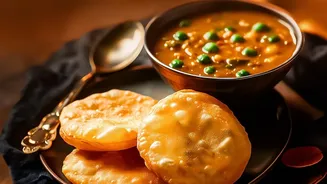
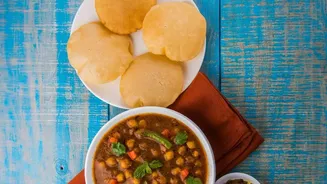
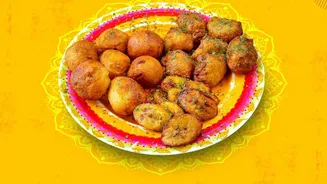
The magic of a puri that puffs into a perfect sphere is pure science. When the rolled dough hits the hot oil, the moisture trapped inside instantly turns into steam. This rapid steam generation needs intense heat. The outer layer of the puri cooks almost immediately, creating a seal. The trapped steam then pushes outwards, inflating the dough like a balloon. If the oil temperature has dropped because the kadai is too crowded, this process is short-circuited. The heat isn't intense enough to create steam rapidly. Without that powerful internal pressure, the puri won't puff up, leaving you with a sad, flat disc.
Avoiding the Soggy, Oily Mess
A low oil temperature doesn't just prevent puffing; it's also the main reason for oily, soggy food. The ideal frying temperature creates a crisp crust so quickly that it forms a barrier, preventing the food from absorbing too much oil. The food cooks from the inside out, essentially steaming itself within a crispy shell. When the oil is too cool, this crust doesn't form right away. The food sits in the oil for longer, absorbing it like a sponge. This not only makes the final product heavy and greasy but also mutes its flavour. The beautiful browning we associate with fried food, a result of the Maillard reaction, also requires high heat to occur properly.
How to Fry Like a Pro
The key to perfect frying is patience and giving your food space. The golden rule is to always fry in small batches. This ensures the oil temperature remains stable. Allow the oil to come back up to the correct temperature between batches. A cooking thermometer is the most reliable tool, but you can also test the oil by dropping in a tiny piece of dough. If it sizzles and rises to the surface immediately without browning too quickly, the oil is ready. Using a heavy-bottomed kadai is also beneficial, as it retains heat better than thinner pans, helping to minimize temperature fluctuations. By giving each piece of food enough room to be surrounded by hot oil, you guarantee an even cook and a perfectly crisp result every time.