




What is the Rhenium Adulteration Scare?
An investigative report by Dainik Bhaskar has claimed that a powdered metal named rhenium is being mixed with gold to increase its weight fraudulently. During an experiment conducted with a jeweller in Jodhpur, investigators allegedly mixed one gram of
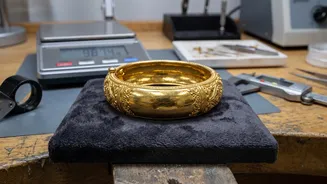
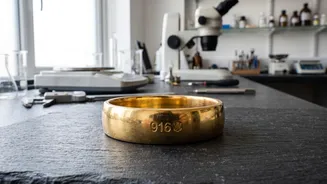
rhenium powder with 7.83 grams of 24-carat gold. The resulting mixture was then used to create a traditional Rajasthani ornament. Despite the gold content being diluted to what was estimated to be around 20-carat purity, the finished piece reportedly passed several tests as 22-carat gold. The investigation even claims a hallmarking centre issued it a '916' mark, certifying it as 22-carat. This has raised serious questions about the vulnerability of the systems designed to protect consumers.
Why Rhenium is a 'Perfect' Imposter
Rhenium's properties make it an unusually effective adulterant. Its density is very close to that of gold, which means it can increase the weight of an ornament without raising red flags during simple density checks. Furthermore, its atomic number (75) is very close to gold's (79). This proximity on the periodic table can cause their spectral signals to overlap during X-Ray Fluorescence (XRF) analysis, a common method used by jewellers for quick, non-destructive purity testing. Standard XRF machines, especially lower-resolution models, may struggle to differentiate rhenium from gold, leading to an inaccurate purity reading. The investigation alleged that the supply chain for this powder traces back to China, with claims that it is specifically manufactured for this purpose.
The Limits of Common Purity Tests
For millions of Indian consumers, trust in gold purity rests on two pillars: the jeweller's in-store testing machine and the official BIS hallmark. This recent report suggests both can potentially be deceived. The common 'karatmeter' is an XRF machine, which primarily analyses the surface of the metal. Cheaper, lower-resolution machines may not have the sensitivity to detect sophisticated adulterants like rhenium. Even the mandatory BIS hallmarking system, which includes the six-digit Hallmark Unique Identification (HUID) number, is now under scrutiny. In the Rajasthan experiment, the adulterated piece allegedly received a valid hallmark. This indicates a potential gap in the standard assaying process, which may not be equipped to look for unexpected elements like rhenium. While there is no evidence of widespread use yet, the experiment highlights a critical vulnerability.
What Does This Mean for Your Gold?
These reports can be alarming for anyone who has invested their savings and trust in gold jewellery. The financial implications of such adulteration are significant. Based on the experiment, it was estimated that a buyer could lose nearly ₹15,000 on a single 'tola' (approximately 10-11.6 grams) of gold. While this specific method of fraud may be new, the challenge of adulteration is not. In the past, metals like iridium and ruthenium have also been used for similar purposes. The key takeaway is not to panic, but to become a more aware consumer. The incident serves as a crucial wake-up call for both the industry and regulatory bodies to upgrade their testing protocols and for consumers to demand greater transparency.
How to Protect Your Investment
While the news is concerning, there are steps consumers can take. Always buy from reputable, BIS-registered jewellers and insist on a proper invoice that details the HUID code, weight, and purity. Use the BIS CARE app to verify the HUID of your purchase in real-time at the counter. This confirms that the piece has been officially recorded in the BIS system. For high-value purchases or if you have doubts about old jewellery, you can get it tested at a BIS-recognized Assaying and Hallmarking Centre. While XRF is a good preliminary, non-destructive test, the most accurate method is a fire assay. This process is destructive as it requires a small sample of the gold, but it provides the definitive composition of the metal.