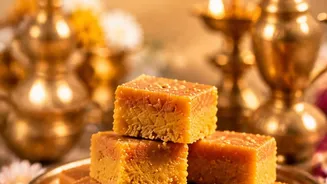


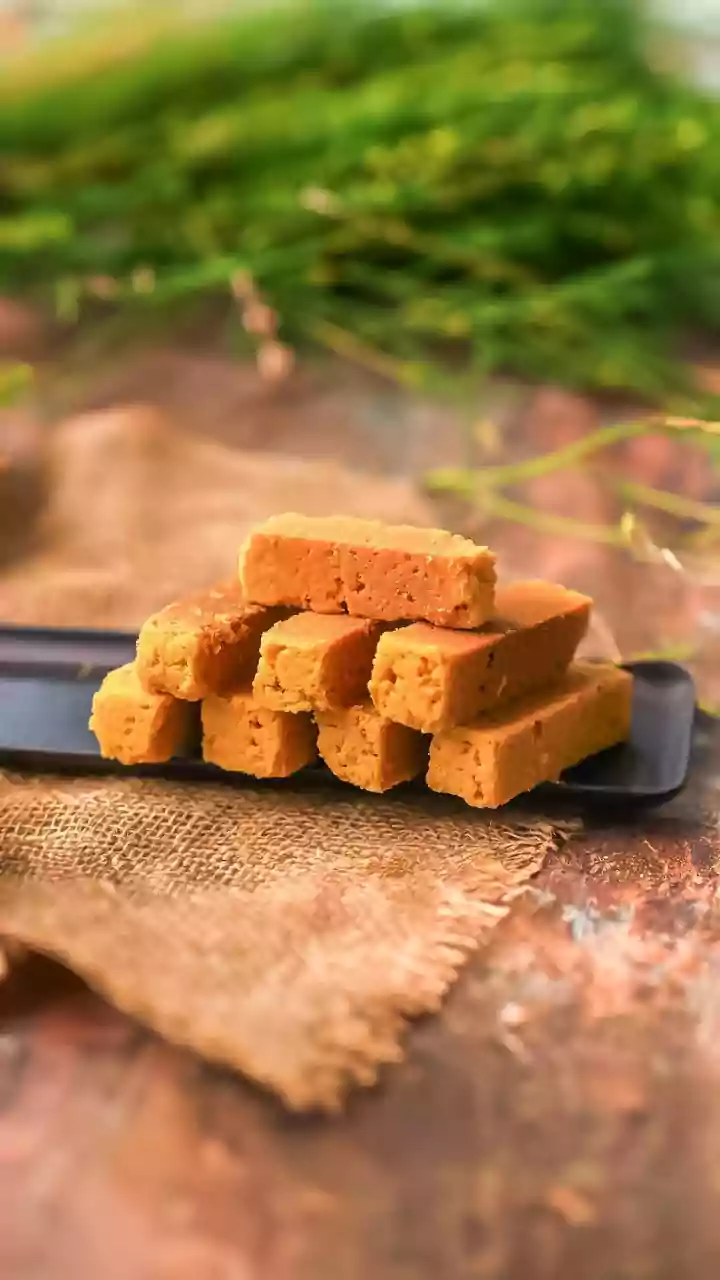




The Joy of Homemade Mithai
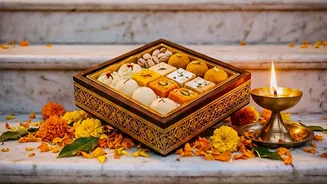
There is a special kind of magic in preparing traditional sweets, or 'mithai', at home during festivals like Diwali, Raksha Bandhan, or Holi. The aroma of roasting nuts and sweet syrup fills the kitchen, creating an atmosphere of celebration that store-bought
boxes just can't replicate. Kaju Katli, a sweet cherished across India, is often seen as complex and reserved for expert cooks. However, this perception is far from the truth. At its heart, it’s a simple dessert made from a handful of ingredients: cashews, sugar, and water. By following a few key steps, you can easily craft this elegant sweet, impressing your family and friends with a treat that is made with love and care. This guide breaks down the process into easy, manageable stages, ensuring a perfect result even for absolute beginners.
Gathering Your Ingredients
The secret to an exquisite Kaju Katli lies in the quality of your ingredients. Since the recipe is so minimal, each component plays a crucial role. You will need: - 1 cup of high-quality, raw, unsalted cashew nuts (kaju). Fresh and plump cashews yield the smoothest and most flavourful fudge. - ½ to ¾ cup of granulated sugar. You can adjust the quantity based on your preference for sweetness. - ¼ cup of water. - 1 teaspoon of ghee (clarified butter), plus a little extra for greasing. This is optional but highly recommended as it adds a wonderful smoothness and flavour. - ¼ teaspoon of cardamom powder (elaichi) or a few drops of rose water for a delicate fragrance (optional). That's it. With just these few items, you are on your way to creating a truly special festive treat.
Step 1: Creating the Perfect Cashew Powder
This is arguably the most critical step. The texture of your final Kaju Katli depends on getting the cashew powder just right. Take your cashews and put them in a mixer or spice grinder. The goal is a fine, flour-like powder. Use the 'pulse' function on your grinder. Grind in short bursts, stopping every few seconds. If you grind continuously, the cashews will release their natural oils and turn into a sticky cashew butter instead of a dry powder. After grinding, it's a good idea to sift the powder through a fine-mesh sieve to catch any larger pieces. Simply grind these remaining coarse bits again until everything is uniform and fine. This ensures your Kaju Katli will have that signature silky-smooth, melt-in-your-mouth feel.
Step 2: Mastering the Sugar Syrup
The second key to success is the sugar syrup consistency. In a heavy-bottomed pan, combine the sugar and water over medium heat. Stir until the sugar has completely dissolved. Allow the syrup to come to a rolling boil. You are looking for what is known as a 'one-string consistency'. To check this, carefully dip a spoon into the syrup, let it cool for a moment, and then touch a tiny amount between your thumb and forefinger. When you gently pull them apart, a single, sticky thread should form. Be very careful, as the syrup will be extremely hot. Achieving this consistency is vital; if the syrup is undercooked, the katli won't set properly, and if it's overcooked, it can become hard and crystalline.
Step 3: Cooking the Cashew Dough
Once your sugar syrup has reached the one-string consistency, immediately turn the heat down to low. Add all the sieved cashew powder at once. Stir continuously and vigorously to ensure there are no lumps. The mixture will start to thicken. Now is the time to add the optional ghee and cardamom powder or rose water. Continue to cook on low heat, stirring constantly, for about 7 to 10 minutes. You'll know it's ready when the mixture thickens into a single, smooth mass that starts to pull away from the sides of the pan. To double-check, take a tiny piece, let it cool slightly, and try to roll it into a ball between your fingers. It should form a non-sticky, pliable ball.
Step 4: Kneading, Rolling, and Cutting
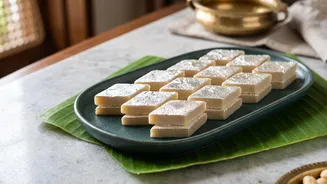
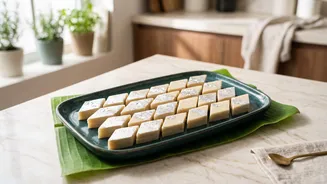
Immediately transfer the hot cashew dough onto a sheet of parchment paper or a plate greased with a little ghee. Be careful as it will be very hot. Let it cool for just a few minutes until it is warm enough to handle. While it's still warm, begin to knead the dough for 4-5 minutes. You can do this by folding the parchment paper over and pressing down, which helps create a very smooth texture. Once smooth, place another sheet of parchment paper on top and use a rolling pin to roll it out into a large, even circle about ¼ inch thick. If you like, this is when you would apply the traditional edible silver leaf (varak). Let the rolled-out dough cool completely at room temperature. Finally, using a sharp knife or a pizza cutter, cut the fudge into the iconic diamond shape.