





The UK Space Agency is offering a unique chance to name its first national mission: a robotic spacecraft designed to clean up our orbital backyard. It's more than a publicity stunt; it’s a critical response to the growing threat of space junk.
A Cosmic Custodian Needs a Name
The UK Space
Agency (UKSA) has officially launched a public competition to find a name for its groundbreaking Active Debris Removal (ADR) mission. The government agency is looking for a memorable name, a maximum of two words, that reflects the mission's core purpose: keeping space safe for future generations. The competition, which is running in partnership with the Association of Science and Discovery Centres, asks entrants to provide a short explanation for their choice, connecting it to the theme of a cleaner, safer orbital environment. The winning name will be etched onto the side of the spacecraft and featured on the official mission patch, cementing its place in British space history. The contest closes on December 10, 2026, offering a rare opportunity for the public to become part of a pioneering space venture.
The High-Speed Junkyard Above Us
For decades, every rocket launch and satellite deployment has left something behind. Low Earth Orbit (LEO) is now a hazardous zone, cluttered with everything from defunct satellites and spent rocket stages to tiny fragments of metal and paint. As of 2026, tracking networks are monitoring over 36,000 objects larger than 10 cm. These pieces of junk travel at speeds exceeding 17,000 miles per hour. At that velocity, even a small fleck of paint can cripple a functioning satellite. The real danger lies with the estimated 130 million fragments too small to be tracked but large enough to cause catastrophic damage. This growing field of debris threatens the essential services we rely on daily, including GPS, weather forecasting, and global communications. Experts warn of a scenario known as the 'Kessler Syndrome', where collisions create more debris, leading to a chain reaction that could render certain orbits unusable for generations.
Inside the UK's Robotic Claw Mission
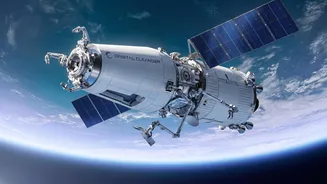
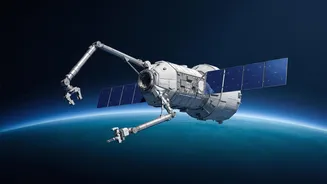
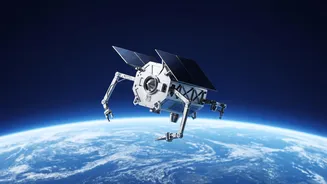
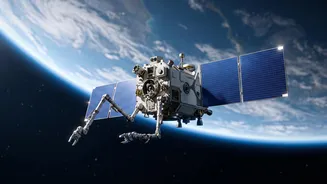
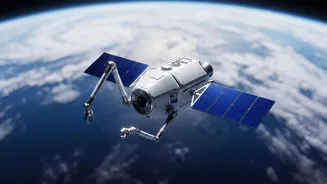
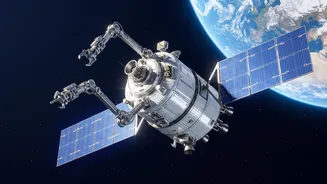
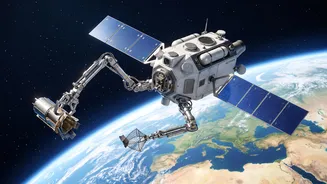
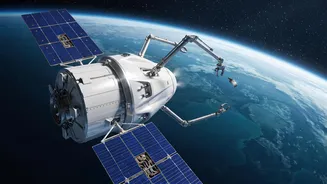
The UK's ADR mission is a bold, world-first initiative. Scheduled to launch in 2029 from the SaxaVord Spaceport in Scotland, the mission will target and remove two defunct, UK-licensed satellites currently tumbling uncontrolled in LEO. The spacecraft, being built by ClearSpace UK, will feature giant robotic claws to grab and secure the non-cooperative targets. Once captured, the robotic 'servicer' will drag the two old satellites into a lower orbit, where they will be released to burn up safely upon re-entering Earth's atmosphere. This will be the first time a single mission has removed more than one piece of space junk. The project, backed by over £60 million in government funding, is designed not just as a one-off cleanup but as a testbed for a refuellable spacecraft that could 'sweep space' for years to come.
A Global Problem Demanding Action
While the ADR mission is a national UK project, the problem it addresses is global. Space debris poses an equal threat to all nations operating in orbit, including India's own growing constellation of satellites managed by ISRO. A collision in a congested orbit could have cascading effects on the services and security of multiple countries. The UK's initiative is part of a broader international push towards space sustainability. The European Space Agency (ESA) is also preparing its own debris removal mission, ClearSpace-1, which is set to launch in 2026. These missions are vital first steps, but they are not a complete solution. Preventing the creation of new debris is just as important. The UK is also working on developing new standards for space sustainability, encouraging companies to design satellites that can be de-orbited safely at the end of their life.