





A New World of Sensation
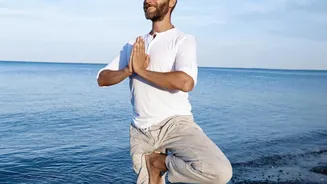
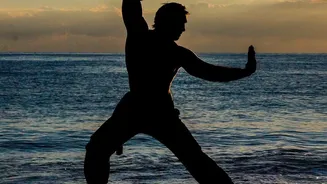
The most immediate change when you step onto sand to practice Tai Chi is the feeling under your feet. A firm, flat floor provides predictable stability. Sand, however, is alive. It shifts and gives way, forcing you to pay much closer attention to how you root
yourself to the ground. This unstable surface demands greater awareness. Every slow shift of weight, a core component of Tai Chi, becomes a more conscious act. Your brain receives a flood of new sensory information from the nerves in your feet, a concept known as proprioception, or your body's awareness of its position in space. This heightened feedback encourages a deeper state of mindfulness, as your mind must be fully present to manage the constant, subtle adjustments required for balance.
Your Body's Automatic Upgrade
This instability is a natural workout enhancer. To maintain balance on sand, your body automatically recruits an army of small, stabilizing muscles in your feet, ankles, calves, and hips that are often underused on solid ground. The constant effort to remain stable turns every movement into a dynamic core exercise. This is a low-impact way to build significant functional strength. Research consistently shows that Tai Chi is one of the best practices for improving balance and preventing falls, particularly in older adults, because it trains the body's visual, vestibular (inner ear), and proprioceptive systems simultaneously. Practicing on an uneven surface like sand amplifies these benefits, effectively fast-tracking your body's ability to correct imbalances and stay upright.
Honouring the Core Principles
The headline's claim that the core technique remains unchanged is largely true, though nuanced. While your body works harder, the foundational principles of Tai Chi are not abandoned; they are reinforced. The practice still revolves around slow, deliberate movements, controlled breathing, maintaining structure, and the concept of 'yin and yang' or the interplay of hardness and softness. In fact, the sand acts as an honest teacher. If you move too quickly, use brute force, or neglect your posture, the shifting surface will immediately let you know by destabilizing you. It forces you to find your true centre, relax into the movement, and 'grow a root under your feet', as one of the key principles of grounding suggests. You learn to generate power from the ground up in a more authentic way.
A Deeper Mind-Body Connection
Often described as 'meditation in motion', Tai Chi is renowned for its ability to calm the mind and reduce stress. The beach environment enhances this aspect exponentially. The rhythmic sound of the waves can guide your breathing, helping you fall into a natural, meditative cadence. The fresh air and expansive view create a sense of peace and connection to nature that is difficult to replicate indoors. This combination of heightened physical focus and a calming natural environment can lead to a profound state of flow, where the mind quiets down and you become fully immersed in the present moment. It transforms the practice from a simple exercise into a holistic experience for mind, body, and spirit.
Tips for Your First Beach Session
If you're inspired to try Tai Chi on the sand, a few tips can help you get started safely. Begin on wet, firm sand near the waterline, which offers more stability than soft, dry sand. Consider starting with basic movements or Qigong exercises before attempting a full, complex form. The goal is not to perform perfectly, but to explore the new sensations. Don't be afraid to allow your knees to be soft and bent to act as natural shock absorbers. Most importantly, listen to your body. If you have significant balance issues or joint injuries, it may be best to stick to a flatter surface or consult an instructor. But for most practitioners, the sand offers a challenging yet rewarding new dimension to explore.