

Anatomy of a Perfect Plate
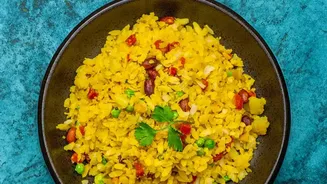
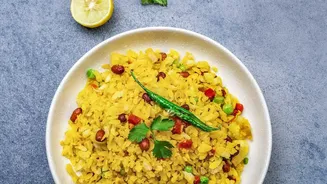
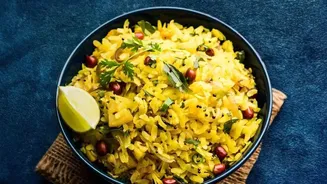
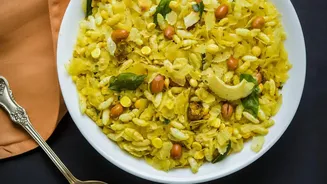
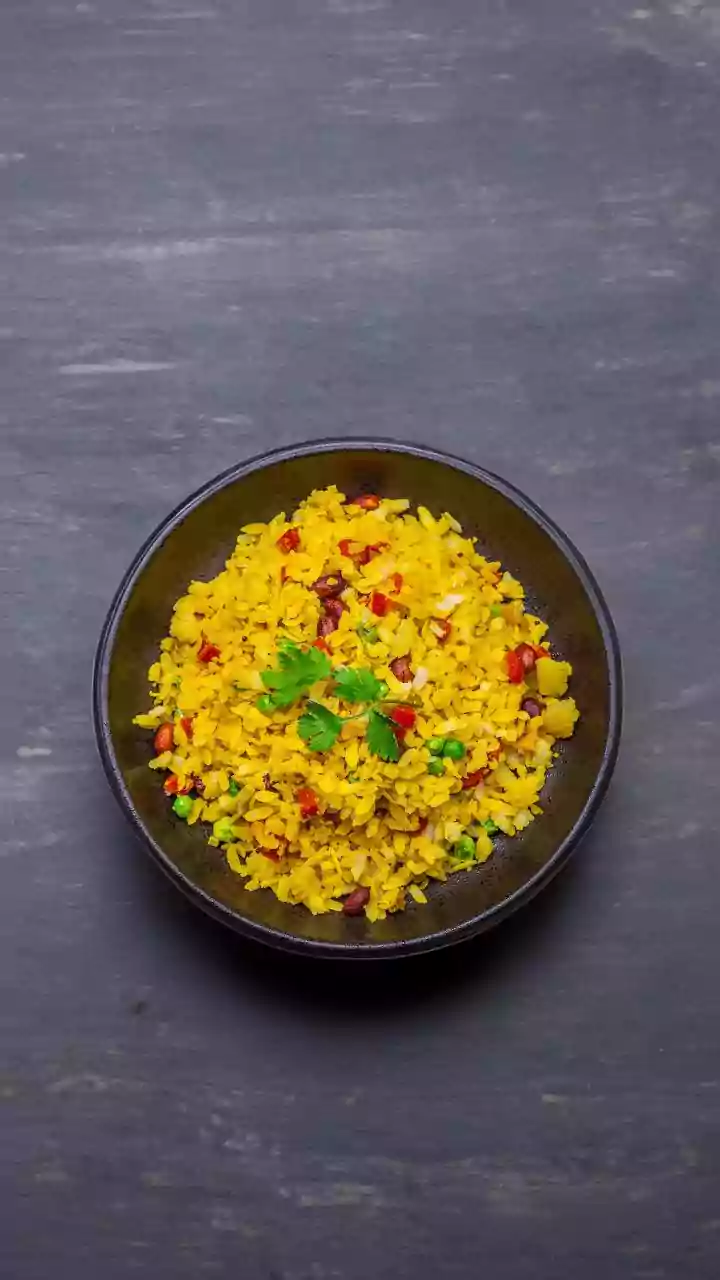
The foundation of this iconic meal is Indori poha, which sets itself apart from other regional variations. Unlike drier, pan-fried versions, Indori poha is steamed until it's exceptionally soft and fluffy. This gentle cooking method keeps the flattened
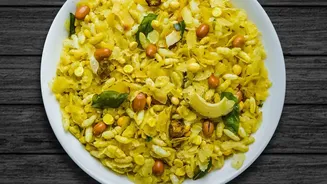
rice flakes moist and light. The poha is seasoned with turmeric, mustard seeds, and notably, fennel seeds, which impart a subtle, sweet aroma. It’s then generously garnished with chopped raw onions for a pungent bite, fresh coriander, and sometimes pomegranate seeds for a burst of sweetness. But the defining element is the topping: a lavish handful of sev, a crunchy chickpea flour noodle. Often, it's the spicy Ratlami sev that provides a textural counterpoint to the soft poha. Finally, a squeeze of lemon and a sprinkle of a special spice blend known as jeeravan masala tie all the savory, tangy, and spicy notes together.
The Sweet and Savory Harmony
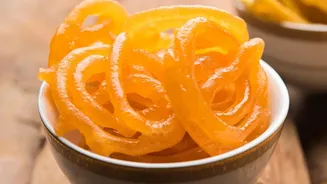
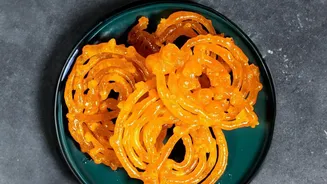
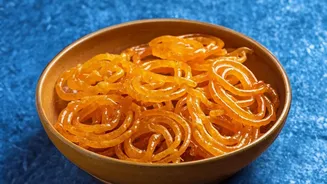
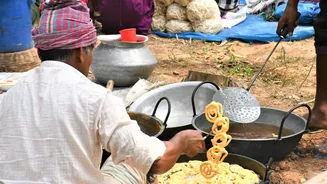
On paper, serving a plate of savory poha with a side of intensely sweet, deep-fried jalebi might seem unusual. Yet, for anyone in Madhya Pradesh's Malwa region, it makes perfect sense. The combination is a masterclass in balancing contrasts. Each spoonful of poha offers a complex mix of soft, crunchy, tangy, and spicy. When followed by a bite of warm, crispy jalebi dripping with sugar syrup, the palate experiences a delightful reset. The jalebi, with origins tracing back to the Middle East, became a beloved sweet in India over centuries. Its straightforward, sugary intensity cuts through the spiced complexity of the poha, creating a breakfast that is simultaneously comforting and exciting. This pairing is a hallmark of the Malwa region's culinary philosophy, which embraces layered flavors of sweet, sour, and spicy in a single meal.
The Indori Soul of a Dish
While poha is enjoyed across India, its combination with jalebi is a cultural institution most strongly associated with Indore. The dish is believed to have journeyed from Maharashtra to Madhya Pradesh with the Holkar dynasty. But it was in Indore that it transformed into the beloved street food it is today. Local vendors perfected the steaming technique and added their own flair with unique toppings and the signature jeeravan masala. It’s an accessible, affordable, and quick meal, making it the go-to breakfast for everyone from students to office workers. In Indore, morning begins at the local poha stall, where the community gathers over paper plates of this iconic dish. It's more than just food; it’s a shared daily ritual and a symbol of the city’s identity.
More Than a Masala
The secret to what makes Indori poha truly distinct is jeeravan masala. This isn't just another generic spice mix; it's a complex blend that can contain up to 20 different spices, including cumin, coriander, black salt, dry mango powder (amchur), fennel, and ginger. It’s used as a finishing spice, sprinkled on top just before serving to deliver a final punch of chatpata—a uniquely Indian flavor profile that is tangy, spicy, and savory all at once. While sometimes confused with chaat masala, jeeravan has its own character, dominated by an earthy cumin base. Many local vendors have their own proprietary recipes, passed down through generations, making each plate of poha slightly different and fiercely loved. This special masala elevates the humble poha into something celebrated.