


A Cosmic Crime Scene
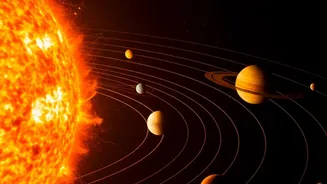
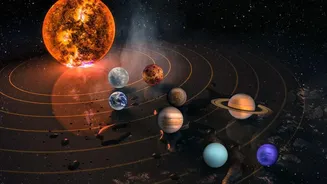
Imagine the early solar system as a chaotic construction zone. More than four billion years ago, a swirling disk of gas and dust called the solar nebula was collapsing to form the sun and its planets. In this turbulent environment, planetary collisions
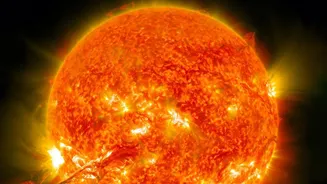
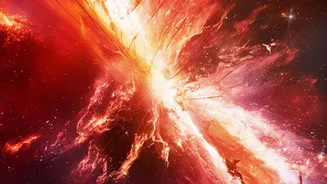
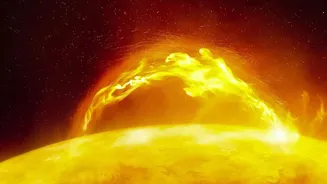
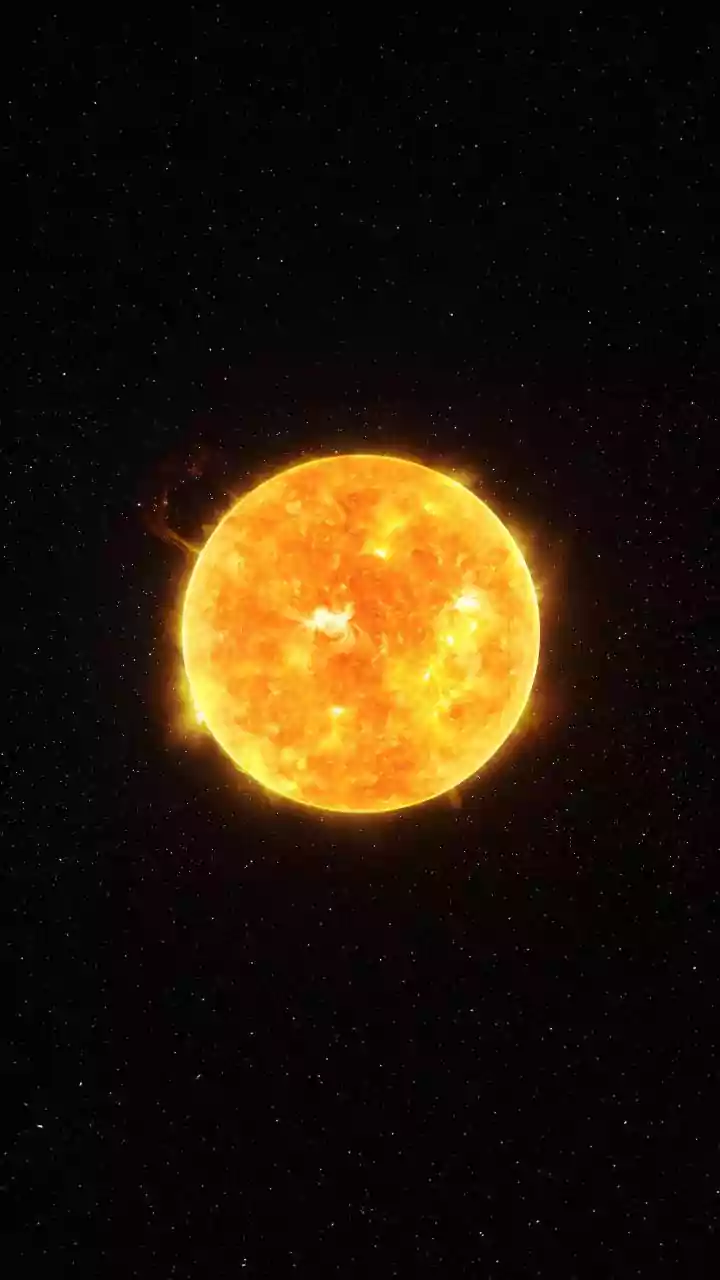
were common. But some scientists now believe something even more dramatic occurred: our young sun may have swallowed a planet whole. New research models suggest that a “super-Earth”—a rocky world several times more massive than our own—could have spiraled into the sun during this primordial era. This cataclysmic event, far from being erased by the sun's fiery furnace, may have left behind a permanent set of clues—a chemical fingerprint—that could solve several long-standing mysteries about our star and the planets that survived.
What is a Planetary Fingerprint?
To understand how a star could hold evidence of a planet it ate, we first need to understand the concept of a chemical fingerprint. In essence, everything in the solar system, from planets to asteroids, is made from the same initial cloud of material. However, the exact recipe varies based on where an object formed. Scientists act like cosmic detectives, analyzing the ratios of different isotopes—versions of an element with slightly different masses—to trace an object’s origin. For example, the specific blend of potassium isotopes in moon rocks helped confirm the Moon was formed from a giant impact with Earth. Similarly, studying isotopes of carbon, oxygen, and zinc in meteorites reveals where they originated, whether in the warm inner solar system or the cold, distant outer regions. This unique isotopic and chemical signature is a celestial body's indelible fingerprint.
The Sun’s Telltale Clues
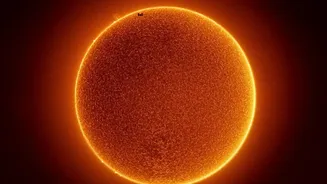
So, what are the clues pointing to a planetary meal? For years, astronomers have been puzzled by certain quirks in the sun’s composition. For one, it has a surprisingly low amount of the element lithium, which is easily destroyed in the high temperatures of a star’s interior. Furthermore, there are subtle mismatches between the standard models of how stars should evolve and what we actually observe deep inside the sun using a technique called helioseismology. The theory of a swallowed planet neatly explains these anomalies. A large, rocky planet would be made of different stuff than the sun, which is mostly hydrogen and helium. According to models, if a super-Earth plunged into the young sun, its heavier materials would have mixed into the solar plasma, altering the sun’s chemical balance in a way that could account for the missing lithium and other structural oddities we see today.
Why This Changes Our Solar Story
The implications of this theory are profound. It could explain a key feature of our solar system: the absence of super-Earths. These massive rocky planets are incredibly common in other star systems, so their non-existence here has been a major puzzle. Perhaps we did have one, but it was sacrificed to the sun early on. This idea recasts the early solar system as an even more violent and unpredictable place than previously imagined. It also suggests that stars are not just the creators of planets but can also be their destroyers, retaining a forensic record of these events for billions of years. If proven, it would give astronomers an entirely new tool for peering into the past. By studying the chemical makeup of other stars, we might be able to identify others that have consumed their own planets, providing a census of just how common this dramatic process is.