







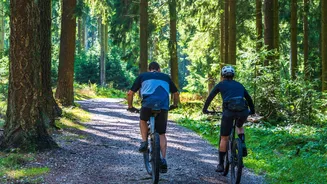
The call of the wild is strong, but the thought of navigating rugged trails can be intimidating. Yet, the simple joy of hiking is more accessible than you think, offering a perfect escape into nature and a reset for mind and body.
More Than Just a Walk
Before lacing up your
boots, it helps to understand why hiking is such a powerful activity. It is a full-body workout disguised as leisure. Unlike walking on a treadmill, navigating uneven terrain engages your core, improves balance, and builds strength in your legs and glutes. But the benefits are more than just physical. Spending time in green, natural spaces is proven to reduce stress by lowering cortisol levels. The simple act of trading city noise for the sounds of nature can boost your mood, sharpen your focus, and provide a profound sense of calm and well-being.
Gearing Up: What You Really Need
Walking into an outdoor store can be overwhelming. The secret for a beginner is to focus on the absolute essentials. The single most important investment is your footwear. Ditch the casual sneakers and opt for a pair of sturdy hiking shoes or boots with good grip and ankle support. Your feet will thank you. Next, dress in layers. Weather can change unexpectedly, so having a moisture-wicking base layer, a warm mid-layer like a fleece, and a waterproof outer jacket will keep you comfortable. A small backpack (20-30 litres is fine for a day hike) is necessary to carry your essentials: plenty of water, some high-energy snacks, a basic first-aid kit, and your phone.
Finding Your Footing on the Trail
Hiking technique isn't complex. The main goal is to move efficiently and safely. When going uphill, shorten your steps and place your feet firmly. You can use a 'rest step'—pausing briefly with your back leg straight and locked—to conserve energy on long climbs. When heading downhill, which can be harder on the knees, keep your body slightly bent and take shorter steps to maintain control. Trekking poles can be a huge help here, acting like an extra set of limbs for balance and taking some of the strain off your joints. Most importantly, listen to your body. Find a comfortable, steady pace you can maintain without getting breathless. It’s a journey, not a race.
Staying Safe and Found
Preparation is the foundation of safety. Before you leave, always check the weather forecast and research your chosen trail. Pick a route that matches your current fitness level; it's better to start with an easy, well-marked trail and build up from there. Always tell someone where you are going and when you expect to return. While a GPS on your phone is useful, don't rely on it entirely, as batteries can die and signals can fail. It’s wise to carry a physical map or at least have one downloaded for offline use. Stick to the marked path to avoid getting lost and to prevent erosion. Finally, be aware of your surroundings, including wildlife. Make some noise as you walk, especially around blind corners, to avoid surprising any animals.
Respecting the Trail for Others
A core principle of hiking is to leave nature as you found it, or even better. This is known as the 'Leave No Trace' philosophy. The rules are simple but crucial. Pack out everything you pack in, including all trash and food scraps. Stay on durable surfaces like the established trail to protect fragile vegetation. Observe wildlife from a distance and never feed them, as it disrupts their natural behaviour. Finally, be considerate of other hikers. Yield to those moving faster or uphill, and keep your voice down to let the sounds of nature prevail. By following these simple ethics, you help ensure the trail remains beautiful and accessible for everyone.