





India’s Watchtower in Space
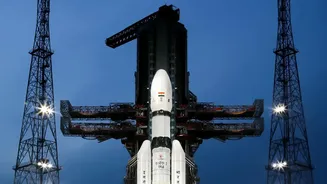
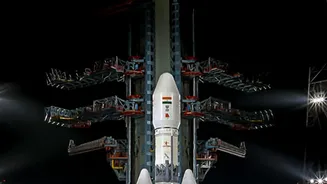
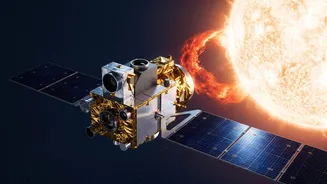
Launched in September 2023, Aditya-L1 is a testament to India's growing prowess in space science. It is strategically positioned at Lagrange Point 1 (L1), about 1.5 million kilometres from Earth, a special spot where the gravitational pulls of the Sun
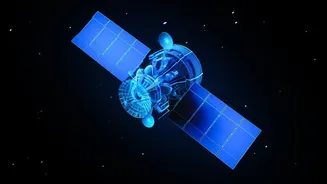
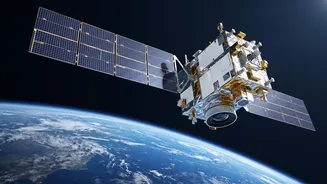
and Earth balance out. This unique location allows the spacecraft to have a continuous, uninterrupted view of the Sun, which is impossible from Earth-orbiting satellites that experience eclipses. Aditya-L1 is not just passively observing; it's functioning as a dedicated space weather station, equipped with seven advanced payloads to study the Sun's various layers and phenomena.
Why We Need to Watch the Sun
The Sun, while the source of life, is also incredibly volatile. It periodically releases massive bursts of energy and radiation known as solar flares, and sometimes hurls giant clouds of plasma, called Coronal Mass Ejections (CMEs), into space. If directed at Earth, this solar fury can have serious consequences. Major solar events can disrupt our satellite communications, knock out GPS navigation systems, damage power grids, and pose a radiation risk to astronauts in space. Understanding and predicting these events is crucial for protecting the technological infrastructure that our modern world depends on.
The Confirmed Warning System
The headline-making capability of Aditya-L1 lies in a recent discovery. Scientists have confirmed that the mission can detect early warning signs of an impending solar flare. Using data from its sensitive instruments, researchers identified small, short-lived brightenings in the Sun's atmosphere that appear hours before a major flare erupts. Crucially, these 'pre-flare events' cluster around the exact location where the larger flare will later occur. This is a significant breakthrough, moving space weather forecasting from simply analysing an event after it happens to having a predictive heads-up.
How the Instruments Work Together
This early detection is not the work of a single instrument but a coordinated effort. The Solar Ultraviolet Imaging Telescope (SUIT) is key, observing the Sun in near-ultraviolet (NUV) wavelengths that are blocked by Earth's atmosphere. SUIT is what spots the initial brightenings in the Sun's lower atmosphere, or chromosphere. This data is then combined with observations from two X-ray spectrometers, SoLEXS and HEL1OS, which detect the release of magnetic energy associated with these events. By using these three payloads in tandem, scientists can confirm that these small flickers are genuine precursors to a much larger energy release.
What This Means for Earth
The confirmed ability to detect pre-flare activity provides a crucial early warning window. While it doesn't mean we can predict flares days in advance, having hours of notice is a game-changer. This lead time allows satellite operators to put their spacecraft into a safe mode, helps airlines reroute flights to avoid communication blackouts over polar regions, and gives power grid managers time to prepare for potential geomagnetic disturbances. For India, this capability strengthens national security by helping protect critical communication and navigation infrastructure. It solidifies Aditya-L1's role not just as a scientific mission, but as a vital tool for risk management on a national scale.