







First, What Is Aerial Yoga?
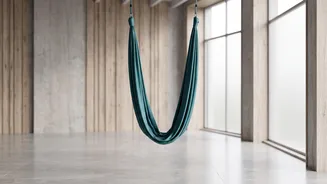
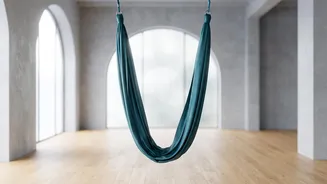
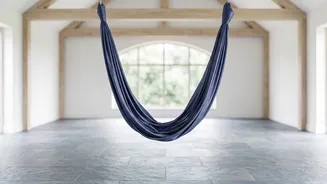
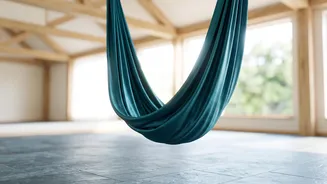
Aerial yoga is a modern practice that blends traditional yoga with elements of Pilates and acrobatics. It’s all done using a soft, sturdy fabric hammock suspended from the ceiling. This isn't just a gimmick; the hammock acts as a supportive prop. Instead
of practicing on a mat, you use the silk to hold your body weight, assist with balance, and guide you through poses. This interaction with the hammock is what creates the unique push-and-pull of making some things easier while demanding more from you in other ways.
The Feeling of Effortless Flight
The most celebrated benefit of the hammock is how it makes you feel lighter. For many, poses that are challenging on the ground become suddenly accessible. The hammock supports your body weight, which takes pressure off your joints, particularly your spine, hips, and knees. This is especially true for inversions, like headstands. Hanging upside down might seem intimidating, but the fabric provides security, allowing your spine to decompress gently under gravity. This can provide relief from back tension. The support also allows you to sink deeper into stretches, exploring a greater range of motion and improving flexibility in areas like the hamstrings and hips without strain.
The Unexpected Challenge
While the silk supports you, it also introduces an element of instability. This is where things get more demanding. Balancing on a moving hammock forces your deep core muscles to fire up constantly just to keep you steady. Holding poses mid-air requires significant core engagement, much more so than many mat-based exercises. Furthermore, you'll discover muscles you never knew you had in your upper body and hands. Gripping the fabric, pulling yourself up, and controlling your movements builds considerable strength in the hands, arms, and shoulders. Many beginners find their forearms and grip are the first things to feel tired, as these muscles are recruited in a completely new way.
A Full-Body Workout in Disguise
This duality is the magic of aerial yoga. It’s a full-body workout that strengthens and lengthens your muscles simultaneously. The support from the hammock allows you to work on flexibility and alignment, while the instability challenges your core and builds functional strength. You’re essentially getting a resistance and stability workout while also enjoying the therapeutic benefits of spinal decompression and deep stretching. This makes it a highly efficient practice, improving balance, strength, and flexibility all in one session. The playful, gravity-defying movements also make it a powerful stress reliever.
Is Aerial Yoga Right for You?
Most studios offer beginner-friendly classes, and you don’t need any prior yoga experience, strength, or flexibility to start. Instructors guide you through the basics at a gentle pace. However, aerial yoga isn't for everyone. Due to the inversions and pressure changes, it's generally not recommended for individuals who are pregnant or have conditions like very high or low blood pressure, heart disease, glaucoma, vertigo, or recent surgeries. If you have any underlying health conditions, it's always best to check with your doctor before trying a class.
What to Expect in Your First Class
For your first class, choose comfortable, fitted clothing that covers the backs of your knees and your armpits to avoid friction from the fabric. Avoid wearing lotions, perfumes, or any jewellery, as these can damage the silks or get caught. Arrive with an open mind. The instructor will guide you on how to safely get in and out of the hammock and will adjust it to your height. It’s normal to feel a bit dizzy at first, but most people adapt quickly. The class will likely end with you cocooned inside the hammock for a floating Savasana (relaxation), which many find to be a deeply meditative and blissful experience.